Why BGPT?
logo

Review Papers Against Their Own Results

Check whether claims match experiments, exact reported results, and stated limitations.Know what the science actually supports before you trust the answer.

Press Enter ↵ to review paper


     Quick Explanation


    This 2018 Immunity review by Kumar, Connors, and Farber synthesizes human (rather than mouse) T cell biology across life stages and tissue sites, arguing that age and anatomic localization—not blood-based snapshots—define T cell function .


     Long Explanation


    Scope and Core Argument

    This review integrates organ-donor tissue immunology to challenge the blood-centric, mouse-model-dominated view of T cell biology. Key claims: (1) thymopoiesis effectively ceases after the fourth decade, with double-positive thymocytes detected at expected frequencies (60–80%) only in donors under 40 ; (2) human naive T cells persist 5–10 years via peripheral turnover, unlike 6–10 week mouse lifespans ; (3) Treg cells fall from 10–30% of CD4+ T cells in early life to under 5% in adults .

    Strongest Contribution: Trm Cell Definition

    The paper's most novel synthesis is the human tissue-resident memory T (Trm) core signature—CD69+/CD103+, downregulated S1PR1/KLF2, upregulated CXCR6/CD49a, with a dual protective (IFN-γ, IL-17) and regulatory (IL-10, PD-1, CD101) profile . Notably, Hobit is dispensable in humans—a genuine human-mouse divergence.

    Critical Limitations

    • Organ donors are deceased and often brain-injured; whether their tissue T cells reflect living immunity is an unresolved confound (authors do not address donor cause-of-death bias).
    • Tissue sampling remains cross-sectional; causal claims about aging trajectories rest on inference, not longitudinal data.
    • Only 2–3% of total T cells reside in blood, yet most cited disease associations rely on blood Tregs—an acknowledged gap.


    Feedback:    

    Updated: October 23, 2026


     BGPT Paper Review


    Study Novelty

    70%

    Synthesized organ-donor human tissue immunology and the human Trm core signature just after their original 2013-2017 publications; consolidates rather than discovers, but the human-mouse divergence framing (Hobit, naive longevity) was still fresh in 2018.


    Scientific Quality

    80%

    Rigorous, well-cited (130 refs) synthesis from the leading organ-donor immunology group. As a review it proposes no new data; minor overgeneralization risk in extrapolating small donor cohorts to all humans; no declared conflicts listed.


    Study Generality

    80%


    Study Usefulness

    80%

    Directly informs vaccine strategies targeting tissue residency and immunotherapy dosing considerations across ages; frequently cited framework for tissue-resident immunity.


    Study Reproducibility

    50%

    Reviews synthesis; underlying organ-donor methods are documented in the primary studies but depend on rare tissue access, limiting independent replication.


    Explanatory Depth

    70%

    Provides mechanistic level (S1PR1/KLF2, CD69 sequestration, epigenetic linearity) but explicitly flags unresolved questions (human thymic selection rules, memory lineage origin).


    🎁 Authors: Collect 250 Free Science Tokens (≈ $25.0 USD)

    Claim My Author Tokens

    Use for 62 days of free BGPT access (4 tokens = 1 day) or trade/sell (≈ $25.0 USD)

     Top Data Sources ExportMCP


     Hypothesis Graveyard


    Memory T cells are centrally maintained and recirculate broadly—falsified by parabiosis, alemtuzumab skin-resident protection, and organ-donor site-specific TCR clonality.


    Thymus is irrelevant after puberty—falsified by TREC/DP thymocyte persistence to ~40 years and RTE detection in transplant reconstitution.

     Science Art


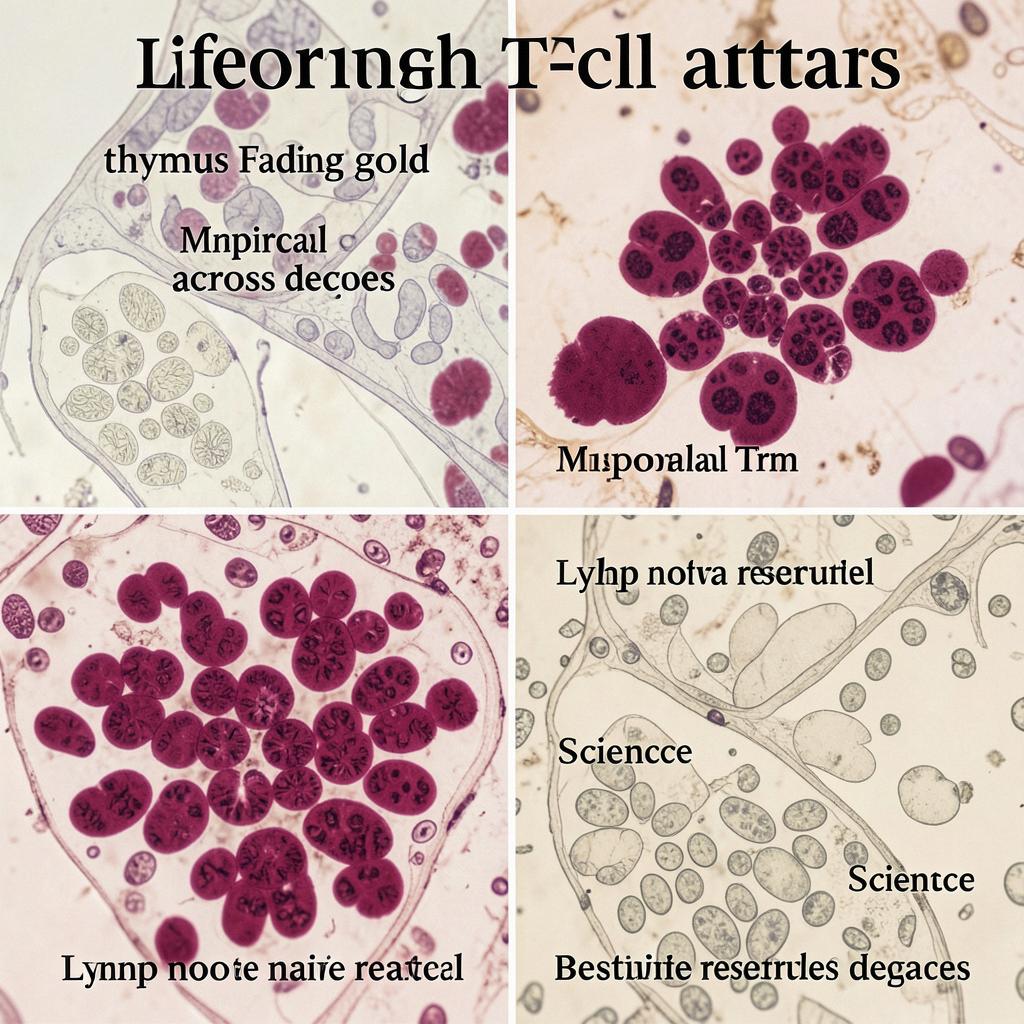
    Paper Review: Human T Cell Development, Localization, and Function throughout Life Science Art

     Science Movie


    Make a narrated HD Science movie for this answer ($32 per minute)


     Discussion


    Stay current without chasing every paper.

    Know what changed, what holds up, and what remains uncertain. Every Friday. No ads.


    My BGPT