Why BGPT?
logo

Author Review β€” Track Authors' Data

Inspect an author's raw data, methods, and reproducibility across their publications.

Press Enter ↡ to find


    Explore by Goal


     Quick Explanation


    Keyvan Alavi β€” scientific strength snapshot
    • Evidence footprint: 2 OA preprints tracked in OpenAlex for 2026, both centered on Mn-functionalized GelMA hydrogels for MRI-guided immunotheranostics (no recorded citations yet in the provided dataset).
    • Primary limitation: based on the provided material, the work appears to be a narrative review rather than a reproducible experimental/clinical contribution; that constrains rigor and impact claims.


     Long Explanation


    Author Review β€” Keyvan Alavi
    Last updated: Jul 05, 2026 Scope: only provided sources
    This critique is strictly grounded in the provided extracted OpenAlex record and the provided preprint metadata/extract for the DOI below. Where the record lacks information (e.g., methods depth, selection criteria, actual figures/data), I mark it as unknown rather than inferring.
    1) Publication footprint (from provided OpenAlex record)
    2) Topic signals (from provided OpenAlex concepts)
    3) Provided qualitative scoring signals for the tracked preprint
    4) What the author’s tracked work appears to contribute (and what it does not)
    Tracked work (from provided dataset)
    • β€œManganese-Functionalized GelMA Hydrogels for MRI-Guided Immunotheranostics in Precision Oncology” (arXiv:2606.29599; DOI provided via arXiv DOI resolver).
    Known from the provided extract:
    • Study type (as extracted): narrative literature review; no new primary experimental dataset is claimed in the provided record.
    • Claimed technical aims: integrate (i) MRI visibility, (ii) tumor microenvironment responsiveness, and (iii) immune activation pathways into a GelMA hydrogel platform.
    • Mechanistic motifs (as extracted): ROS generation / hypoxia relief / glutathione depletion and cGAS–STING immune activation are described as proposed mechanisms.
    • Critical hurdles (as extracted): safety/toxicity of manganese release, release control, mechanical robustness, standardization/reproducibility, and regulatory translation challenges.
    What is not established by the provided record:
    • No direct empirical validation is evidenced in the provided extract (because it is described as a literature review with no primary data).
    • No selection methodology (e.g., systematic search strings, inclusion/exclusion criteria, PRISMA-style reporting) is described in the provided extract; therefore rigor vs. narrative bias cannot be adjudicated from the record alone.
    5) Scientific strength assessment (skeptical, evidence-weighted)
    Strengths observable from the provided material
    • Translational framing: the extract explicitly lists safety/toxicity, release control, robustness, and regulatory barriers rather than treating feasibility as guaranteed.
    • Mechanism-to-design mapping: the extract connects hydrogel material design (GelMA) to imaging and immunological motifs (MRI visibility and cGAS–STING activation) as conceptual design targets.
    Key weaknesses / uncertainties (based on the provided extract only)
    • Epistemic limitation: because the provided record indicates no primary data, the contribution is limited to synthesis/argumentation; this cannot substitute for experimentally validated performance (contrast, release kinetics, immune activation, systemic safety).
    • Reproducibility risk: the provided scoring for reproducibility is relatively low (5/10), and the excerpt attributes uncertainty to lack of standardization across GelMA synthesis and manganese loading.
    • Bias vulnerability (unknown from excerpt): narrative reviews can be vulnerable to selection and emphasis bias unless a systematic method is described. The provided extract does not supply the review methodology, so this remains unverified.
    6) Evidence-weighted β€œimpact” proxy: citations (from provided record)
    Important skepticism: the provided OpenAlex snippet reports 0 citations and h-index 0 for the author at the time of the captured record; for 2026 preprints, this can reflect time-lag rather than scientific insignificance. No deeper citation network metrics were provided.
    7) What would disprove / materially change this assessment?
    • Evidence of primary experimental data demonstrating repeatable MRI contrast performance, controlled Mn release under tumor-relevant conditions, and reproducible immune activation outcomes. (The provided extract currently indicates no primary data.)
    • Demonstrations that the review’s proposed mechanisms translate into quantitative, standardized metrics and that cross-lab reproducibility problems (GelMA synthesis variability; Mn loading variability) are solved.


    Feedback:   

    Updated: July 05, 2026

    BGPT Author Review


    Scientific Quality

    30%

    Based only on the provided record, the tracked contribution is a 2026 arXiv preprint described as a narrative literature review with no primary experimental data. That limits scientific rigor and verifiable novelty until reproducible quantitative results (contrast performance, Mn release control, immune activation metrics, and safety) are demonstrated. The provided extract also flags reproducibility/standardization hurdles, further lowering evidential strength.


    Communication Quality

    70%

    The extracted record suggests the author communicates translational intent and enumerates limitations clearly. However, communication quality cannot be fully judged without reading the full manuscript text, figures, and structure; thus the score is moderate rather than high-confidence.


    Author Novelty

    40%

    The concept blends known components (GelMA hydrogels, manganese-related MRI visibility, and immunomodulatory/cGAS–STING framing). Without primary experiments or clear novel datasets in the provided extract, novelty is best viewed as synthesis-level rather than demonstrably new mechanistic or engineering breakthroughs.


    Scientific Rigor

    40%

    The provided extract indicates a literature review rather than experimental work, and does not provide formal review methodology details (search strategy, inclusion/exclusion criteria). Additionally, it flags standardization/reproducibility challenges, implying weak grounding for claims about performance. Rigor could be higher in the full text, but is not verifiable from the provided extract.

     Hypothesis Graveyard


    β€œHigher MRI contrast automatically implies stronger immune activation.” This is unlikely if imaging intensity is primarily governed by bulk Mn distribution while immune signaling depends on localized intracellular release kinetics.


    β€œA single mechanistic explanation (e.g., ROS alone) accounts for anti-tumor immune effects.” This would be unlikely if cGAS–STING activation requires specific upstream stimuli beyond ROS intensity.

     Science Art


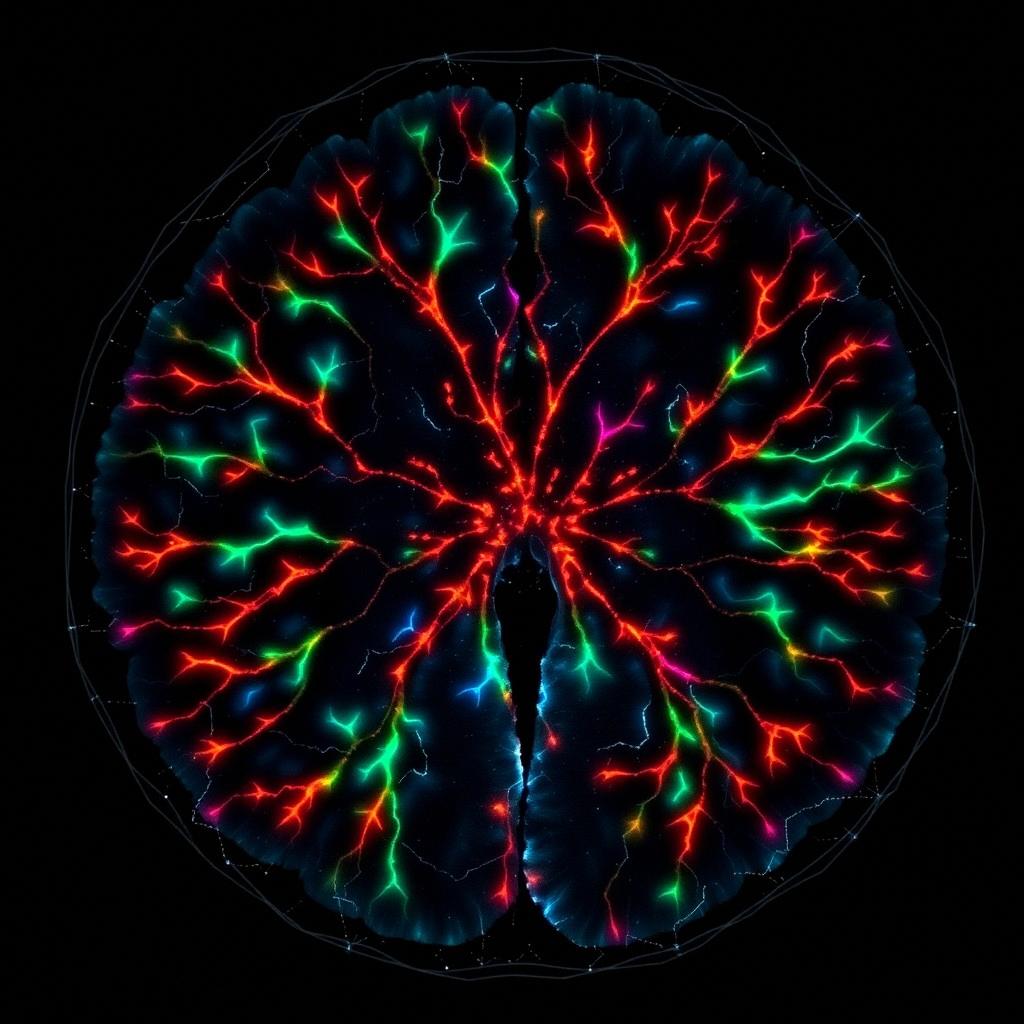
    Author Review: Keyvan Alavi Science Art

     Science Movie


    Make a narrated HD Science movie for this answer ($32 per minute)


     Discussion


    Follow the Evidence

    New scientific claims, supporting evidence, and important limitations. Every Friday. No ads.


    My BGPT