Why BGPT?
logo

Review papers with raw data transparency

Quickly verify claims by accessing the underlying experimental data and figures.


Press Enter ↡ to solve


    Fuel Your Discoveries


     Quick Answer


    Core claim:
    DNA gyrase activity is required for efficient Tn5 transposition in vivo, and the authors argue this requirement is mediated by supercoiled recipient DNA rather than a direct gyrase role in the strand-exchange chemistry.
    Evidence highlighted includes coumermycin inhibition (gyrB-dependent), temperature-sensitive gyrA43 defects, and suppression of the gyrA43 phenotype by deleting topoisomerase I (increasing supercoiling), with a transcriptional-fusion control suggesting the effect is not primarily at Tn5 promoter transcription.
    Primary source:


     Long Answer


    Paper Review (Visual + Skeptical): DNA gyrase is a host factor required for transposition of Tn5
    Journal/Year (from DOI metadata provided): Cell, 1982.
    1) What the authors set out to determine
    • The authors investigate whether DNA gyrase provides the DNA substrate needed for Tn5 transposition, focusing on the idea that transposition may require supercoiled recipient DNA.
    2) Evidence map (visual)
    Note: This map only reflects claims explicitly supported in the provided full text/abstract of the paper.
    3) Recreated quantitative figures (from reported values)
    3A) Coumermycin: effect on recipient supercoiling vs transposition timing
    Ratios used are explicitly stated in the Discussion text: after-infection peak superhelical energy ~64% and transposition ~70%; before-infection ~9% and ~11%, respectively.
    3B) Table 2 recreated: gyrA43 temperature sensitivity of Tn5 transposition
    Values are taken directly from the provided Table 2 in the TEI text: for SY720 (gyrA43) transposition frequency drops from ~4Γ—10^-5 at 30Β°C to ~0.09Γ—10^-5 at 38Β°C (relative frequency ~0.06).
    3C) Table 3 recreated: fop deletion suppresses gyrA43 transposition defect
    Table 3 reports that in gyrA43, deleting topoisomerase I (top) increases relative transposition frequency from ~0.04 (top+) to ~0.28 (Ξ”top).
    4) Mechanistic interpretation: what is supported vs not
    4A) Supported by multiple lines of evidence (within this paper)
    • Pharmacological gyrB dependence: coumermycin inhibition occurs in wild-type, is absent in a coumermycin-resistant gyrB allele, and matches when coumermycin is present before introducing the recipient DNA.
    • Genetic gyrase dependence: thermolabile gyrA43 causes strong temperature-sensitive transposition defects.
    • Suppression by increased supercoiling (topoisomerase I deletion): in gyrA43, deleting topoisomerase I increases supercoiling and suppresses the transposition defect, supporting the β€œsupercoiled substrate” explanation for gyrase requirement.
    4B) How strong is the β€œsupercoiled DNA substrate” causal claim?
    • Correlation-to-causation risk remains. The paper offers a genetic suppression experiment (gyrA43 + topoisomerase I deletion) that strengthens causality, but it is still possible that changing supercoiling also changes other cellular/biophysical properties relevant to transposition efficiency (e.g., DNA accessibility, topology-dependent donor/recipient processing) beyond a single β€œsupercoiled substrate” variable. The authors explicitly consider and then discount an alternative explanation (direct involvement in strand exchange), but the extent of direct biochemical testing is not shown in the provided text.
    • Timing intervention is compelling but could be confounded by recipient topology state changes. The study’s β€œadd coumermycin before vs after infection” logic is central. The authors argue that later addition produces near-normal transposition because lambda has already become a covalently closed circle with supertwists introduced; thus recipient supercoiling differs. This is a strong within-assay argument, but it remains possible that other antibiotic effects could alter later steps indirectly; again, the paper correlates with recipient supercoiling assays to support topology as the key mechanism.
    4C) Is it a transcriptional effect?
    • The authors attempt to address transcription directly using a Tn5 promoter-driven lacZ fusion (crossed into the same malF::Tn5 insertion context as donors). They report that coumermycin at 20 Β΅g/ml has absolutely no effect on Ξ²-galactosidase activity under the assay conditions described. This is presented as evidence against a primarily transcriptional mechanism for transposition inhibition.
    5) Experimental design strengths & blind spots
    Strengths
    • Multiple orthogonal perturbations of gyrase topology: pharmacological (coumermycin with resistance allele), temperature-sensitive gyrA43, and topoisomerase I deletion suppression are triangulated toward a single mechanistic variable (supercoiling).
    • Use of nonreplicating recipient DNA simplifies interpretation: the assay uses nonreplicating lambda as recipient so that differences in recipient replication do not drive the readout; the paper explicitly highlights this design rationale.
    Blind spots / limitations (what would most likely change the story)
    • Supercoiling is not a single biochemical knob. Altering superhelical density can change DNA accessibility, local strand separation tendencies, and possibly the kinetics of recipient processing. The authors’ model emphasizes single-stranded character and strand invasion initiation, but the provided text frames molecular mechanism development as future work (in vitro systems).
    • Drug-specific effects beyond gyrase are hard to exclude entirely. Coumermycin is used to implicate gyrase subunit B, and resistance allele results support target specificity; however, any small off-target physiological perturbations could still influence transposition indirectly. The paper’s resistance control is the main mitigation for this concern.
    • Transposition frequency readout is an endpoint with potential compositional effects. The assay quantifies insertion events (transducing particles per output phage). Changes in DNA topology might alter multiple sub-steps (e.g., synapsis, cleavage/strand transfer probability, or integration efficiency), and the paper does not separately quantify each sub-step in the provided text.
    6) Conclusion (confidence-weighted)
    Most supported conclusion:
    In this in vivo Tn5 transposition system, DNA gyrase is required primarily because it enables supercoiling of the recipient DNA; when recipient DNA remains relaxed (via gyrase inhibition), transposition is strongly reduced, and increasing supercoiling via topoisomerase I deletion suppresses a gyrA43 transposition defect.
    Confidence note:
    High confidence that gyrase activity/topology strongly correlates with and drives the measured transposition frequency under the assay conditions; moderate confidence about the precise molecular sub-step(s) affected (because the provided text indicates mechanistic resolution would benefit from in vitro reconstitution).


    Feedback:   

    Updated: April 13, 2026

    BGPT Paper Review


    Study Novelty

    70%

    The paper moves a longstanding transposition question (host factors and DNA topology) toward a specific, experimentally testable substrate hypothesis (gyraseβ†’supercoiled recipient DNA), using multiple perturbations and a transcriptional reporter control. The novelty is strong for its time, but it is not entirely β€œnew biology” because supercoiling-dependent recombination models already existed in the literature cited within the paper.


    Scientific Quality

    80%

    Strengths: triangulation via (i) gyrase inhibition with target-resistance, (ii) temperature-sensitive gyrase genetics, and (iii) genetic suppression by altering topoisomerase I balance; plus an additional transcriptional-fusion control to address a key confound (transcription). Limitations: endpoint-based transposition readouts do not directly resolve which molecular sub-steps are topology-limited; the mechanistic enzymology is framed as awaiting in vitro systems.


    Study Generality

    50%

    The findings are clearly demonstrated in a specific bacterial system (E. coli) and particular recipient DNA substrate format (lambda nonreplicating recipient; covalently closed topology). While the authors argue for a unified model centered on supertwisted DNA, generalization to other transposons/recipient contexts remains inferential from this single study.


    Study Usefulness

    80%

    Mechanistically useful for designing transposition assays and interpreting how host DNA topology manipulations can shift transposition frequency; also provides a template for using gyrase inhibitors, resistance alleles, and topoisomerase I balance as causal topology probes.


    Study Reproducibility

    60%

    The TEI-provided full text includes experimental procedures and quantitation descriptions (including timing, concentrations, strains, and gradient-based supercoiling assays). However, some details (e.g., exact strain genotypes/IDs in all cases, precise numeric replicate info for every figure) are not fully extractable from the provided excerpt alone, and the coumermycin dose unit/numbering appears OCR- or TEI-fragmented in places, which can complicate exact replication without the original PDF.


    Explanatory Depth

    70%

    The paper provides a topology-centric causal model connecting gyrase activity to supercoiling of the recipient substrate and correlates that with transposition frequency. It also explicitly considers (and partially discounts) a direct gyrase strand-exchange involvement, but does not fully resolve sub-step enzymology.


    🎁 Authors: Collect 188 Free Science Tokens (β‰ˆ $18.8 USD)

    Claim My Author Tokens

    Use for 47 days of free BGPT access (4 tokens = 1 day) or trade/sell (β‰ˆ $18.8 USD)

     Top Data Sources ExportMCP


     Analysis Wizard


    Maps reported transposition/supercoiling ratios into structured arrays and generates correlation plots and grouped bars to visually test whether transposition scales with recipient superhelical energy, using only values extracted from the full-text tables/discussion.


     Hypothesis Graveyard


    A direct gyrase strand-exchange catalytic role (independent of supercoiling) is unlikely because genetic suppression by topoisomerase I deletion in gyrA43 restores transposition in the direction predicted by increased supercoiling.


    Coumermycin inhibition is primarily transcriptional (not topology) becomes less plausible given the promoter-lacZ fusion result showing no measurable transcription effect under the drug regimen used for transposition assays.

     Science Art


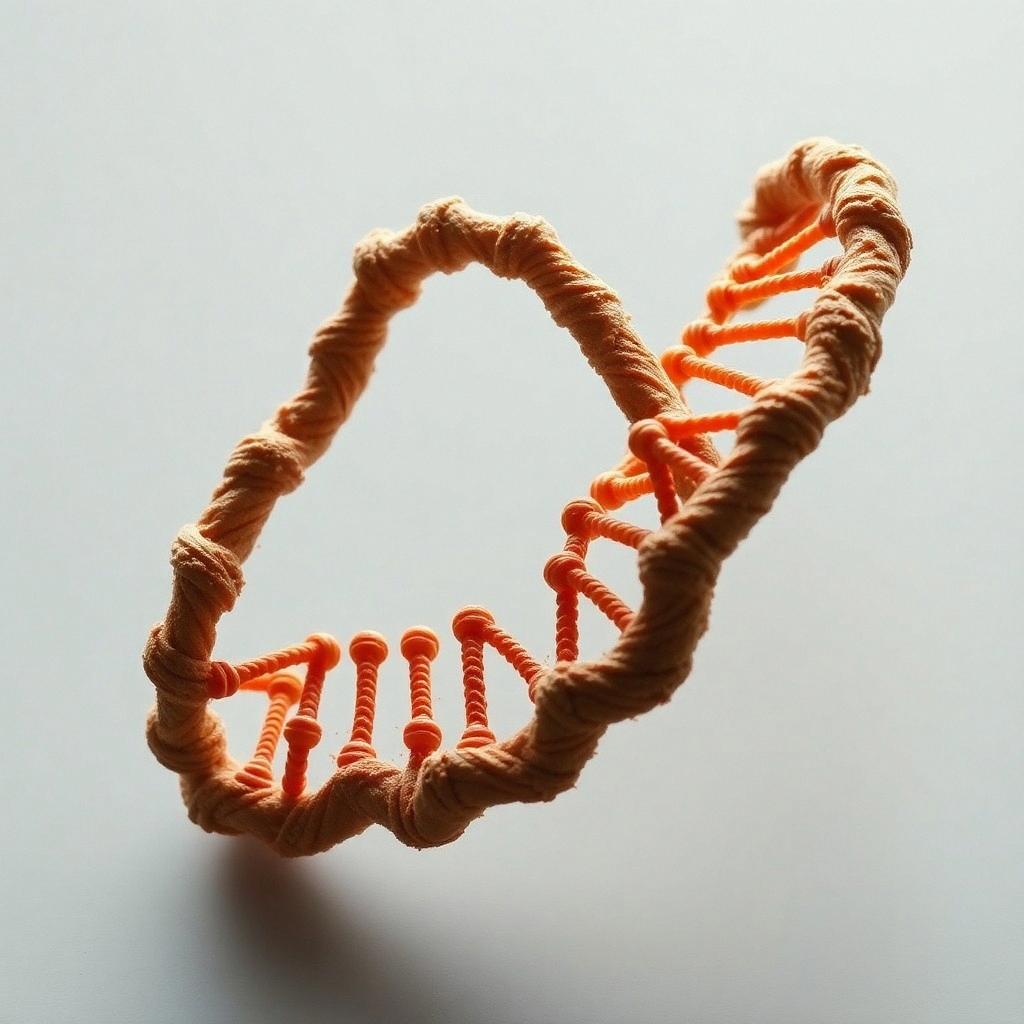
    Paper Review: DNA gyrase is a host factor required for transposition of Tn5 Science Art

     Science Movie


    Make a narrated HD Science movie for this answer ($32 per minute)


     Discussion


    Get Ahead With Science Insights

    Custom summaries of the latest cutting edge Science research. Every Friday. No Ads.


    My BGPT