Check your idea against supporting claims, contradicting results, and falsification criteria.Know what the science actually supports before you trust the answer.
Press Enter ↵ to test hypothesis
Explore by Goal
"The first principle is that you must not fool yourself — and you are the easiest person to fool."
- Richard Feynman
BGPT Odds of True
45%
80% Confidence
The integration is methodologically coherent but currently untestable: only 11 individuals have any ancestry estimate and none have quantitative non-local proportions paired with GO-term data, so a true mobility→microbiome association cannot be established or refuted with existing data.
Hypothesis Novelty
62%
Pairing paleogenomic ancestry with calculus functional metagenomics is a genuinely new integration; individual-level ancestry-in-calculus and GO-term microbiome layers each exist separately but have never been joined for mobility inference.
Quick Analysis Plan
Copied
Yes in principle, but not yet at testable power: the Roman calculus study retained 52 samples for GO-term analysis yet only 11 individuals had SNP-based ancestry inference from low-endogenous host DNA in calculus, so any mobility→microbiome association test would run on ≤11 paired observations — far below the power needed to detect the modest effects reported (cemetery PERMANOVA R²=0.082).
Long Analysis Plan
Battling-test the integration hypothesis: feasibility, not yet falsifiability
The hypothesis is architecturally sound but statistically underpowered with current data. It requires per-individual pairing of (a) functional GO-term profiles and (b) non-local ancestry proportions. The only dataset supplying both ends of that pairing is the Roman-era calculus study — and its own numbers expose the bottleneck.
All values are reported counts from the study itself; ancestry inference used ANGSD against 1000 Genomes references and resolved only to "closest present-day population: Tuscany/Iberia," not quantitative non-local proportions.
What works in the hypothesis's favor. The functional layer exists: 1,099 GO terms were retained, and four GO terms (e.g., GO:0071281 cellular response to iron ion) differ significantly between cemeteries. Non-local ancestry is measurable elsewhere in Roman-era populations — Portugal's transect quantifies per-individual qpAdm ancestry proportions including Italy_Roman and North-African proxy sources, and the Slovenia/Cividale study pairs 1240k genomes with 329 strontium-isotope mobility measurements.
Where the hypothesis breaks down. (1) Ancestry ≠ mobility: genetic ancestry proportions reflect ancestral populations, not individual lifetime movement — isotope data are the direct mobility proxy, and conflating the two is the hypothesis's central hidden assumption. (2) Effect size is small relative to noise: cemetery explains R²=0.082 of microbiome variance while residuals explain 0.83; individual health is non-significant (p=0.526), so any ancestry-mobility signal would need to be detected within an 8% effect band. (3) Shared DNA source problem: both host ancestry and microbial GO-terms come from the same low-biomass calculus extract; soil controls (8 total) and FEAST source-tracking reduce but do not eliminate environmental confounding.
Improved, falsifiable version: "Among Roman-era individuals with BOTH targeted-capture genome-wide ancestry (≥0.5× on 1240k SNPs) and ≥1M reads of authenticated calculus microbiome (damage-verified, FEAST-filtered), non-local ancestry fraction (or Sr/86Sr deviation from local baseline) predicts GO-term functional dispersion (Aitchison distance), tested with PERMANOVA stratified by cemetery and read count." This splits hypothesis space: if non-migrants (isotopically local) and migrants show no functional difference after stratification, the mobility→microbiome link is falsified at accessible power.
Confidence note: the feasibility verdict rests on reported sample counts from one preprint-grade study (bioRxiv-style DOI, not yet peer-reviewed journal placement); the ancestry-measurement ceiling (n=11, broad resolution) is the single most decisive limiting fact.
We'll email you the results when your analysis is finished.
Hypothesis Graveyard
Ancestry-proportion-based mobility inference: superseded because ancestry reflects origin populations, not individual lifetime movement; isotope+genome pairing (Slovenia model) is the correct mobility ground truth.
Using raw GO-term abundance directly: environmental/source-tracking confounding at low biomass requires FEAST-filtered, damage-authenticated subsets before any functional association test.
Science Art
Science Movie
Make a narrated HD Science movie for this answer ($32 per minute)

 Explore by Goal
 Hypothesis Novelty
 Quick Analysis Plan
 Long Analysis Plan
 Top Data Sources
 Ask a Follow-Up
 Key Insight
 Keep Exploring
 Hypothesis Graveyard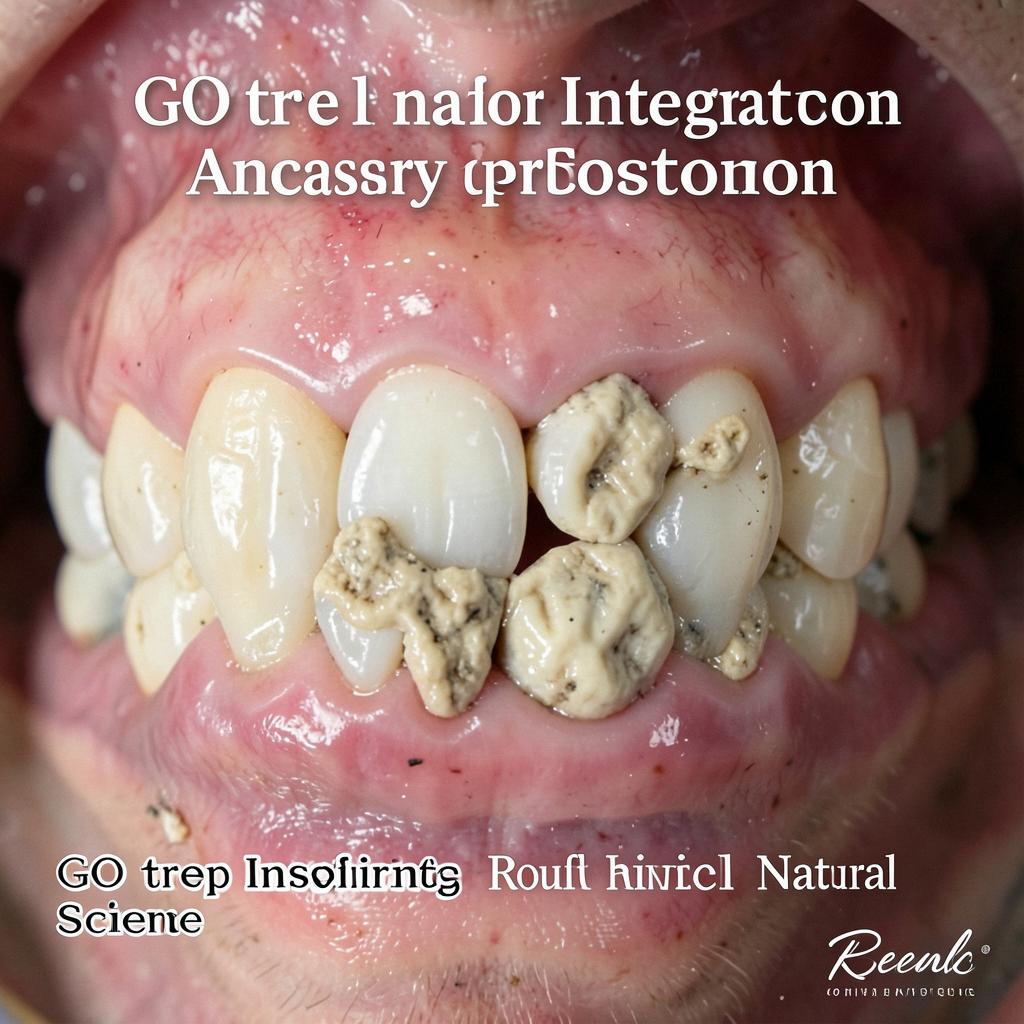
 Discussion