Inspect each claim in a paper against the experiments and reported results that support it, including limitations and provenance.Know what the science actually supports before you trust the answer.
Press Enter ↵ to review
Explore by Goal
"The scientist only imposes two things, namely truth and sincerity, imposes them upon himself and upon other scientists."
- Erwin Schrödinger
Quick Explanation
Copied
The paper provides a promising preclinical proof of concept: modular VHH–histatin fusion proteins showed pathogen-selective activity, rapid in-vitro killing, plasma stability, and encouraging ABG14 activity in a small neutropenic-mouse model. However, the evidence does not yet establish clinical efficacy, durable resistance prevention, microbiome safety, or broad strain coverage; the strongest claims exceed the reported validation.
Long Explanation
Evidence supporting the platform
The authors fused pathogen-binding camelid VHH fragments to histatin through pathogen-protease-cleavable linkers. ABG07, ABG14, and ABG16 were tested against Candida, Pseudomonas aeruginosa, and Staphylococcus aureus, respectively. Reported killing generally occurred at 5–12.5 µg/mL for AbTids versus approximately 50–150 µg/mL for the corresponding VHHs, corresponding to roughly 10–30-fold lower tested concentrations, although the manuscript does not provide complete dose–response curves, confidence intervals, or standardized MIC/MBC tables. ABG14 also showed activity against carbapenem-resistant P. aeruginosa, biofilm reduction, no measurable effect on the tested commensals, and no HEK293T toxicity at 125 µg/mL in an MTT assay.
What the experiments actually establish
Specificity is incomplete: purified-antigen ELISA and protease-cleavage assays were selective, but whole-cell assays showed approximately 40–50% apparent ABG07 activity against S. aureus and approximately 40% ABG16 activity against one P. aeruginosa strain. This weakens the claim of “extreme” specificity and indicates that antigen-level binding does not predict cellular selectivity reliably.
Resistance evidence is preliminary: ABG14 did not show appreciable growth during nine serial passages at one sublethal concentration, whereas meropenem resistance increased. That experiment used one principal molecule, two Pseudomonas strains, nine generations, and OD600-based growth; it does not exclude resistance through target loss, protease loss, altered surface architecture, AMP tolerance, biofilm adaptation, or host-mediated selection.
In-vivo evidence is small and narrow: the mouse experiment used groups of n=4, a neutropenic intravenous infection, one resistant P. aeruginosa isolate, short observation, and ABG14 only. The text inconsistently describes ABG14-treated infected animals as having no mortality and elsewhere states 75% survival for the uninfected toxicity group, so the animal-level survival data and group assignments require clarification.
Translation remains unresolved: complement-inactivated plasma stability, HEK293T MTT testing, and a limited commensal panel do not establish pharmacokinetics, tissue penetration, immunogenicity, complement activation, cytokine effects, renal clearance, repeat-dose safety, or preservation of the complete human microbiome.
Critical interpretation
The central engineering idea is credible and potentially useful: combining binding-mediated concentration with locally triggered AMP release can create a dual-checkpoint antimicrobial. Related antibody–AMP and peptide-conjugate studies support the broader feasibility of conjugated biological antimicrobials, but they also illustrate the recurring translational gap between strong in-vitro potency and clinically relevant exposure, safety, and pharmacology.
Bottom line: the paper supports “modular AbTids can generate pathogen-directed antimicrobial leads rapidly in vitro and can produce an encouraging ABG14 signal in a small mouse experiment.” It does not yet support “resistance-proof,” “microbiome-sparing,” “low-immunogenicity,” or “clinically effective.” The most decisive next evidence would be blinded, adequately powered animal studies across independent clinical isolates; pharmacokinetic–pharmacodynamic exposure measurements; mutant-frequency and whole-genome resistance studies; target/protease knockout controls; orthogonal viability assays; comprehensive safety and immunogenicity testing; and replication by an independent laboratory.
Feedback:
Updated: August 03, 2026
BGPT Paper Review
Study Novelty
80%
The VHH–pathogen-protease-cleavable-linker–histatin architecture is a distinctive modular combination tested across bacterial and fungal targets, although antibody–AMP conjugation and targeted antimicrobial delivery are established concepts.
Scientific Quality
60%
The study contains a coherent engineering concept and multiple orthogonal assay types, but reporting is incomplete: replicate-level data, full statistical details, animal-level outcomes, comprehensive controls, and standardized susceptibility metrics are insufficient. The supplied text also contains nomenclature and internal reporting inconsistencies. Funding came from BIRAC and the Gates Foundation; authors declared no conflicts, but the work was conducted by the company developing AbTids.
Study Generality
60%
The modular design may be adaptable, but experimental validation covers only three main pathogen classes, a small strain panel, one extensively characterized AbTid in vivo, and simplified laboratory systems.
Study Usefulness
70%
The work identifies plausible antimicrobial leads and a testable design framework, but its practical value is currently preclinical because pharmacology, safety, independent replication, and clinical-isolate breadth remain unresolved.
Study Reproducibility
50%
Core methods are described, but raw data, complete sequences, exact replicate numbers for many assays, full dose–response results, detailed animal randomization/blinding, and complete statistical outputs are not provided in the supplied text.
Explanatory Depth
60%
The proposed dual mechanism is biologically coherent, but direct mechanistic causality is not fully demonstrated: target blockade, cleavage-site mutants, AMP-release quantification, protease dependence, and resistance-genotype analyses are incomplete.
Analyzing supplied AbTid sequences and pathogen targets to map conservation, cross-reactivity risk, cleavage-site variability, and candidate resistance mutations across available pathogen genomes.
Get emailed when your analysis is done!
We'll email you the results when your analysis is finished.
Hypothesis Graveyard
A simple claim that dual action makes resistance impossible is not supported: the study tested only nine passages, limited strains, and one major AbTid, so it cannot exclude resistance through target loss, cleavage-site escape, or AMP tolerance.
A claim of complete pathogen specificity is weakened by the reported whole-cell cross-killing of S. aureus by ABG07 and P. aeruginosa by ABG16 despite selective purified-antigen assays.

 Explore by Goal
 Quick Explanation
 Long Explanation
 Top Data Sources
 Ask a Follow-Up
 Key Insight
 Keep Exploring
 Analysis
  Hypothesis Graveyard
 Potential Experiments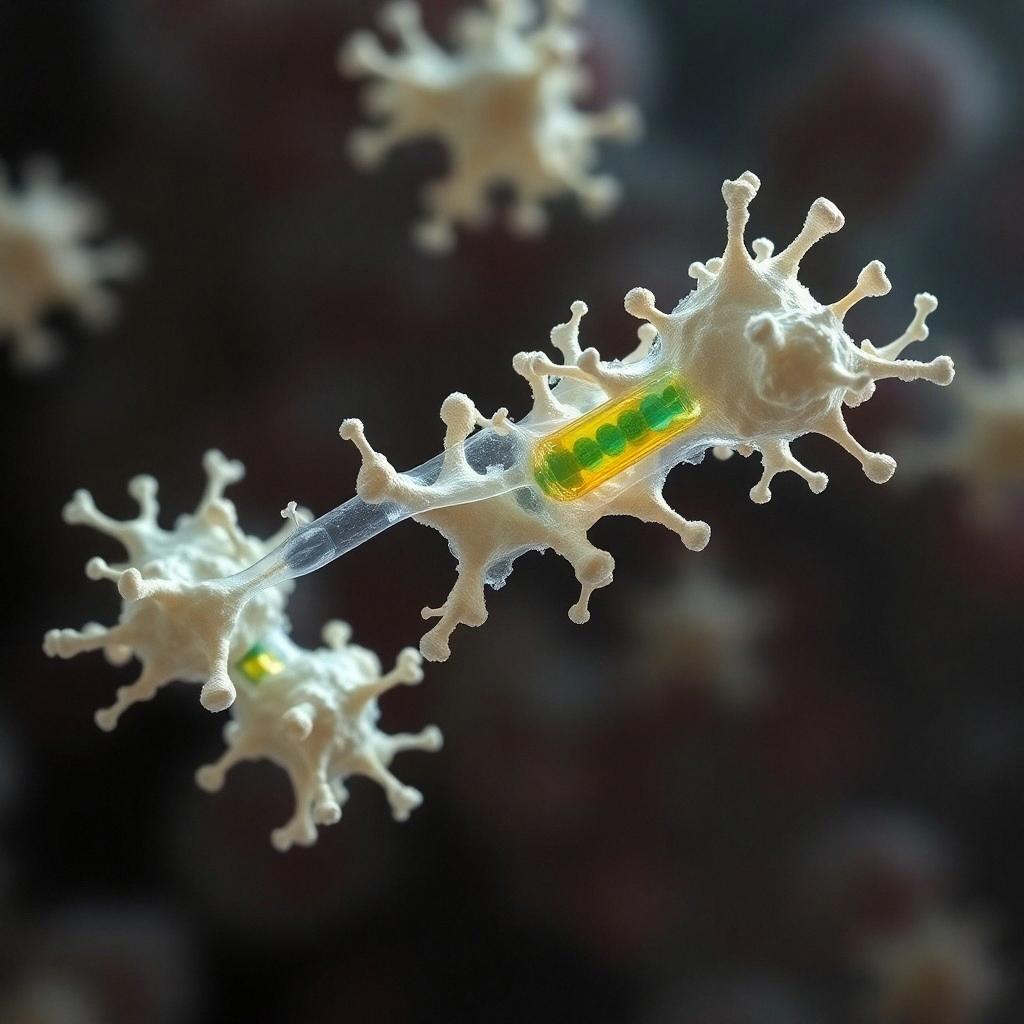
 Discussion