Why BGPT?
logo

Assess an author's data and outputs

See the raw experimental evidence behind an author's publications and reproducibility signals.


Press Enter ↵ to solve


    Fuel Your Discoveries


     Quick Explanation


    Anna Hupalowska — scientific strength snapshot
    Evidence from a mechanistic paper (APPL1 → TRAF2 → NIK → NF-κB / p65 nuclear entry; basal, TNF-independent) shows strong signaling specificity via multiple perturbation modalities (co-IP, pull-down, reporter readouts, knockdown/rescue, and pathway-positioning experiments) while transparently acknowledging limitations like reliance on overexpression/immortalized cell models and limited in vivo validation ().


     Long Explanation


    Author Review: Anna Hupalowska
    Skeptical, evidence-based critique focused on biological/scientific substance
    VISUAL 1 — What the provided evidence says (mechanism evidence map)
    Legend: “direct binding” = physical interaction data; “causal pathway” = perturbation that changes the signal readout; “placement” = epistasis/ordering evidence; “TNF-independence” = stated independence checks.
    VISUAL 2 — Claimed citation impact vs. provided profile metrics (context-only)
    The bar chart uses only citation counts you provided (OpenAlex top works). It is not a substitute for a full bibliometric audit.
    LONG — Scientific strength critique
    1) Mechanistic causality signal quality (example paper from provided raw data)
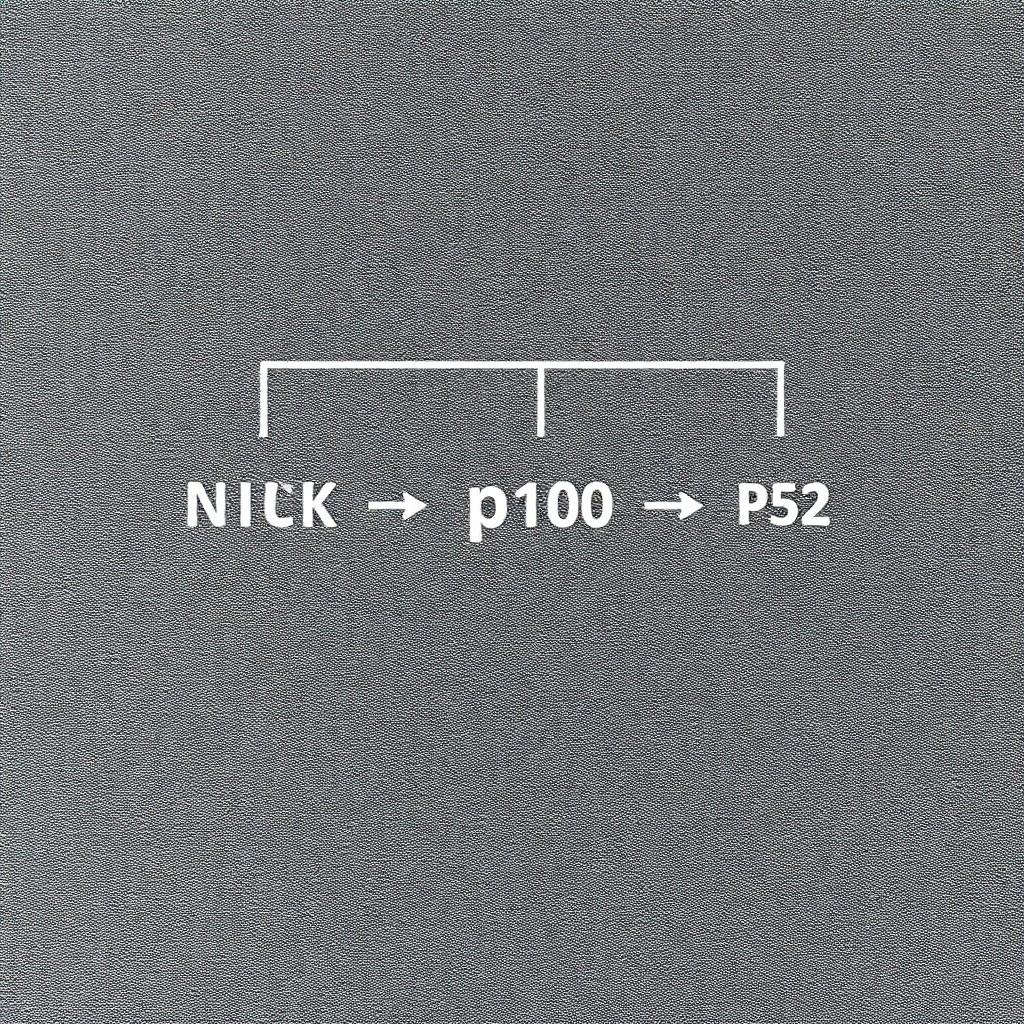
    The APPL1 paper (Journal of Cell Science, DOI 10.1242/jcs.105171) is mechanistically framed as: APPL1 regulates basal NF-κB by stabilizing NIK, and APPL1 interfaces canonical and noncanonical NF-κB signaling through a physical APPL1–TRAF2 link and downstream p100→p52 processing, culminating in p65 nuclear translocation and selective cytokine gene expression independent of TNF stimulation ().
    Strengths
    • Multi-modal evidence: physical interaction (co-IP/pull-down) + functional output (NF-κB reporter, qPCR/ELISA) + dependency tests (NIK requirement) + pathway ordering (IKK2 perturbation) reduces the odds that the phenotype is a single-assay artifact ().
    • Epistasis-style placement: “upstream of IKK2” via IKK2-K44M blocking the APPL1-driven activation, and NIK dependency via dominant-negative/knockdown are directly aligned with the proposed signaling chain ().
    Key limitations / blind spots
    • In vitro, overexpression/knockdown reliance: the provided excerpt notes heavy use of overexpression and RNAi rescue/knockdown in immortalized lines, which can introduce off-target effects or non-physiological stoichiometries; the absence of robust in vivo support (in the excerpt) leaves organism-level causality less certain ().
    • Endosomal colocalization uncertainty: the excerpt states that unequivocal colocalization of TRAF2 with APPL1 on enlarged APPL endosomes was not clearly observed, which weakens a strict “complex forms on APPL endosomes” interpretation even if signaling outcomes support the pathway model ().
    • TNF-independence depends on the experiment’s framing: the excerpt supports TNF-independent basal effects, but for NF-κB networks, low-level cytokine variability and cell-state effects can complicate “independence” claims; more physiological perturbations would tighten this inference ().
    2) Field fit: atlases + single-cell / developmental biology themes (high-level, from provided profile)
    Your provided OpenAlex-like profile lists a portfolio that spans human cell atlas efforts and developmental/cell-fate work, with at least one highly cited paper on embryo self-organization and another on cellular-resolution mapping programs. This suggests the author’s skill set likely includes large-scale, high-dimensional biology and systems-level reasoning.
    Scientific strength inference (with humility): because this chat includes only detailed raw experimental data for one specific mechanistic paper (the JCS APPL1 paper), I can only rigorously evaluate mechanistic evidence for that particular work. For the broader atlas/development items, I can’t assess experimental design quality from the excerpted metadata alone.
    3) What would most improve falsifiability (for the specific mechanism example)
    To sharpen the APPL1→TRAF2→NIK→processing→p65 model beyond the excerpted limitations, the highest-value disconfirming tests would be:
    • More direct spatial mechanism: quantitative, statistically robust colocalization of TRAF2 and APPL1 under conditions that preserve endosomal identity (addressing the “not unequivocal” colocalization limitation).
    • Physiological perturbations: approaches that avoid overexpression stoichiometry and instead alter APPL1 endosomal function/levels in a more physiological regime, then test whether the same NIK stabilization and p100 processing signatures occur.
    • Network-level specificity: show that the basal NF-κB phenotype is not simply a broad stress/inflammation response by testing a wider set of pathway readouts (the excerpt indicates gene subset effects, but also that generalizability/in vivo relevance remain uncertain).
    These steps follow directly from the limitations explicitly indicated in the provided paper excerpt ().
    VISUAL 3 — Confidence grading (from available evidence only)
    Grading targets the mechanism chain in the provided APPL1 paper excerpt.
    4) Scientific citation metrics (provided by you; not independently verified here)
    From your provided OpenAlex-like data: works_count ≈ 25, cited_by_count ≈ 3774, and h-index ≈ 20. From your provided citation summary block: h-index ≈ 20, total citations ≈ 3267, paper count ≈ 24.
    Skeptical note: h-index and cited-by counts are influenced by field size, publication age, author position in large collaborations, and can reflect citation practices rather than direct mechanistic rigor. They’re useful for scale/context, not for causality quality.
    5) Bottom-line verdict
    For the mechanistic example provided, the scientific strength is high: it integrates direct binding evidence, functional NF-κB output assays, pathway dependency and ordering experiments, and downstream localization/processing/cytokine readouts—yet the excerpt explicitly flags cell-line/perturbation mode limitations and uncertainty around endosomal colocalization, which reduce how strongly one should claim the exact spatial mechanism ().


    Feedback:   

    Updated: April 25, 2026

    BGPT Author Review


    Scientific Quality

    80%

    Based on the provided raw mechanistic evidence for a key NF-κB signaling paper, the author shows strong ability to triangulate mechanism (binding + reporter output + dependency/epistasis + downstream localization/processing/cytokines). The main downgrades are typical for mechanistic cell biology in vitro: reliance on overexpression/RNAi in immortalized lines, incomplete physiological validation, and weaker spatial (endosomal colocalization) support in the excerpt. Broader atlas/development strengths cannot be fully judged from metadata alone.


    Communication Quality

    70%

    The mechanistic summary framing is coherent and logically ordered (problem → interaction → dependency → pathway placement → downstream outputs). However, without full text here, I can’t verify how carefully uncertainties and alternative interpretations were discussed across the whole author portfolio.


    Author Novelty

    70%

    The mechanism described (APPL1 stabilizing NIK and connecting canonical/noncanonical NF-κB at basal state) appears conceptually specific rather than generic. Exact novelty magnitude relative to contemporaneous literature isn’t fully assessable from the excerpt alone.


    Scientific Rigor

    70%

    Rigor is supported by multi-assay convergence and mechanistic ordering tests in the provided excerpt. Rigor is capped by explicitly noted limitations (cell-line focus, overexpression/RNAi artifacts risk, and less definitive endosomal colocalization), which is consistent with moderate-to-strong rigor rather than near-exhaustive in vivo spatial causality.

     Hypothesis Graveyard


    The “TNF-independent” model is weakest if later studies show that subtle TNF/IL-1 contamination or autocrine cytokine loops fully explain basal NF-κB activation; then APPL1 would be an amplifier rather than a selector of upstream basal signaling.


    The strict spatial interpretation (“TRAF2 acts on APPL1 endosomes to stabilize NIK”) becomes less compelling if quantitative colocalization and endosomal functional disruption fail to reproduce NIK stabilization; then interaction could be indirect or compartmental rather than co-local mechanistic.

     Science Art


    Author Review: Anna Hupalowska Science Art

     Science Movie


    Make a narrated HD Science movie for this answer ($32 per minute)


     Discussion


    Get Ahead With Science Insights

    Custom summaries of the latest cutting edge Science research. Every Friday. No Ads.


    My BGPT