Why BGPT?
logo

Review papers with raw data transparency

Quickly verify claims by accessing the underlying experimental data and figures.


Press Enter ↡ to solve


    Fuel Your Discoveries


     Quick Explanation


    Quick take: Dutton et al. (2021) introduce the "meta-gut" concept and provide field and mesocosm evidence that hippopotamus gut microbes coalesce with pool microbiomes under high fecal loading, altering redox-sensitive biogeochemistry (CH4, BOD, H2S, Fe(II), SRP) and showing bacteriophage modulation of bacterial activity β€” data and code are openly archived (Mendeley) and methods are reproducible from supplied protocols and sequencing pipelines


     Long Explanation


    Visual paper analysis β€” "The meta-gut" (Dutton et al., 2021)

    Visual summary

    Hippo fecal loading can create anoxic bottom-water patches where obligate anaerobes from the hippo gut persist and function ex situ; these gut-derived microbial taxa correlate with enhanced microbial catabolism (CH4, BOD, H2S, Fe(II), SRP). Mesocosm tests show bacteria additions produce these biogeochemical shifts and that viral fractions (bacteriophages) partially dampen bacterial-driven changes β€” supporting the meta-gut hypothesis.

    Figure A β€” Simplified taxa overlap (hippo gut vs pool bottom) (derived from paper reported numbers)
    Note: bar heights are illustrative to show proportion and use the paper's reported overlap (87 active shared taxa); see primary data for exact counts and taxa lists (Mendeley Data)
    Figure B β€” Biogeochemical differences across treatments (mesocosm): selected variables (Fe(II), BOD, H2S, pH)
    Interpretation: bacteria-only treatment produced higher Fe(II), BOD and H2S and lower pH vs control; addition of viral fraction blunted these shifts β€” consistent with Table 1 and Fig.5e in the paper (linear mixed-effects models; Fe(II), pH, H2S, BOD significant)

    Core strengths (what the paper does well)

    • Integrative conceptual advance: formally proposes the "meta-gut" as community coalescence between host gut and environment, linking microbial ecology to ecosystem biogeochemistry with testable predictions
    • Multi-pronged approach: field surveys across subsidy gradients + time-series after flushing + controlled mesocosm experiments allow causal inference beyond pure correlation
    • Open data & reproducible pipeline: sequences processed with QIIME2/DADA2, taxonomy (SILVA), contamination removed with decontam, code and data archived on Mendeley (DOI provided) enabling reanalysis

    Key limitations, blind spots and alternative interpretations

    • Limited hippo gut sample size (Nβ‰ˆ10 individuals) and geographically constrained system: generality to other species/ecosystems requires further tests
    • Source attribution uncertainty: SourceTracker and ASV-based attribution can mis-assign taxa when unknown environmental reservoirs or free-living anaerobes grow in situ β€” authors report a large 'unknown' component in time-series
    • Mesocosm simplification & loading regime mismatch: bottles received a one-time input into oxic river water rather than continuous fecal input into pre-existing anoxia in pools β€” this likely explains why gut-derived taxa declined in bottles but increased in natural pools between flushing events (authors note this)
    • Activity inference from rRNA has limitations: rRNA-based 'active' community is a useful proxy but taxa-specific rRNA copy and life-history differences can bias activity inference; authors cite Blazewicz et al. 2013 regarding limits
    • Taxonomic vs functional inference: 16S amplicon data reveal taxonomic co-occurrence but not direct functions or metabolic fluxes by specific taxa; metagenomics/metatranscriptomics would strengthen mechanistic claims about functional roles of gut-derived taxa in CH4 or SRP cycling.

    Where the evidence is strongest

    1. Spatial pattern: bottom waters of high-subsidy pools contain an active community more similar to hippo gut than upstream waters β€” supported by NMDS, PERMANOVA, CCA and taxon-level overlap (87 taxa)
    2. Biogeochemical mediation: mesocosm bacteria treatment increased Fe(II), BOD, H2S and lowered pH relative to controls; viruses reduced those effects β€” indicating microbial drivers (and viral modulation) of observed geochemical states

    Practical and theoretical implications

    • Animals as mobile microbial reactors: mass-defecating/wallowing animals (hippos, wallowing pigs, congregating waterfowl, mussel aggregations) could seed environments with gut-adapted taxa β€” altering local nutrient cycles and forming temporary meta-gut patches when environmental conditions (anoxia, residence time) match gut redox niches
    • Conservation/functional consequences: loss of freshwater megafauna could remove not only nutrient subsidies but also microbial drivers of ecosystem states; restoration may reintroduce both nutrient and microbial subsidies with cascading effects (positive or negative) β€” requires controlled tests.
    • Applied microbiome ecology: microbial source and viral dynamics jointly regulate ecosystem processes β€” future monitoring of water quality near congregating animals should consider microbial and viral loads, not only nutrients and DOC.

    Concrete ways to strengthen/extend the work

    1. Direct metagenomics/metatranscriptomics on paired gut and pool bottom samples to link taxa to metabolic gene expression (methanogenesis, sulfate reduction, phosphatase, iron reduction).
    2. Quantify continuous in situ fecal loading rates and residence-time thresholds needed to sustain gut-derived taxa in the environment (dose-response of taxa persistence).
    3. Viral ecology: shotgun viromes and phage-host linkage (e.g., CRISPR spacers, metatranscriptomic phage reads) to identify specific phages controlling key bacterial players like Macellibacteroides or Clostridia.
    4. Cross-system tests: replicate approach in other congregating species (bison wallows, waterfowl ponds, mussel beds) to assess generality of meta-gut patterns.

    Minimal methods reproducibility checklist (from paper)

    • Sample preservation: filters stored with RNAlater and frozen (authors detail volumes and filters, Qiagen kit for extraction).
    • Sequencing: V4 16S amplicons (F515/R805), dual-index library prep, Illumina MiSeq 2x250 (Yale Center for Genome Analysis).
    • Bioinformatics: QIIME2 demultiplexing, DADA2 for ESVs, SILVA v128 for taxonomy, decontam for contaminants, Phyloseq/vegan/SourceTracker/LEfSe for analyses; R code + data on Mendeley (DOI given)."
    Primary citation:
    Next-step options


    Feedback:   

    Updated: March 07, 2026

    BGPT Paper Review


    Study Novelty

    90%

    The paper formalizes a new, testable conceptual framework β€” the "meta-gut" β€” and pairs it with empirical field and experimental evidence; combining active (RNA) profiling with biogeochemistry and viral manipulations is novel in ecosystem-scale host–microbe work.


    Scientific Quality

    80%

    Solid experimental design and appropriate statistical analyses (QIIME2/DADA2, NMDS, PERMANOVA, CCA, LME) with open data; limitations include small gut-sample N, mesocosm realism issues, and reliance on 16S for functional inference, but authors explicitly note these caveats and support core claims with multiple lines of evidence.


    Study Generality

    70%

    Mechanistic idea likely generalizable to other high-density, aquatic congregating animals (wallowing mammals, waterfowl, mussel beds), but empirical validation outside hippo pools is needed; framework bridges microbial community coalescence and ecosystem function across systems.


    Study Usefulness

    90%

    Usefully reframes animal subsidies to include microbial transfers, informs riverine conservation and water-quality management, and suggests monitoring microbial and viral loads near high-density animal aggregations; actionable for ecologists and restoration practitioners.


    Study Reproducibility

    80%

    Methods are transparently described (sample preservation, primers, sequencing, and R scripts), and primary data are archived (Mendeley DOI). Reproducibility is limited by field variability and mesocosm context but core computational steps (QIIME2, DADA2, decontam) are standard and reproducible.


    Explanatory Depth

    80%

    Paper links taxonomic coalescence to measurable biogeochemical shifts and includes viral modulation, offering mechanistic inference; deeper molecular functional links (metagenomics/metatranscriptomics, phage–host networks) remain to be established.


    🎁 Authors: Collect 500 Free Science Tokens (β‰ˆ $50.0 USD)

    Claim My Author Tokens

    Use for 125 days of free BGPT access (4 tokens = 1 day) or trade/sell (β‰ˆ $50.0 USD)

     Top Data Sources ExportMCP


     Analysis Wizard


    Fetching/processing the paper's Mendeley 16S sequences and metadata, building DADA2/ASV tables, running SourceTracker-like source attributions and generating taxa-to-biogeochemistry correlations for hypothesis testing.


     Hypothesis Graveyard


    All observed pool anaerobes are strictly environmental (not gut-derived): falsified by the 87 active taxa uniquely shared with hippo feces and the temporal increase of hippo-derived taxa between flushing events.


    Bacteriophages have no ecosystem function: contradicted by mesocosm LME results showing viruses reduced Fe(II), BOD and pH shifts vs bacteria-only treatment.

     Science Art


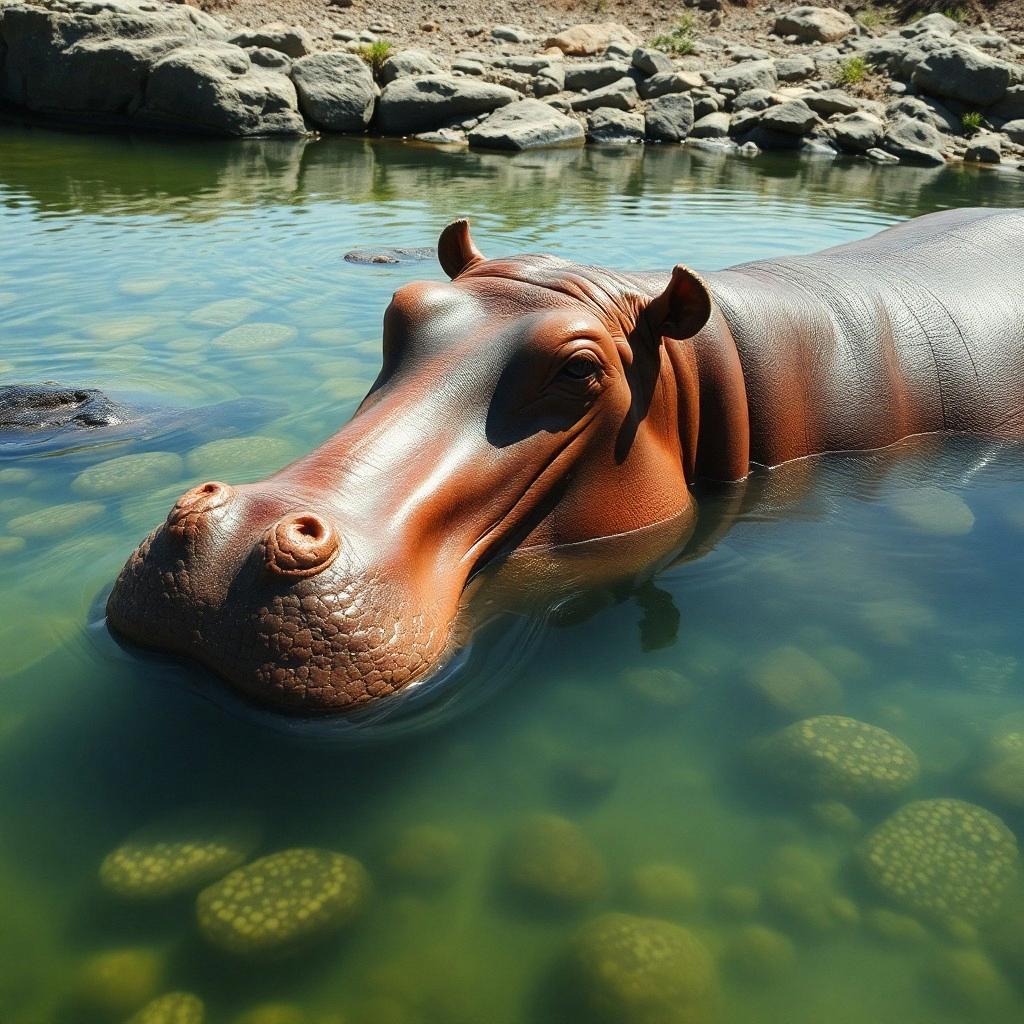
    Paper Review: The meta-gut: community coalescence of animal gut and environmental microbiomes Science Art

     Science Movie


    Make a narrated HD Science movie for this answer ($32 per minute)


     Discussion


    Get Ahead With Science Insights

    Custom summaries of the latest cutting edge Science research. Every Friday. No Ads.


    My BGPT