Check what supports each statement: experiments, reported results, scope, and limitations.Know what the science actually supports before you trust the answer.
Press Enter ↵ to review paper
Explore by Goal
"Somewhere, something incredible is waiting to be known."
- Carl Sagan
Quick Explanation
Copied
This first transcriptomic study of repeated touch in Mimosa pudica shows that a single mechanical stimulus mainly induces flavonoid-biosynthesis genes (789 DETs), while repeated stimulation triggers a much larger, down-regulation-shifted program (4,907 DETs) enriched for stress-response TFs (WRKY, NAC, MYB, AP2/ERF, HSF), lipid metabolism and hormone signaling, with ΦPSII reduced but Fv/Fm preserved .
Long Explanation
What the paper actually shows
Buti, Checcucci and colleagues dropped potted Mimosa pudica plants 15 cm once or repeatedly (following the Gagliano protocol), measured chlorophyll fluorescence, and performed the first de novo RNA-Seq analysis (Trinity assembly; 93,662 transcripts, 96.4% BUSCO completeness; data at E-MTAB-14230) of single vs. repeated mechanical stimulation .
The signature pattern: single stimulation up-regulates flavonoid/phenylpropanoid genes (chalcone synthase, flavonol synthase, leucoanthocyanidin reductase), whereas repeated stimulation shifts toward stress-response TFs (WRKY, NAC, MYB, AP2/ERF, HSF), lipid metabolism (α-dioxygenase 2, LPEAT2, FAD), and hormone signal transduction — the authors interpret this as a shift from short-term antioxidant defense to a long-term acclimation/memory-like state . Physiologically, ΦPSII was significantly lower in both stimulated groups while dark-adapted Fv/Fm was unchanged (n=5, one-way ANOVA + Tukey), suggesting photosynthetic inhibition without lasting photochemical damage .
Critical assessment
Strengths: reproducible drop apparatus, public data deposition, standard QC-aware pipeline (edgeR, FDR<0.05, |LFC|>2), and honest acknowledgment that the ATP-limitation hypothesis for reduced ΦPSII is speculative .
Key weaknesses: (1) Only 2 control RNA-Seq libraries after one low-quality sample was excluded, versus 3+3 — the 4,907-DET multi-stimulated signature rests on the narrowest base. (2) Whole-leaf tissue was sampled within seconds (single) or ~10 min (multi), but leaf folding occurs in the pulvinus; the mechanosensory transcriptional program of the actual motor organ is unmeasured — a blindspot the authors concede. (3) Sampling time confounds comparisons: single-stimulus sampling is seconds post-drop, multi-stimulus ~10 min, so 'memory-like' differences partly reflect time-since-last-stimulus, not stimulus history per se. (4) The multi-stimulated plants 'no longer responded' — the lack of movement itself could alter gene expression independent of memory. (5) 'Memory' language risks over-interpretation: habituation in Mimosa is behaviorally established (e.g., adaptation times of 13–50 s varying with stimulus intensity in classic work ), but no epigenetic or priming-retention assay (e.g., re-challenge days later) was performed here, so the transcriptomic data support reprogramming, not proven memory. (6) The title claims a 'transcriptional mechanism behind leaf folding' yet no causality was tested (no qRT-PCR validation, no mutants/knockdowns); enriched categories are correlational. (7) Thigmomorphogenesis literature (e.g., TCH genes, Piezo channels) is invoked but not directly examined in the DE results.
What would disprove the interpretation: pulvinus-specific time-course sampling showing identical profiles after single vs. repeated stimuli, or re-challenge experiments failing to show faster/stronger secondary responses tied to the identified TFs.
Confidence note: the DET counts and enrichment findings are well-supported by reported data; the memory/acclimation interpretation remains an author hypothesis at moderate confidence.
Author Reviews:
Feedback:
Updated: September 13, 2026
BGPT Paper Review
Study Novelty
80%
First transcriptomic analysis of repeated vs. single mechanical stimulation in M. pudica; de novo transcriptome resource for a non-model species. Concept (thigmomorphogenesis, stress memory) is familiar, but application and species-specific data are new.
Scientific Quality
70%
Standard, well-documented pipeline; public data; honest limitations. However: only 2 control replicates post-QC, whole-leaf instead of pulvinus tissue, sampling-time confound (seconds vs. 10 min), no qRT-PCR validation, and 'memory' claims exceed what correlational enrichment data can establish.
Study Generality
60%
Findings on flavonoid-vs-stress-pathway shifts echo patterns seen in Arabidopsis and poplar thigmomorphogenesis studies; generality beyond M. pudica is plausible but untested across species or tissues.
Study Usefulness
70%
Provides a validated de novo Mimosa transcriptome and candidate genes (WRKY/NAC/MYB/HSF TFs, flavonoid enzymes) for mechanosensing research and stress-resilience breeding hypotheses.
Study Reproducibility
80%
Detailed methods, tool versions, thresholds, and deposited raw reads (E-MTAB-14230) enable replication; a fixed-height drop apparatus is precisely described.
Explanatory Depth
60%
Describes which pathways shift but the mechanism is inferred from enrichment only; no validation of TF targets, no epigenetic marks, and the ATP-limitation photosynthesis explanation is explicitly speculative.
We'll email you the results when your analysis is finished.
Hypothesis Graveyard
'Leaf folding is driven by the differential transcription observed here' — implausible: folding completes within 30 s while transcriptional changes take minutes-hours; folding is ion-channel/electrical (Hagihara 2022), and this transcriptome reflects downstream acclimation, not the movement mechanism itself.
'Adapted plants simply fatigued (ATP depleted)' — partially consistent with the reduced ΦPSII, but the authors' own transcriptional reprogramming (TF induction, hormone signaling) indicates active regulatory change rather than passive energy exhaustion; neither hypothesis is excluded without direct ATP measurement.

 Explore by Goal
 Quick Explanation
 Long Explanation
 Top Data Sources
 Ask a Follow-Up
 Key Insight
 Keep Exploring
 Hypothesis Graveyard
 Potential Experiments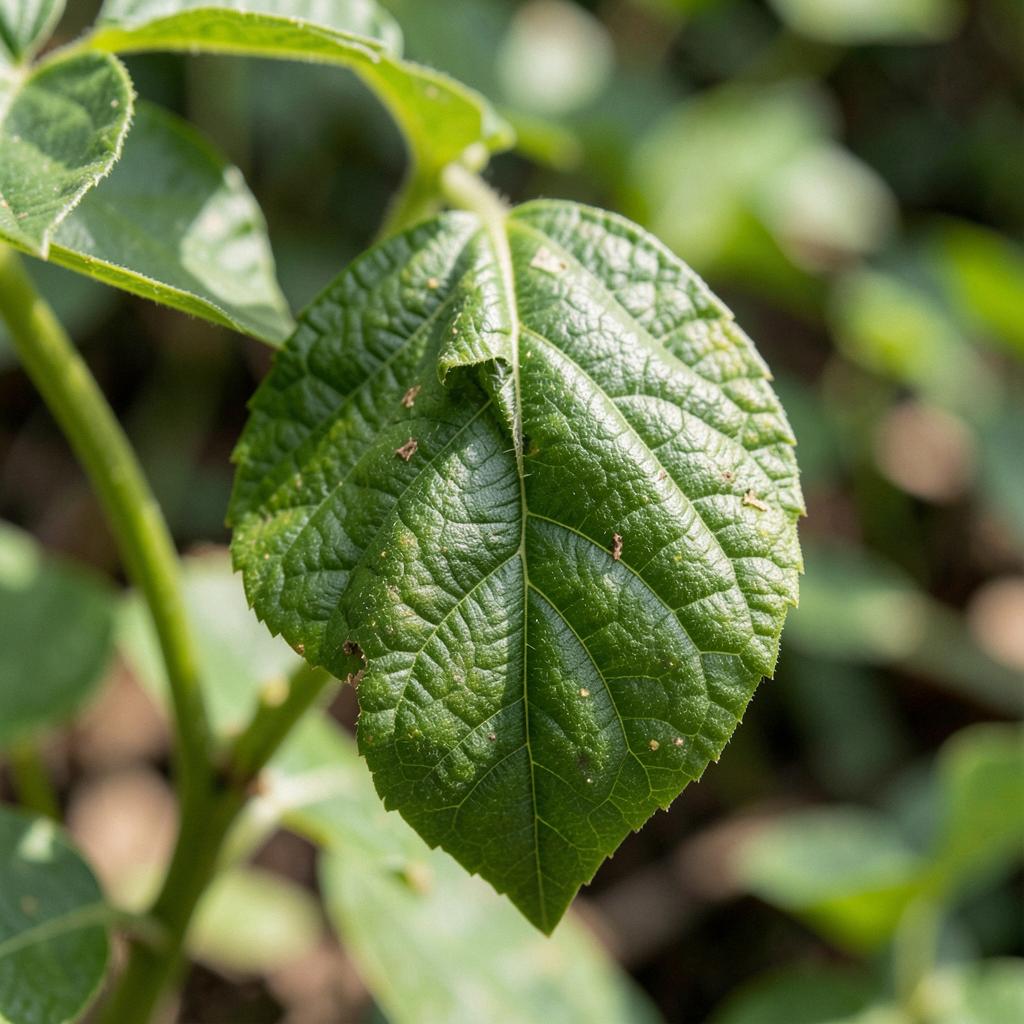
 Discussion