Why BGPT?
logo

Review papers with raw data transparency

Quickly verify claims by accessing the underlying experimental data and figures.


Press Enter ↡ to solve


    Fuel Your Discoveries


     Quick Explanation


    Core message
    Polyamines (putrescine, spermidine, spermine) are proposed to support intestinal mucosal barrier function by coupling epithelial renewal (proliferation + junctional integrity) with lamina propria immune conditioning (notably macrophage differentiation), with mechanistic links including EIF5A hypusination and autophagy, plus microbiome-derived putrescine feeding into spermidine biology.


     Long Explanation


    Paper review (visual-first): Role of polyamines in intestinal mucosal barrier function
    Review article summary, mechanism map, and critical assessment of evidence quality/limitations.
    Quick orientation
    • Scope: narrative synthesis focused on polyamine regulation of intestinal epithelial renewal, junctions (AJs/TJs), and lamina propria immune differentiation.
    • Central mechanistic anchors: EIF5A hypusination (spermidineβ†’EIF5A hypusine), autophagy links, plus regulation of translation/stability of junction proteins via signaling/translation control.
    • Microbiome emphasis: putrescine produced by gut bacteria is discussed as a substrate feeding epithelial and immune polyamine biology.
    Mechanism map (systems view)
    A compact network of the paper’s proposed causal chain (host epithelium + immune + microbiome β†’ barrier). Node/edge semantics are drawn from the review’s mechanistic descriptions and representative primary studies it cites.
    Evidence anchors for this map include: polyamine requirement for intestinal mucosal maturation and recovery from injury via ornithine decarboxylase (ODC) inhibition studies and microbiome-dependent control of epithelial proliferation and macrophage differentiation via bacterial putrescine/EIF5A hypusination .
    Evidence strength dashboard (qualitative, review-level)
    Because this is a narrative review (no primary dataset generated), the most defensible assessment is: which mechanistic claims are supported by multi-model perturbations vs which are inferential or context-dependent. Below, β€œstrong” means convergence across genetic/pharmacologic/model perturbations in relevant systems described by the review; β€œmoderate” indicates some perturbations but fewer causal links; β€œweak” indicates correlational claims or unclear directionality across contexts.
    Mapping these modules to specific anchoring studies mentioned in the review:
    • Epithelium renewal: ODC inhibition delays maturation/recovery .
    • Junctions: review describes reduced E-cadherin/TJs with DFMO and restoration by SPD in cell models .
    • EIF5A: review connects spermidine/EIF5A hypusination to proliferation and homeostasis in epithelial and immune contexts; hypusination blockade can reduce proliferation in organoid contexts in the symbiotic polyamine study .
    • Autophagy: review states SPD promotes autophagy in mammalian systems; as an intestinal barrier module, the evidence is mechanistic but may be more uneven across specific barrier readouts .
    • Microbiome-derived PUT causality: gnotobiotic comparisons of PUT-producing vs PUT-deficient strains are used by the review to argue for substrate-driven causal effects .
    • Macrophage M1/M2: review describes ODC/derived polyamines shifting polarization and linking to metabolic/mitochondrial programs; the symbiotic polyamine paper provides part of this evidence .
    Mechanistic claim quality: what is known vs inferred vs uncertain?
    Module Known (causal where supported) Inferred (logic chain) Uncertain / context-dependent
    Polyamines β†’ epithelial renewal ODC inhibition (DFMO) delays intestinal mucosal maturation and recovery in vivo Spermidine/putrescine substrates feed EIF5A hypusination β†’ translation programs needed for proliferation (review synthesis) Which polyamine species/time windows dominate in humans depends on site, inflammation stage, and dosing form; review flags context dependence in colitis/IBD metabolism
    Polyamines β†’ junctions (AJs/TJs) Occludin protein stability requires polyamines; depletion destabilizes occludin, and spermidine can restore stability Polyamine-dependent translation control (via HuR/Chk2 axis described in the review) supports TJ/AJ component abundance A major blank spot: desmosome/polyamine relationship noted as unreported in the review
    Microbiome β†’ polyamine supply Microbiome-derived putrescine is shown to alter intracellular epithelial polyamine pools and proliferation in gnotobiotic settings (PUT-producing vs deficient strains) Bacterial polyamine metabolism is proposed to tune immune polarization toward M2-like profiles in lamina propria Translation: human intestinal lumen polyamine composition and transporter activity vary; review notes limited standardization and need to identify key transporters for exogenous polyamines
    Counterpoints & blindspots (skeptical audit)
    1) Directionality is not always consistent across disease context
    The review explicitly notes both positive and negative findings in polyamine-related barrier outcomes, motivating mechanistic resolution of β€œwhy” results differ across models/stages.
    2) Review-level evidence stacking can mask causal heterogeneity
    This is a narrative synthesis (no original data generated). Causal claims depend on how primary studies were designed (genetic vs pharmacologic perturbations, cell line vs organoid vs in vivo, and which polyamine species/dose were used).
    3) Species/model transfer risk
    The review heavily uses rodent and cell culture systems; while mechanistic conservation of polyamine pathways (e.g., EIF5A hypusination) is plausible, barrier readouts and immune phenotypes can differ by species and experimental setup. The need for context-sensitive interpretation is explicitly acknowledged for IBD metabolism/stage/site effects.
    4) Immune polarization is a simplification
    β€œM1/M2” framing is commonly used, but macrophage states are more continuous and context-dependent; the review relies on subset labels and gene markers like Arg1/iNOS to support polarization. (This does not negate the mechanism, but it cautions against assuming binary states.)
    5) Transporter biology remains a key unknown
    The review notes that uptake is regulated by transcellular transporters, co-transporters, and passive diffusion, and therefore identifying the critical transporter(s) for exogenous polyamines is important.
    Overall assessment (skeptical but constructive)
    The review is strongest at integrating historically established polyamine roles (e.g., ODC/DFMO links to mucosal maturation/repair) with recent mechanistic nodes like EIF5A hypusination and microbiome-linked PUT→SPD supply .
    Its main limitation is that, as a narrative review, it cannot fully resolve causality across all proposed modules (epithelial junction remodeling vs immune state shifts vs microbiome metabolite dynamics), and it acknowledges that directionality can differ across inflammation type/stage and spatial context within the gut. .


    Feedback:   

    Updated: April 28, 2026

    BGPT Paper Review


    Study Novelty

    60%

    Novelty is moderate: the review’s contribution is mainly an updated synthesis emphasizing newer molecular nodes (EIF5A hypusination, autophagy) and a microbiome-to-epithelium/immune integration theme rather than introducing a single new primary finding.


    Scientific Quality

    70%

    Scientific quality is solid for a narrative review: it links historical DFMO/ODC causal work to mechanistic intracellular nodes (EIF5A hypusination, autophagy) and microbiome-derived PUT supply, and it acknowledges contextual caveats for IBD polyamine metabolism. Main limitations are inherent to narrative reviews: no pre-registered protocol and no new dataset, so causal certainty across modules is limited by heterogeneity and selection of primary studies.


    Study Generality

    70%

    General enough to inform multiple downstream research directions (epithelial renewal, junction stability, immune modulation; microbiome-metabolite coupling) but somewhat specialized to polyamine biology in gut barrier contexts.


    Study Usefulness

    70%

    Useful as a mechanistic map and literature guide: it consolidates key pathways (EIF5A, autophagy, junction protein regulation, macrophage polarization, microbiome PUT supply) and highlights knowledge gaps (e.g., transporter criticality, desmosomes).


    Study Reproducibility

    40%

    Low-to-moderate reproducibility is expected for narrative reviews because it does not provide new experimental methods or raw datasets; reproducibility would rely on reader access to the primary studies rather than on replicable procedures in the review itself.


    Explanatory Depth

    80%

    Depth is high for a review: it repeatedly connects polyamine chemistry through EIF5A hypusination, autophagy/turnover, and specific junction/immune-linked molecular pathways, and it integrates microbiome-produced putrescine into a mechanistic model.


    🎁 Authors: Collect 131 Free Science Tokens (β‰ˆ $13.1 USD)

    Claim My Author Tokens

    Use for 32 days of free BGPT access (4 tokens = 1 day) or trade/sell (β‰ˆ $13.1 USD)

     Top Data Sources ExportMCP


     Analysis Wizard


    Construct a mechanistic knowledge graph linking polyamine species β†’ EIF5A/autophagy/junction proteins/macrophage states from the cited studies, then rank evidence nodes by perturbation type and model system.


     Hypothesis Graveyard


    A simple β€œmore polyamines always equals tighter barrier” rule likely fails because the review notes mixed findings and emphasizes dependence on inflammation type/stage and site, indicating non-monotonic behavior.


    Assuming polyamine effects on barrier are solely structural (junction protein abundance) is unlikely; the review emphasizes immune differentiation and signaling/metabolic pathways as essential components, so junction changes may be downstream of broader host-state effects.

     Science Art


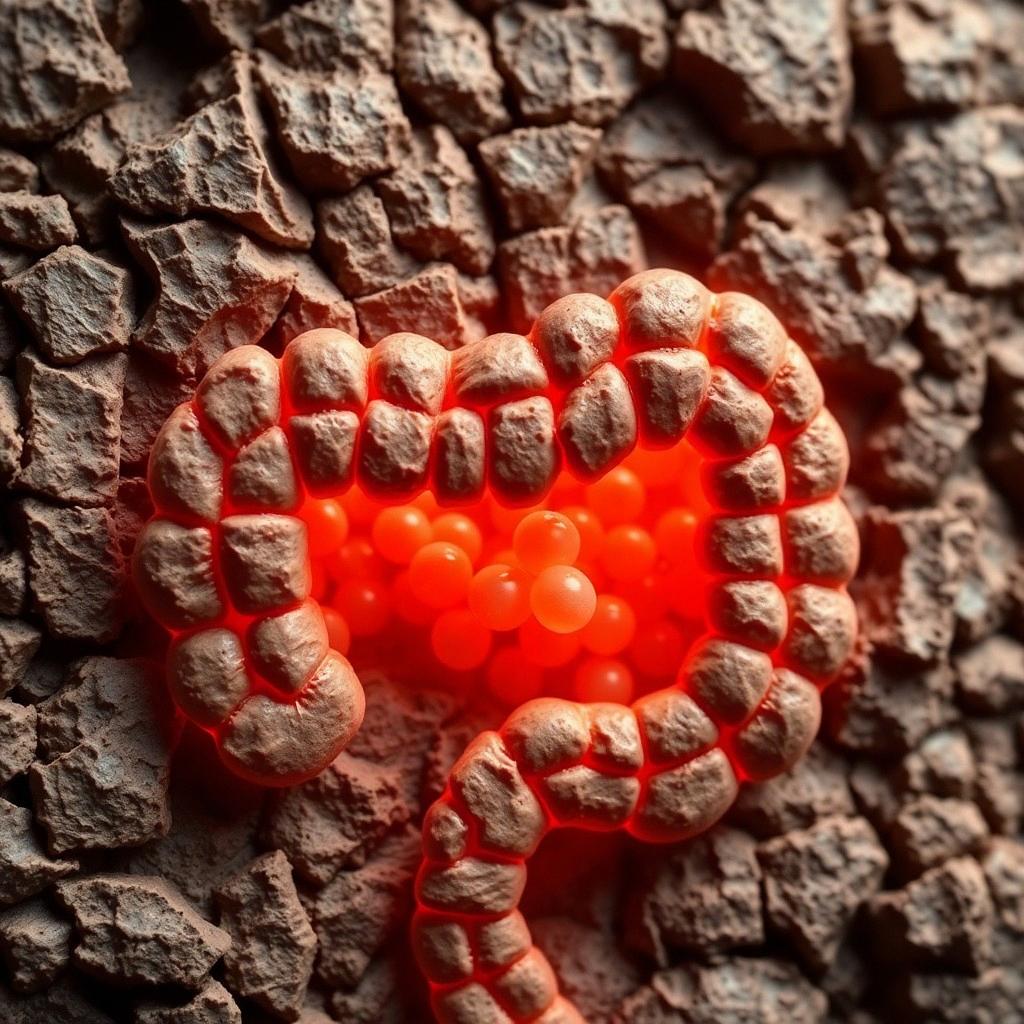
    Paper Review: Role of polyamines in intestinal mucosal barrier function Science Art

     Science Movie


    Make a narrated HD Science movie for this answer ($32 per minute)


     Discussion


    Get Ahead With Science Insights

    Custom summaries of the latest cutting edge Science research. Every Friday. No Ads.


    My BGPT