Check a paper's claims against linked experiments, exact results, stated scope, and limitations.Know what falsifiable science actually supports before you trust the answer.
Press Enter ↵ to search evidence
Explore by Goal
"The scientific man does not aim at an immediate result. He does not expect that his advanced ideas will be readily taken up. His work is like that of the planter - for the future. His duty is to lay the foundation for those who are to come, and point the way."
- Nikola Tesla
Quick Explanation
Copied
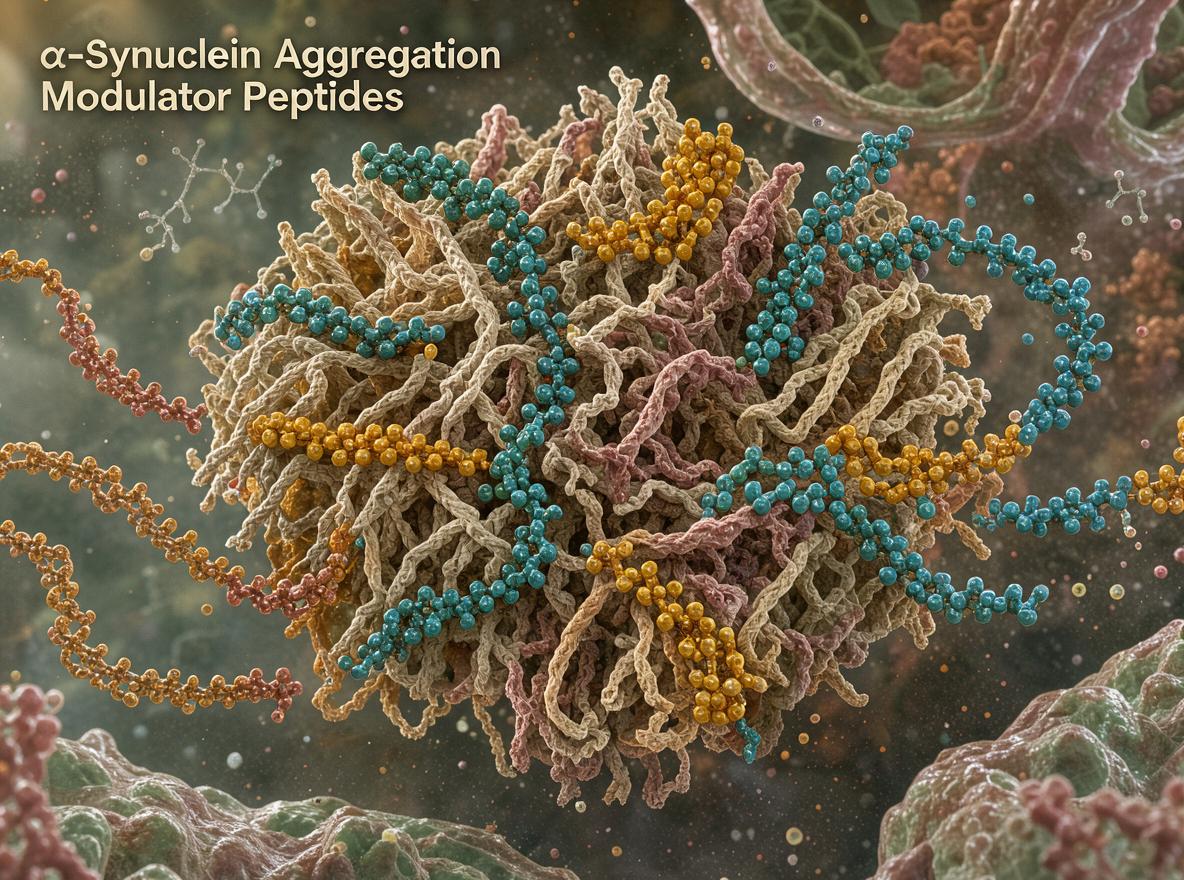
This 2007 BMC Bioinformatics study used GA-guided docking ('in silico panning') against the hydrophobic α-synuclein NAC core (residues 68-78), and SPR confirmed micromolar binding (QSTQ KD ≈ 19 μM) for the top tetrapeptides—but unexpectedly, all top peptides accelerated fibrillation (>1.5× ThT and light-scattering signals at 5-fold molar excess), exposing a key limitation of docking-based screening against unfolded targets .
Long Explanation
What the paper did
Abe, Kobayashi, Sode and Ikebukuro targeted the water-insoluble NAC amyloid-core peptide α-synuclein 68-78 (GAVVTGVTAVA)—undockable by conventional wet screening—by running six generations of a genetic algorithm over a 10,000-sequence tetrapeptide library (10 residues: G,A,V,S,T,P,Q,N,F,Y), evaluating only 150 peptides (1.5%) with MOE-Dock/MMFF94s . Top hits QSTQ, GSQQ, SQTQ, AQTQ bound α-synuclein by SPR (QSTQ KD = 19 μM; AQTQ similar; GSQQ/SQTQ weaker; control PTYF >10× weaker).
The pivotal—and honest—result
At 5-fold molar excess, all four top peptides increased ThT fluorescence and 330-nm light scattering (>1.5× for QSTQ/AQTQ): they promoted fibrillation. The authors interpret weak binding as inducing conformational exposure of the hydrophobic core, consistent with prior reports that partial NAC homologs can accelerate aggregation . Their claim that acceleration might lower cytotoxicity via protofibril depletion is a hypothesis—no cytotoxicity or protofibril quantification was performed.
Critical assessment
Strengths: a feasible computational route to ligands for an insoluble target; transparent methods (Fmoc synthesis, SPR, Scatchard analysis); outcome reported despite contradicting the intended inhibitor goal. Weaknesses: docking against a modeled linear motif of a natively unfolded protein is a strong assumption; scoring terms were revised mid-run (rounds 4-6), an unblinded post-hoc change; GTTP's anomalous +115 kcal/mol total energy suggests calculation artifacts; only 5 peptides validated experimentally; no replicates/SEM reported; no cytotoxicity, no in vivo data, and no repository data .
Modern work validates the paper's implicit point—that NAC-region peptide binding readily modulates (often accelerates) aggregation—while superseding its approach: backbone thioamide/N-methyl engineering of the 66VGGAVVT72 NAC motif can convert an aggregation promoter into a sub-stoichiometric inhibitor active in SH-SY5Y cells , and therapeutic validation for α-synuclein aggregation modulation now exists in vivo (e.g., CLR01 reducing soluble striatal α-synuclein and improving motor performance in Thy1-aSyn mice) .
What would change this verdict
Replication with dose-response replicates, cytotoxicity assays, and in vivo testing of QSTQ/AQTQ; conversely, confirmation that these peptides accelerate aggregation without reducing protofibril burden would refute the therapeutic framing.
Feedback:
Updated: November 21, 2026
BGPT Paper Review
Study Novelty
70%
Early (2007) demonstration of GA+docking peptide screening against an unfolded, insoluble amyloid-core target; in silico panning itself was already published by the same group (Yagi et al. 2007), so the framework was familiar but the application to α-synuclein was new.
Scientific Quality
60%
Honest reporting of a counterintuitive outcome is commendable, but key weaknesses exist: mid-run change of the scoring function, anomalous GTTP total energy (+115 kcal/mol), only five SPR validations, no replicates/error bars, no cytotoxicity data, and no in vivo work.
Study Generality
70%
The in silico panning pipeline is target-agnostic and could be applied to other aggregation-prone or insoluble disease proteins; the biological conclusions are specific to α-synuclein NAC biology.
Study Usefulness
60%
Practically useful as proof-of-concept for computationally screening ligands to insoluble hydrophobic targets, and the acceleration finding is a cautionary datapoint for docking-to-function extrapolation; direct therapeutic value is limited.
Study Reproducibility
60%
Methods are described in usable detail (force field, GA parameters, SPR protocol, aggregation conditions), but no raw data repository, no replicate/error reporting, and docking run specifics (30 MOE-Dock runs) limit exact reproduction.
{'html': '', 'description': 'Illustrative simulation of the reported >1.5x ThT enhancement, clearly labeled as simulated—anchored only to the reported plateau ratio and ~40 h timescale, with arbitrary kinetic shape assumptions.'}
Generated scientific data; not direct experimental measurements.
Analysis Wizard
Replicating the GA-driven peptide docking screen against the α-synuclein 68-78 NAC motif and correlating predicted docking energies with experimentally reported SPR affinities to test scoring validity.
Get emailed when your analysis is done!
We'll email you the results when your analysis is finished.
Hypothesis Graveyard
In silico panning hits will act as aggregation inhibitors because they bind the amyloid core—falsified by the paper's own ThT/light-scattering data showing promotion.
Docking energy rank order predicts SPR binding affinity rank—partially falsified: top-ranked peptides by energy (e.g., GQQV at -408) were not the best binders (QSTQ at -390 was).

 Explore by Goal
 Quick Explanation
 Long Explanation
 Top Data Sources
 Ask a Follow-Up
 Key Insight
 Keep Exploring
 DataGen
 Analysis
 Hypothesis Graveyard
 Discussion
