Why BGPT?
logo

Review papers with raw data transparency

Quickly verify claims by accessing the underlying experimental data and figures.


Press Enter ↡ to solve


    Fuel Your Discoveries


     Quick Explanation


    Core finding (with skepticism)
    This integrative review (8 studies, 2014–2019) reports multiple associations between exclusive breastfeeding and outcomes such as lipid profile, cognitive/behavioral measures, weight trajectories, and shorter hospitalization in some subgroups, but the evidence base is heterogeneous and heavily reliant on non-randomized observational designsβ€”so causal claims are limited.
    Review methods and included-scope details:


     Long Explanation


    Paper Review (science-focused, evidence-based): β€œBenefits of exclusive breastfeeding: An integrative review”

    DOI: 10.18502/npt.v7i4.4034 β€’ Received 2020-02-14; Accepted 2020-03-29

    What the paper actually did (and what it didn’t)

    • Design: integrative review intended to synthesize experimental and non-experimental evidence (conceptual + empirical) rather than perform a narrow intervention meta-analysis.
    • Scope: studies about exclusive breastfeeding benefits in infants; timeframe limited to 2014–2019 and languages English/Portuguese/Spanish.
    • Quality appraisal: reported use of a Newcastle–Ottawa-style scale for case-control methodological quality domains (selection, comparability, exposure/outcome).
    • Core limitation (structural): the review narrows to only 8 included studies, with heterogeneous populations and endpoints, which constrains cross-study comparability.
    PRISMA-like yield (records to included studies)

    Reported benefits (as a taxonomy, not effect sizes)

    The review reports benefits across physical, cognitive, and other domains, based on the included studies it analyzed.
    Benefit categories present in the review’s synthesis
    Note: This chart counts the number of sub-items listed in the review’s Table 2, not the magnitude of benefit or statistical effect sizes.

    Key included-study signals (and contradictions)

    The review explicitly mentions mixed results: it reports that some studies did not find associations with BMI/adiposity, while others did; and it reports that behavioral findings were inconsistent across studies.
    Contradiction map (as stated by the review)
    This diagram is strictly based on the review’s discussion statements about disagreement between study results.

    Mechanistic plausibility (known vs asserted)

    Known biological plausibility (not proven in this review)
    Human milk composition includes nutrients and bioactive factors relevant to growth and immune development (the paper lists major nutrient classes and micronutrients).
    The broader literature (outside this integrative review) supports that breastfeeding is associated with multiple health outcomes across infancy and beyond, with extensive epidemiologic evidence and mechanistic discussion in major reviews.
    What remains uncertain inside this specific paper
    The integrative review’s claims are limited by (i) only eight included studies, (ii) heterogeneous endpoints/populations, and (iii) reliance on observational designsβ€”so mechanistic plausibility does not equal causal demonstration within the included evidence.

    Critical bias audit (skeptical, evidence-weighted)

    • Language/database restriction bias: review searched only three databases and limited eligibility to 2014–2019 and three languages; authors acknowledge possibility of disregarded studies.
    • Confounding (observational endpoints): many included outcomes (BMI/adiposity long-term, cognition/behavior, lipid profiles) are susceptible to residual confounding (e.g., parental behavior, socioeconomics, baseline child health). The review notes inconsistent findings and lack of consensus, which is consistent with confounding/measurement differences.
    • Measurement heterogeneity: exclusive breastfeeding definitions and outcome measurement timing vary across included studies; the paper states heterogeneity of age and study designs/endpoints prevents comparability.
    • Review-level uncertainty: integrative reviews are broader in method inclusion than some strictly-defined systematic review frameworks; without explicit effect-size synthesis, conclusions remain qualitative/associative.

    Practical utility (for how readers should use this paper)

    The review positions exclusive breastfeeding benefits as something that should be explained to parents and integrated into nursing practice, but readers should treat the current paper as a structured evidence map rather than a definitive causal proof.


    Feedback:   

    Updated: April 18, 2026

    BGPT Paper Review


    Study Novelty

    60%

    A topic-focused integrative review on exclusive breastfeeding benefits; novelty is moderate because the paper’s main contribution is synthesis of a narrow 2014–2019 subset rather than new mechanistic evidence or effect-size pooling.


    Scientific Quality

    60%

    Strengths: PRISMA-P guided integrative review framing; independent reviewers; use of a Newcastle–Ottawa-style quality assessment; explicit inclusion/exclusion rationale; transparent acknowledgement of limitations (age/design/endpoint heterogeneity; limited database scope). Red-flags/limitations: only eight included studies; no visible quantitative meta-synthesis of effect sizes; outcome definitions and follow-up timing likely heterogeneous; reliance on observational data makes causal inference fragile. No evidence of open datasets for reanalysis is described in the provided paper text.


    Study Generality

    70%

    The topic is broadly general for infant nutrition, but the evidence base is geographically and temporally constrained (limited to 2014–2019 and specific databases/languages), and the included studies’ heterogeneity reduces generality of specific outcome claims.


    Study Usefulness

    70%

    Useful as an evidence map for clinicians/readers to understand which outcome domains have reported associations with exclusive breastfeeding; less useful for definitive causal ranking across outcomes because synthesis remains qualitative and heterogeneous.


    Study Reproducibility

    60%

    Methods are described at a high level (databases searched, search window, quality appraisal tool). However, reproducibility is constrained by missing operational details in the provided text (e.g., full search strings/MeSH mapping, explicit included-study list with complete bibliographic metadata for all eight, and no effect-size extraction table).


    Explanatory Depth

    50%

    The review emphasizes reported associations and a few mechanistic plausibility statements (composition links), but it does not deeply adjudicate mechanisms or provide causal pathways with quantitative integration of milk components to outcomes.


    🎁 Authors: Collect 105 Free Science Tokens (β‰ˆ $10.5 USD)

    Claim My Author Tokens

    Use for 26 days of free BGPT access (4 tokens = 1 day) or trade/sell (β‰ˆ $10.5 USD)

     Top Data Sources ExportMCP


     Analysis Wizard


    Build a reproducible extraction table from the eight included studies (exclusive-breastfeeding window, outcome timing, effect direction/CI), then visualize outcome-domain consistency and contradiction frequency as network edges.


     Hypothesis Graveyard


    β€œBreast milk is universally protective against all long-term outcomes in a dose-independent way.” This is weakened by the review’s explicit contradictions for BMI/adiposity and behavior across included studies.


    β€œExclusive breastfeeding effects are purely due to parental socioeconomic factors and must be zero after adjustment.” This is also not supported by the review because it reports multiple domains where associations are observed, and it does not show effect attenuation after comprehensive adjustment for all confounders (which would be required to support the zero-effect claim).

     Science Art


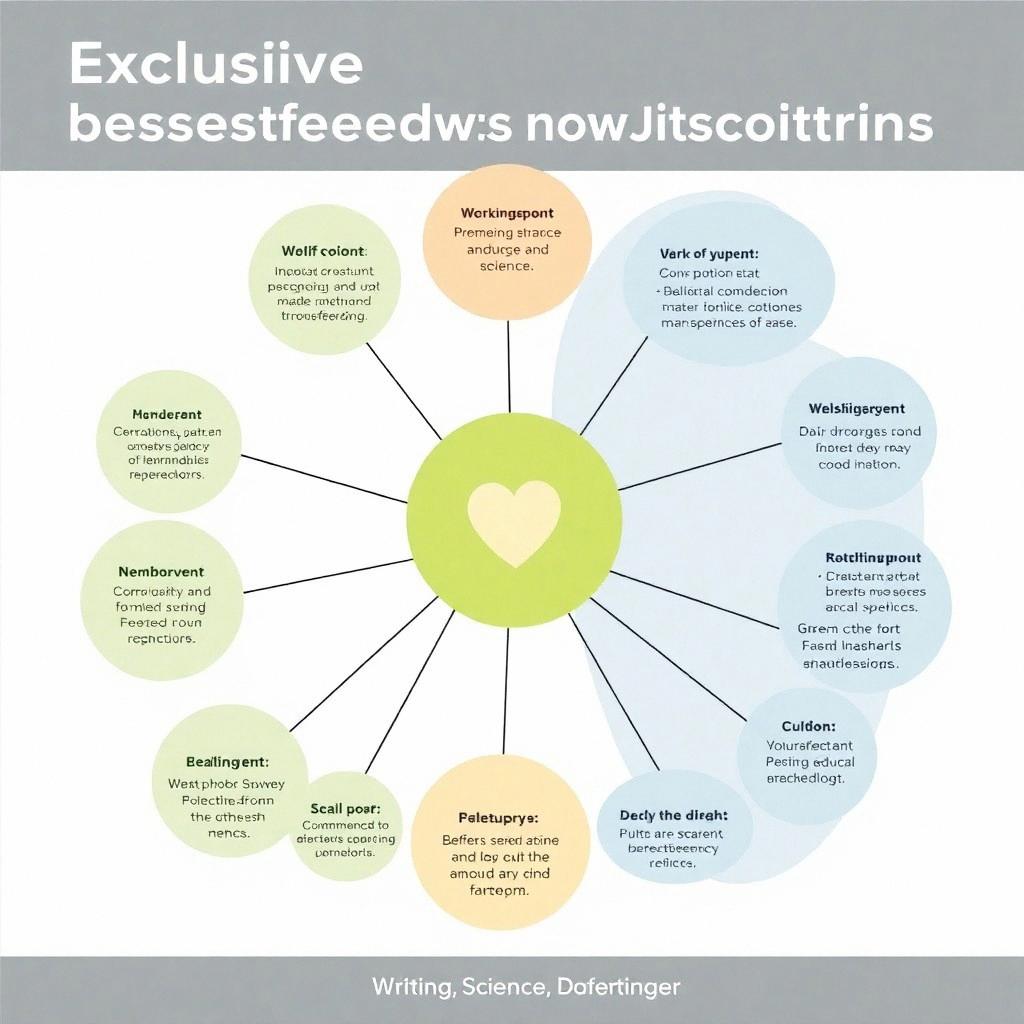
    Paper Review: Benefits of exclusive breastfeeding: An integrative review Science Art

     Science Movie


    Make a narrated HD Science movie for this answer ($32 per minute)


     Discussion


    Get Ahead With Science Insights

    Custom summaries of the latest cutting edge Science research. Every Friday. No Ads.


    My BGPT