Why BGPT?
logo

Ecology β€” Field Data at Scale

Discover observational and experimental ecology data, trends, and metadata from full papers.

Press Enter ↡ to search


    Explore by Goal


     Quick Answer


    Core idea
    Coral bleaching is best understood as a holobiont breakdown: heat/light stress perturbs symbiont photosynthesis and redox balance, generating oxidative stress and calcium/redox signaling changes that contribute to zooxanthellae dysfunction and/or expulsion; at the same time, host–symbiont cellular death/remodeling pathways (apoptosis/autophagy) and symbiosis-state epigenetic regulation can shift the system toward symbiont loss.


     Long Answer


    How corals bleach (cellular mechanisms)

    Bleaching is not one single β€œswitch”; across studies it emerges as an integrated chain involving: (i) light/temperature-driven stress, (ii) ROS/redox disruption, (iii) cell-signaling changes (e.g., calcium/redox) and (iv) cellular programs (apoptosis/autophagy) that culminate in symbiont dysfunction and release/expulsion; epigenetic regulation can help reorganize the host transcriptional state during the transition from symbiosis to breakdown.

    Epigenetic β€œstate shift” during symbiosis breakdown (Aiptasia)

    In Aiptasia pallida, symbiosis vs aposymbiosis produced thousands of differentially methylated genes and hundreds of differentially expressed genes, with overlap; the study also identifies pathways linked to autophagy/apoptosis and nutrient exchange.

    Microenvironment changes in the coral gastrovascular cavity (GVC)

    Microsensor data show diel-style shifts in O2/pH for healthy corals and more consistently hypoxic/acidic conditions in bleached corals; the study also reports detectable H2, NO, and N2O linked to anaerobic metabolism under stress.

    Predicted functional shifts in the GVC (microbial metabolism)

    Using predictive functional inference from 16S data, the study reports lower predicted catalase abundance in bleached polyps and shifts in gene-fraction proxies related to denitrification and sulfur cycling.
    Critical caveat: these are predicted functional profiles from 16S inference (not measured gene abundance), so they support hypotheses about pathway shifts rather than proving mechanism.

    Where antioxidant capacity appears during bleaching (host vs symbiont)

    Quantitative proteomics reported that common antioxidant proteins were absent in the coral host but present in the algal endosymbionts across the stress conditions tested, implying that protective redox buffering may be more symbiont-localized during these bleaching transitions.
    Critical caveat: the plot uses an arbitrary display scale only to visualize β€œabsent vs present”; it is not a quantitative abundance. The underlying directionality is directly from the proteomics report.

    Mechanism map (evidence-weighted links)

    This graph compresses the evidence from the studies you provided into a causal-looking network; it is a model of interpretation, not a proven single pathway.
    Why skepticism matters: multiple studies suggest different mechanistic entry points (ROS/redox, carbon/CO2 limitation models, apoptosis/autophagy, epigenetic state shifts). The evidence can be partly correlative and species-/experiment-dependent, so β€œthe” mechanism may vary by context.

    What’s known vs uncertain (from your provided sources)

    • Known/strongly supported: stress-associated bleaching involves redox-related proteomic shifts and compartment-specific antioxidant detection (host vs symbiont), consistent with ROS/redox disruption being central in at least some bleaching contexts.
    • Known/moderate: in Aiptasia, manipulating apoptosis or autophagy alone was not sufficient, but combined inhibition reduced bleachingβ€”suggesting interaction between pathways in symbiont release.
    • Known/moderate: bleaching correlates with shifts in the internal GVC chemical microenvironment: bleached corals show hypoxia/acidification across light conditions and detectable anaerobic metabolites (H2/NO/N2O), indicating altered internal cycling that could feedback into holobiont stress physiology.
    • Uncertain (important): some pathway claims (e.g., microbial functional shifts) are based on predicted metagenomic functions from 16S inference rather than direct metagenomics/metatranscriptomics, so mechanistic certainty is limited by the prediction step.
    What would disprove/shift the picture? If ROS dynamics do not change as bleaching progresses (or antioxidant/redox signatures do not align), or if apoptosis/autophagy inhibition does not change bleaching outcomes in additional models, or if GVC hypoxia/anaerobic metabolite signatures do not track bleaching state, then the proposed integrated mechanism would require revision.


    Feedback:   

    Updated: July 07, 2026

     Top Data Sources ExportMCP


     Hypothesis Graveyard


    A simplistic single-step model β€œROS alone directly expels symbionts” is weakened by evidence that antioxidant proteins are compartment-specific and that combined apoptosis+autophagy inhibition changes bleaching outcomes, implying pathway interactions and not a single causal node.


    β€œFunctional shifts in microbial sulfur/denitrification pathways are proven causal drivers of bleaching” is currently too strong because functional profiles in the provided work are predictive (16S inference), not direct functional gene abundance/acting activity measurements.

     Science Art


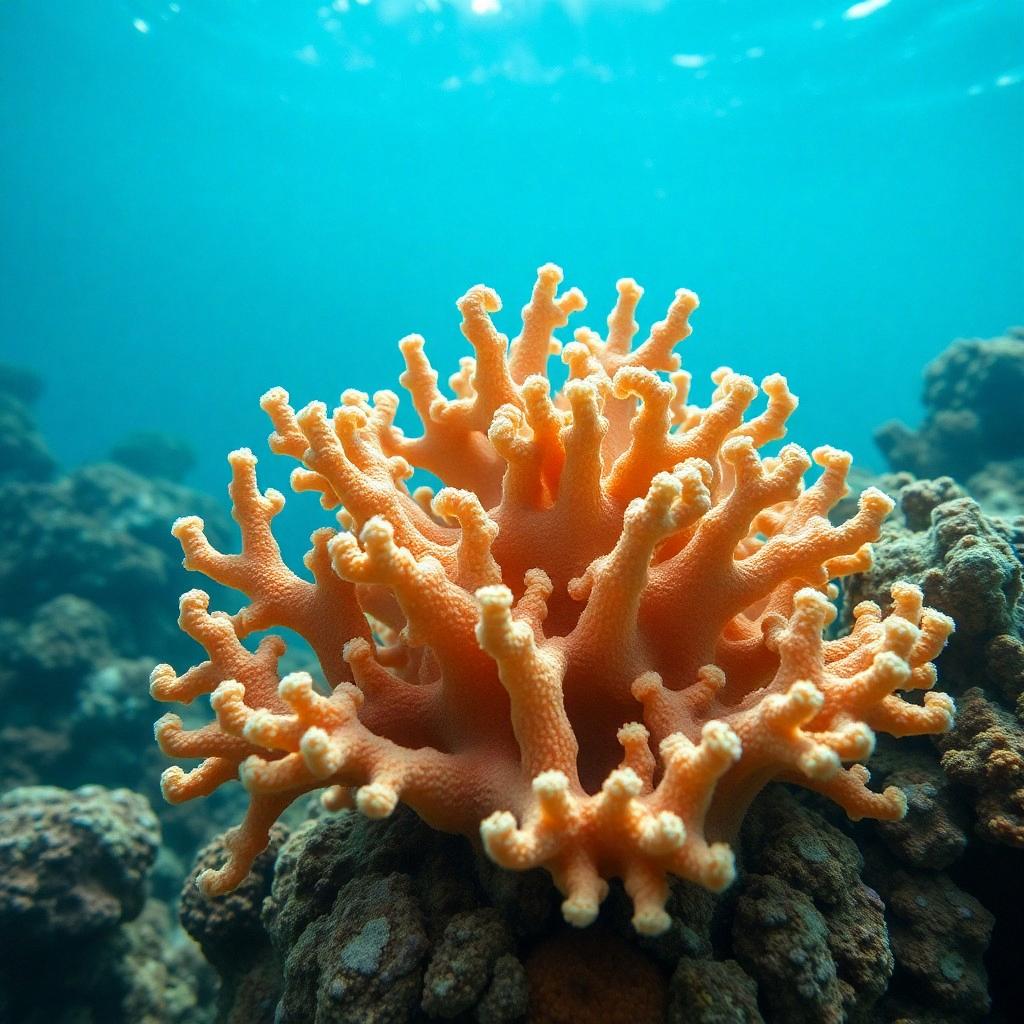
    How do corals bleach? What are the cellular mechNisms Science Art

     Science Movie


    Make a narrated HD Science movie for this answer ($32 per minute)


     Discussion


    Follow the Evidence

    New scientific claims, supporting evidence, and important limitations. Every Friday. No ads.


    My BGPT