See which claims are backed by experiments, exact reported results, and linked sources — not summaries.Know what the science actually supports before you trust the answer.
Press Enter ↵ to find evidence
Explore by Goal
"The important thing is not to stop questioning. Curiosity has its own reason for existing."
- Albert Einstein
Quick Explanation
Copied
Climate change is a long-term change in climate conditions, driven by both natural processes and human-caused changes in atmospheric greenhouse gases. The supplied evidence supports greenhouse-gas-driven warming, rising sea levels, altered water-system risks, and feedbacks from thawing permafrost, while emphasizing substantial regional and model uncertainty.
Long Explanation
How the climate system changes
Greenhouse gases absorb outgoing infrared radiation, changing Earth’s energy balance. The supplied review reports industrial-era increases in CO2 from 280 to approximately 400 ppm, methane from 700 to 1,721 ppb, and nitrous oxide from 275 to 312 ppb, alongside historical warming and sea-level rise. These values come from a 1999 review and are not current observations.
Observed and modelled consequences
In the Nerang River catchment, an eight-model CMIP5 ensemble projected slightly lower Hinze Dam inflows in 2075–2084 than in 2000–2009; the largest reported monthly decrease was about 124.42 ML/day under RCP4.5 and 91.58 ML/day under RCP8.5.
A modelled 0.8 m sea-level-rise boundary increased downstream median river levels by roughly 0.75–0.80 m in many months, with greater sensitivity nearer the river mouth.
In Busan, modelled 100-year compound-flood damage was KRW 1,488.4 billion, compared with KRW 752.8 billion for storm surge and KRW 729.8 billion for urban flooding considered separately. This result is scenario-dependent, not a global estimate.
Feedbacks and limits of inference
Thawing permafrost can release greenhouse gases over decades to centuries, potentially amplifying warming; the cited synthesis stresses uncertainty about deep carbon and abrupt-thaw processes. Coastal wetlands store carbon, but their global sink strength is vulnerable to warming, sea-level rise, and habitat loss. Estimates are uncertain because regional measurements, area estimates, and burial methods vary substantially.
Confidence: high that greenhouse gases affect climate; moderate for the specific regional projections supplied here. The main uncertainties concern future emissions, model structure, regional precipitation, compound-event dynamics, ecosystem feedback magnitude, and whether historical calibration relationships remain valid in future conditions.
We'll email you the results when your analysis is finished.
Hypothesis Graveyard
A purely temperature-only explanation is insufficient for the supplied flood results because the Nerang modelling attributes the strongest downstream water-level response to the imposed sea-level-rise boundary condition.
Treating compound flooding as the sum of independent hazards is inadequate for Busan because the reported compound loss exceeds either single-hazard estimate and the study identifies interacting coastal and urban processes.

 Explore by Goal
 Quick Explanation
 Long Explanation
 Top Data Sources
 Ask a Follow-Up
 Key Insight
 Keep Exploring
 Hypothesis Graveyard
 Potential Experiments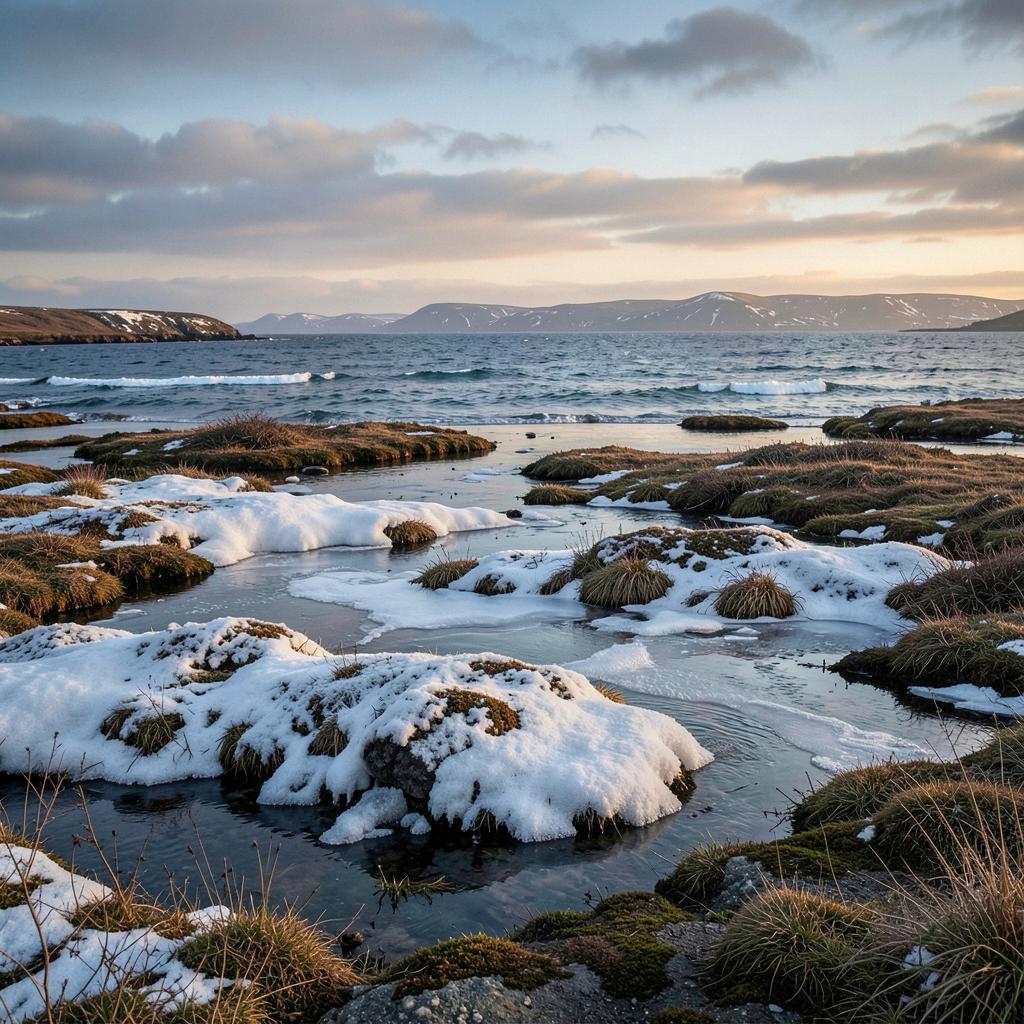
 Discussion