Why BGPT?
logo

Science's Data Search Engine

Results grounded in experimental data—not abstracts.


Press Enter ↵ to solve


    Fuel Your Discoveries


    BGPT Odds of True


    25%

    80% Confidence


    The hypothesis claims a systematic causal/associative link between an unspecified “PLACER rank” and an unspecified catalytic-efficiency observable. Without definitions, mapping, and raw data, only a low-to-moderate likelihood can be justified as a generic expectation that rankings sometimes correlate with downstream performance, but confounding/selection could negate the effect.


     Hypothesis Novelty


    35%

    Testing whether an in-silico score/rank predicts experimental enzyme performance is common in protein engineering. Novelty depends entirely on what “PLACER” specifically ranks and how the evaluation is designed.

     Quick Explanation


    Can we test the hypothesis?
    Not yet: “PLACER ranking” is undefined (which metric? which biological/enzymatic system? what data?). Without that, “catalytic efficiency” can’t be mapped to a measurable kinetic observable (e.g., activity, turnover, apparent specificity), so causal impact can’t be evaluated.
    If you specify (1) what PLACER ranks, (2) how catalytic efficiency is measured, and (3) provide raw measurements (or the paper/link), I can compute effect sizes, check confounders, and run a mechanistic plausibility audit.


     Long Explanation


    Hypothesis Battle-Test (Evidence-First)
    PLACER ranking impact on catalytic efficiency” (as of Apr 26, 2026)
    0) What’s missing (blocks a real test)
    • What exactly is “PLACER ranking”? (a score? a rank order of enzyme variants? of residues? of predicted binding sites? of candidates produced by an algorithm?)
    • What exactly is “catalytic efficiency”? (kcat? kcat/KM? Vmax? apparent activity? fluorescence proxy? initial rates? per-cell vs purified protein?)
    • What dataset/experiment are you referring to? (paper link, figure/table, supplementary data, or your raw measurements)
    • What are the controls? (WT baseline, expression level normalization, substrate concentration normalization, batch effects, assay temperature/pH, purification yield)
    Without these, any numeric “impact” claim would be under-identified.
    1) Formalize the hypothesis as a measurable statement
    A testable version is something like:
    H0: Catalytic efficiency is independent of PLACER rank once key assay covariates are controlled.
    H1: Catalytic efficiency changes systematically with PLACER rank (monotonic trend and/or rank-group differences), conditional on covariates.
    Key point: you must choose a mapping from “efficiency” to a scalar outcome variable and define the PLACER rank variable unambiguously.
    2) Visuals (what we will plot once you provide data)
    Below are the plots I will generate if you paste raw data (rank, efficiency, and covariates). For now, the figures are schematic of the required analyses (no fabricated data).
    2A) Scatter + smooth trend: efficiency vs PLACER rank
    2B) Rank-group comparison (e.g., quartiles/deciles)
    2C) Multivariable model diagnostic: efficiency ~ rank + covariates
    3) Critical evaluation checklist (common failure modes)
    • Confounding by expression/solubility: variants with better rank may simply express better, inflating “efficiency” proxies.
    • Assay-condition coupling: if “ranked” constructs were tested under different substrate concentrations / timepoints / pH, apparent catalytic changes may reflect assay regimes.
    • Normalization ambiguity: catalytic efficiency must be normalized to the correct physical unit (protein amount, molar concentration, or per-cell expression), depending on the assay.
    • Non-monotonic relationships: rank→performance might be non-linear (top-N enrichment then plateau). Rank correlation alone can miss this.
    • Selection bias: if only “high ranks” were followed up experimentally, you can’t estimate the full rank-performance curve without systematic sampling.
    • Measurement noise: enzyme kinetics can be noisy; without replicates and proper uncertainty propagation, rank-performance signals can be overinterpreted.
    • Definition drift: “PLACER” could refer to different procedures across papers/projects; the ranking’s meaning must be verified.
    4) What I need from you to actually test it (paste-ready)
    A) Minimal dataset (table)
    Columns you should provide:
    • variant_id
    • placer_rank (and specify whether 1 is best)
    • catalytic_efficiency (and specify the assay + units)
    • replicate_id (or at least replicate count)
    • optional covariates: expression level, purification yield, batch/run, substrate concentration, temperature, pH
    B) One sentence definitions
    • What is PLACER ranking computed from?
    • What formula defines your catalytic efficiency value?
    5) Current “battle” verdict (cannot confirm without definitions/data)
    Status: The hypothesis is under-specified because “PLACER ranking” and “catalytic efficiency” are not tied to measurable variables.
    Most likely outcome after proper specification: rank may correlate with efficiency if rank is genuinely predictive and experiments sample across the rank spectrum; but if rank is confounded by expression/assay differences or selection bias, the apparent impact can disappear after covariate adjustment.
    Confidence remains low until you provide the raw dataset or the exact paper/source defining these quantities.
    Run a fully independent Science AI agent (recommended)


    Feedback:   

    Updated: April 26, 2026

     Analysis Wizard


    It parses your pasted table, standardizes rank direction, computes rank-stratified summary plots, fits rank vs efficiency (with optional covariates), and outputs effect sizes plus uncertainty from replicates.


     Hypothesis Graveyard


    A simple Pearson/Spearman correlation between rank and a single proxy “activity” without expression/batch normalization—this can produce spurious “support” from confounding and selection bias.


    A rank→efficiency claim derived only from top-ranked constructs tested experimentally—this can’t estimate the true rank-performance curve and may mislead about general predictive power.

     Science Art


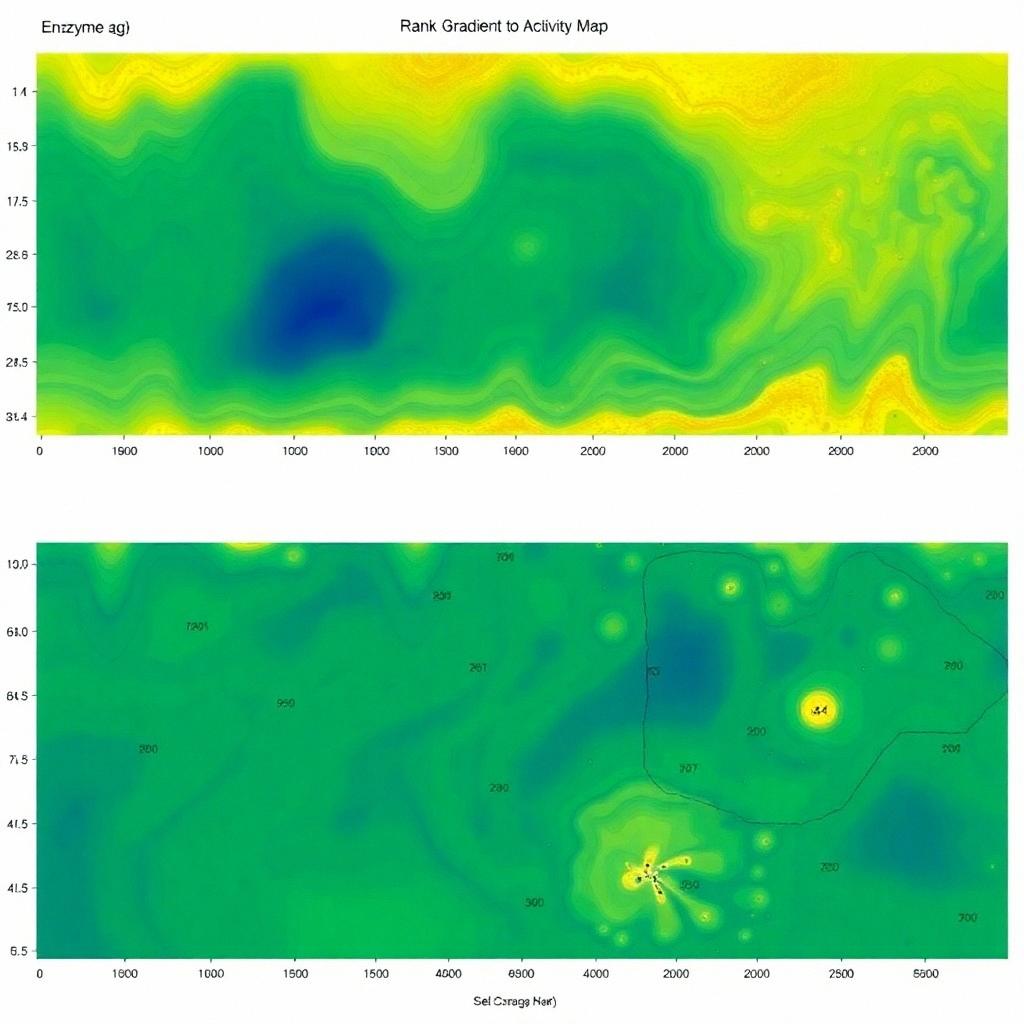
    Test Hypothesis: PLACER ranking impact on catalytic efficiency Science Art

     Science Movie


    Make a narrated HD Science movie for this answer ($32 per minute)


     Discussion


    Get Ahead With Science Insights

    Custom summaries of the latest cutting edge Science research. Every Friday. No Ads.


    My BGPT