Check each claim against its experiments, reported results, scope, and stated limitations.Know what the science actually supports before you trust the answer.
Press Enter ↵ to start review
Explore by Goal
"Study hard what interests you the most in the most undisciplined, irreverent and original manner possible."
- Richard Feynman
Quick Explanation
Copied
The preprint provides genome-scale and mechanistic evidence that bacterial promoters and terminators frequently overlap: 200 termination–start site pairs were found within 35 bp (modal spacing ~10 bp) in A. baumannii, a pattern conserved in E. coli and B. subtilis, and mutational assays show coupled promoter activity modulates terminator readthrough in vitro and in vivo .
Long Explanation
Core Evidence
Genome-scale observation: Using cappable-seq (12,529 TSSs) and term-seq (1,810 TTSs) in A. baumannii, the authors found 200 TTSs within 35 bp of a downstream TSS, with a modal spacing of just 10 bp . The pattern was reproduced bioinformatically (TransTermHP + PWM) and conserved across E. coli (540 pairs), B. subtilis (109 pairs), and six additional species.
Dual-purpose DNA: Coupled terminators carry a −10 hexamer downstream of the terminator T-tract, with the stem-loop encoding DNA doubling as the −35 element . Semi-synthetic constructs confirmed mutations in shared elements reduce both promoter and terminator activity.
Regulatory Interference
Causal validation: Inactivating the coupled nlpD promoter increased surE terminator readthrough by 58%; improving it reduced readthrough by 25% . In vivo, a dual gfp-lacZ reporter showed 1.9-fold vs 3.3-fold arabinose-induced lacZ increase with intact vs inactivated coupled promoter. Inserting ≥35 bp between promoter and terminator abolished the effect; linearized templates retained it, excluding supercoiling .
Strengths and Blind Spots
The combined bioinformatic + in vitro + in vivo approach is well controlled (RNAI internal normalization, promoter-inactivation templates, linearized DNA). However, mechanistic assays used E. coli RNA polymerase with A. baumannii DNA at selected loci only—no exhaustive validation, no direct RNAP dwell-time or collision measurements, and no chromosomal in-context deletion of a coupled promoter to test downstream termination effects. Experimental TTS–TSS distance profiles are noisier than computational predictions, and no inference is possible for inactive transcription units.
Significance
If broadly validated, this reframes bacterial promoters and terminators as integrated rather than independent regulatory elements, with implications for synthetic biology terminator design, gene expression modelling, and possibly eukaryotic analogues like gene looping.
Challenges the textbook view that promoters and terminators are independent elements by providing genome-scale evidence plus causal mutational validation for a previously underappreciated coupling mechanism conserved across diverse bacteria.
Scientific Quality
80%
Multiple complementary lines of evidence (genomic maps, bioinformatics, in vitro, in vivo) with appropriate controls. Limitations: preprint, selected loci tested mechanistically, E. coli RNAP used with A. baumannii templates, no direct dwell-time/collision kinetics, no chromosomal in-context validation.
Study Generality
80%
Conserved across at least nine bacterial species spanning ~2 billion years of evolution; primary function defined mechanistically; extends to speculation about eukaryotic analogues.
Study Usefulness
70%
Reframes regulatory element architecture in compact bacterial genomes with implications for synthetic biology terminator design, gene expression modelling, and understanding transcriptional interference.
Study Reproducibility
70%
Detailed methods, deposited FASTQ data (ArrayExpress E-MTAB-17359), exact sequences, and well-described mutational constructs; some assay quantification is manual, and biological replicates are n=3.
Explanatory Depth
80%
Mechanistic model (promoter-bound RNAP occluding terminator DNA, requiring 35 bp proximity, supercoiling excluded) is specific and testable, though direct kinetic evidence of collisions/dwell-times is lacking.
Scanning bacterial genomes for coupled promoter-terminator pairs using TransTermHP predictions and -10 motif PWMs, then quantifying spacing distributions to identify conserved coupling across species.
Get emailed when your analysis is done!
We'll email you the results when your analysis is finished.
Hypothesis Graveyard
'Terminators are purely intrinsic, sequence-determined elements whose efficiency is independent of genomic context'—falsified by demonstration that coupled promoter activity modulates readthrough by up to 58% in vitro.
'DNA supercoiling explains promoter-terminator coupling'—ruled out by linearized-template experiments showing unchanged coupling effects.

 Explore by Goal
 Quick Explanation
 Long Explanation
 Top Data Sources
 Ask a Follow-Up
 Key Insight
 Keep Exploring
 Analysis
  Hypothesis Graveyard
 Potential Experiments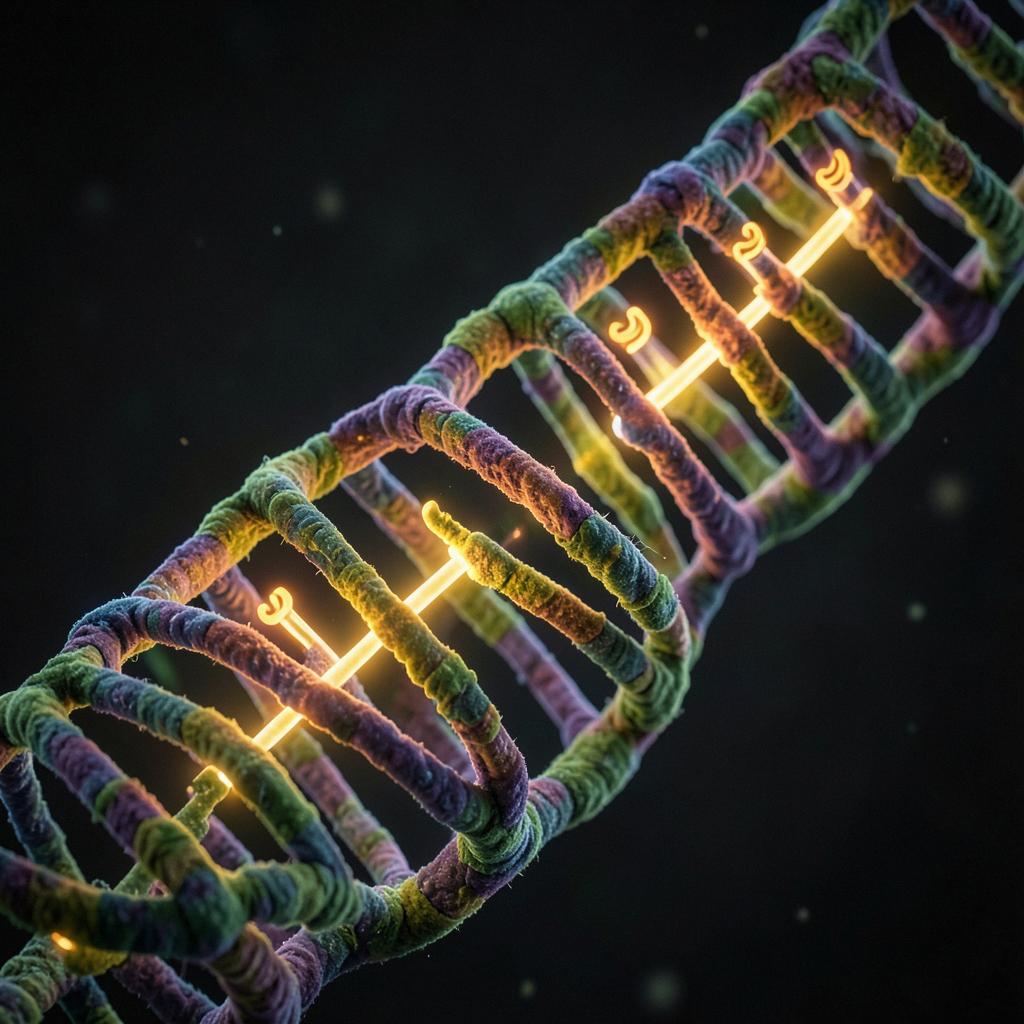
 Discussion