Why BGPT?
logo

Review papers with raw data transparency

Quickly verify claims by accessing the underlying experimental data and figures.


Press Enter ↵ to solve


    Fuel Your Discoveries


     Quick Explanation


    Paper (2009 narrative review) bottom line: it argues tyrosine kinase blockers have reshaped multiple cancers via targeted blockade (especially BCR-ABL with imatinib), but emphasizes that acquired resistance and patient selection are recurring bottlenecks, motivating next-generation inhibitors and combination strategies.


     Long Explanation


    Paper Review: Tyrosine Kinase Blockers: New Hope for Successful Cancer Therapy
    Narrative review (Anti-Cancer Agents in Medicinal Chemistry, received 2007; accepted 2008; catalog DOI: 10.2174/187152009787047752)
    What the paper claims (structured, evidence-linked)
    • Target rationale: tyrosine kinases (TKs) are presented as frequently cancer-relevant signaling nodes; oncogenic TK activation is linked to proliferation, apoptosis, DNA repair, and angiogenesis.
    • Inhibition strategies: the paper contrasts (i) extracellular receptor-blocking monoclonal antibodies and (ii) intracellular small-molecule inhibitors that act at ATP-binding domains.
    • Clinical exemplars: it highlights imatinib for BCR-ABL+ CML and several EGFR/VEGFR-KIT/PDGFR-family inhibitors for various solid tumors and leukemias.
    • Resistance as a central limitation: it emphasizes acquired resistance and enumerates mechanisms including ATP-site mutations, target amplification, altered binding conformation (inactive-state binding), and clonal cytogenetic evolution (as summarized within the review).
    • Future direction: it frames future therapeutic regimens as combining TK inhibitors (possibly multiple agents) with other anticancer therapies, plus novel engineered strategies (e.g., monoclonal antibodies, antisense/siRNA approaches, and ‘combi-targeting’ concepts).
    Visual 1 — Snapshot of key inhibitors and their stated targets (from paper Table 1 + inhibitor text)
    Note: This figure only visualizes what the paper explicitly lists (not a comprehensive oncology TKI universe).
    Visual 2 — Resistance concept map (from paper text: mechanisms → implications → response strategies)
    Because the paper is narrative, the “map” is a graphical re-statement of its described logic, not a quantitative evidence model.
    Paper critique (skeptical, scientific, and bounded to what’s actually in the text you provided)
    Strengths (what it does well)
    • Coherent mechanistic framing: it provides a logically ordered progression from TK biology → oncogenic activation → inhibitor classes → clinical exemplars → resistance → proposed counter-strategies.
    • Explicit recognition of resistance: the paper does not treat success as universal; it places resistance at the center and discusses multiple resistance pathways (mutations, amplification, clonal evolution).
    Scientific red flags / limitations
    • Narrative review risk: by design, it depends on selected literature; it does not present a transparent, systematic search strategy or quantitative risk-of-bias assessment (at least not in the provided text).
    • Precision overreach risk: when it makes broad claims like “remarkably effective across various tumors,” that’s difficult to interpret without response metrics, comparator arms, and effect sizes stratified by biomarker/line of therapy.
    • Mechanistic statements are not automatically causal evidence: it links TK activity to multiple downstream pathways (DNA repair, apoptosis, proliferation), but without explicit experimental evidence maps for each pathway claim in the review’s own narrative.
    What would most disconfirm or revise the paper’s stance?
    • Systematic negative evidence: rigorous, biomarker-stratified clinical evaluations showing no meaningful benefit over standard-of-care would challenge broad “hope” framing.
    • Resistance universality: demonstrating that resistance emerges rapidly and irreversibly across inhibitor classes and tumor contexts would undermine the proposal that novel/combination strategies can “overcome resistance” in general.
    Key mechanistic takeaway (bounded by paper text)
    The review’s central scientific thesis is targetability: oncogenic TK activation produces actionable dependencies, making receptor/kinase blockade (mAbs or ATP-site inhibitors) a credible cancer strategy, but evolutionary escape (mutation/amplification/clonal dynamics) repeatedly limits durability—therefore next steps emphasize inhibitor diversification, alternative binding/inhibition modes, and rational combinations/adjunct designs.
    Optional: run an AI “science agent” to stress-test the review claims
    If you want, the agent can extract and reorganize every mechanistic/resistance claim in the review into a falsifiable claim list and generate a structured critique checklist.


    Feedback:   

    Updated: March 28, 2026

    BGPT Paper Review


    Study Novelty

    40%

    The paper is broadly consistent with the early 2000s “targeted kinase inhibition + resistance” framework and focuses on summarizing known inhibitor classes and exemplar successes (not introducing a new model validated with original data).


    Scientific Quality

    60%

    Mechanistically coherent and well-populated with named inhibitors and resistance concepts, but the provided text does not show a systematic review methodology, quantitative consolidation, or transparent bias/risk-of-bias assessment—typical limitations of narrative reviews.


    Study Generality

    60%

    It covers major TK targets across multiple cancers and thus is relatively general, but it is still largely organized around a small set of historically prominent drugs and does not deliver a unified quantitative cross-cancer model.


    Study Usefulness

    70%

    Useful as a mechanistic and therapeutic landscape refresher focused on TK blockers, key targets, and resistance themes; less useful as a decision tool without quantitative effect sizes and systematic evidence grading.


    Study Reproducibility

    40%

    Reproducibility is limited because it is a narrative review without an explicit systematic search protocol or a machine-readable extraction of outcomes/effect sizes.


    Explanatory Depth

    70%

    It gives multi-level mechanistic background (TK activation, receptor dimerization, oncogenic mutations/translocations, and resistance categories) and connects these to inhibitor binding/inhibition strategies, though causal pathway depth is limited by the review format.


    🎁 Authors: Collect 56 Free Science Tokens (≈ $5.6 USD)

    Claim My Author Tokens

    Use for 14 days of free BGPT access (4 tokens = 1 day) or trade/sell (≈ $5.6 USD)

     Top Data Sources ExportMCP


     Analysis Wizard


    Parse the paper’s Table 1 and resistance section text to generate a structured inhibitor→target table and a resistance-mechanism→counterstrategy adjacency list for graph export and claim auditing.


     Hypothesis Graveyard


    “One inhibitor class can universally overcome resistance.” The review itself argues resistance mechanisms are heterogeneous (mutation, amplification, clonal evolution) and suggests multiple strategies/inhibitors, making universal defeat unlikely within the review’s framing.


    “Resistance is only due to target mutations in the ATP-binding site.” The review explicitly lists additional mechanisms (e.g., target amplification and clonal evolution) and indicates some resistance mechanisms can be independent of the direct target mutation, so this strongman is too narrow.

     Science Art


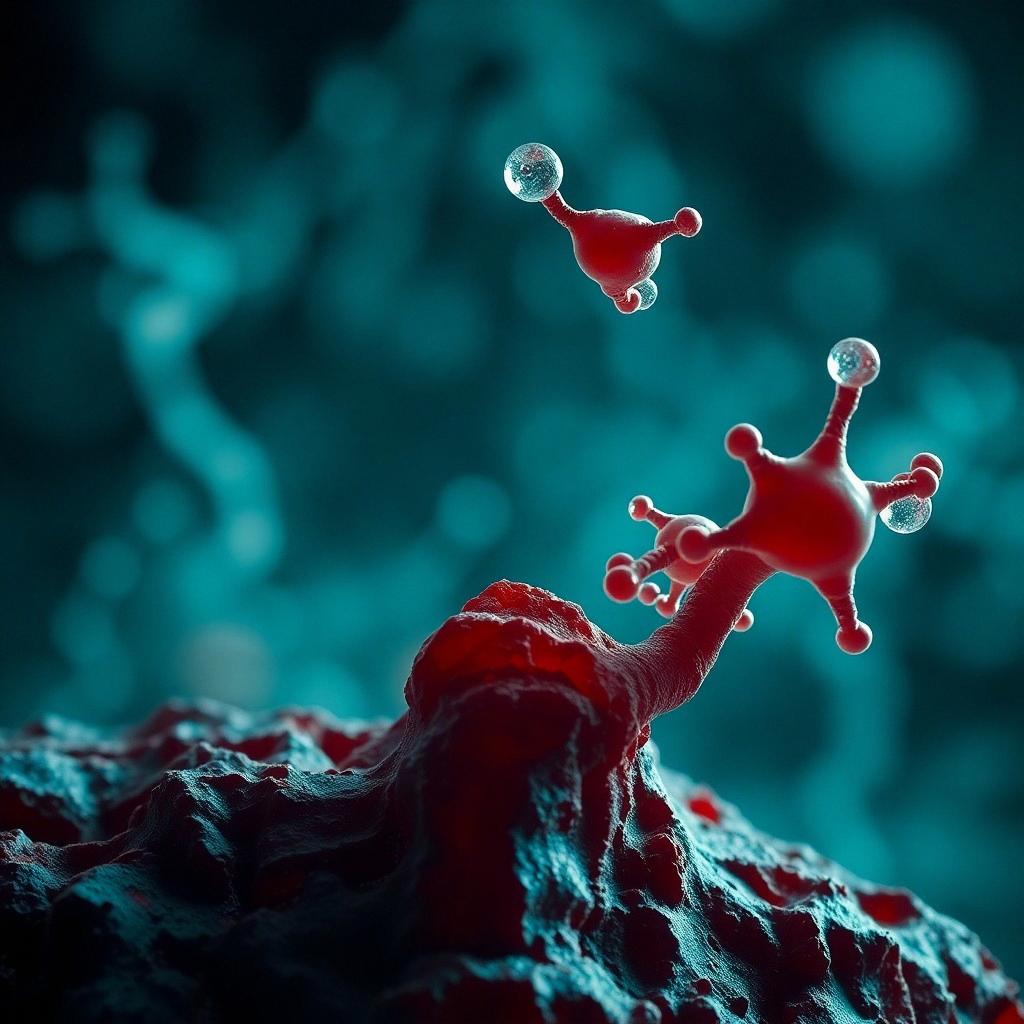
    Paper Review: Tyrosine Kinase Blockers: New Hope for Successful Cancer Therapy Science Art

     Science Movie


    Make a narrated HD Science movie for this answer ($32 per minute)


     Discussion


    Get Ahead With Science Insights

    Custom summaries of the latest cutting edge Science research. Every Friday. No Ads.


    My BGPT