Analyze how experimental results and claims are presented, scoped, and limited in a paper.Know what the science actually supports before you trust the answer.
Press Enter ↵ to analyze
Explore by Goal
"Biology gives you a brain. Life turns it into a mind."
- Jeffrey Eugenides
Quick Explanation
Copied
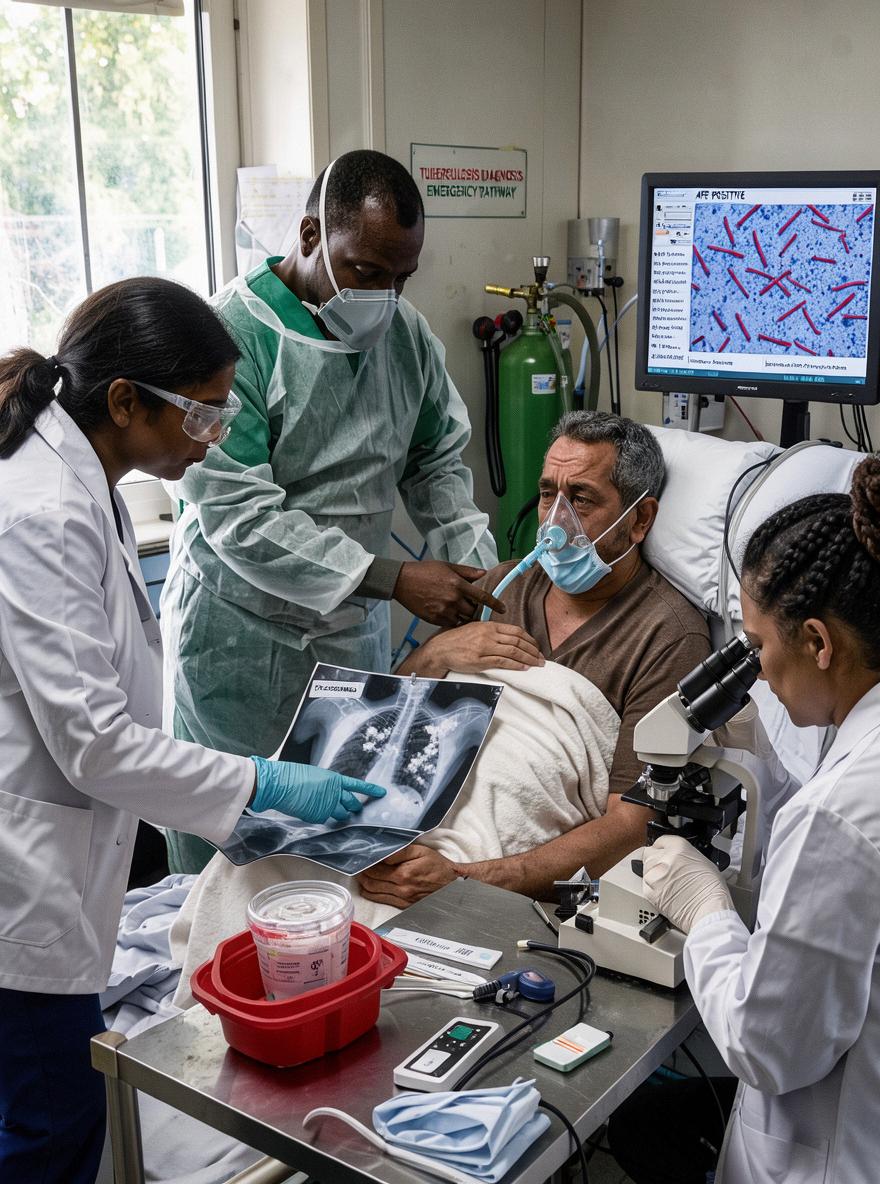
This 2020 narrative review in the American Journal of Emergency Medicine competently summarizes tuberculosis evaluation for emergency clinicians — pathophysiology, infection control, NAAT/diagnostic performance, and HIV-specific pitfalls — citing 160 resources, but it is a non-systematic narrative synthesis with no quantitative meta-analysis, and its core recommendations (airborne isolation, N95/PAPR use, three sputum specimens, NAAT on first specimen) align with IDSA guidance rather than offering new evidence [10.1016/j.ajem.2019.12.040].
Long Explanation
What the paper reports
This narrative review by Long et al. targets emergency clinicians, emphasizing that TB remains low-frequency but high-consequence in US emergency departments. Key sourced claims: roughly one-third of the world population is affected, ~23% harbor latent TB, and in 2018 there were ~10 million active cases with 1.5 million deaths; the authors report that up to two-thirds of US TB cases occur among travelers and immigrants from high-risk areas, and ~30% of TB cases (and >90% of multidrug-resistant TB) are not diagnosed within the first year [10.1016/j.ajem.2019.12.040]. Risk stratification numbers include relative risks of 1.6 for homeless and incarcerated populations, and HIV co-infection in ~13% of TB patients, accounting for over 25% of TB-related deaths [10.1016/j.ajem.2019.12.040].
Diagnostic content — the strongest section
The review accurately reports diagnostic test performance: sputum AFB microscopy sensitivity 20–80% with specificity approaching 90%; NAAT sensitivity 75–95% with results in hours; Xpert MTB/RIF sensitivity ~98% in smear-positive but only ~67% in smear-negative patients, with specificity approaching 100% [10.1016/j.ajem.2019.12.040]. It also usefully covers urine LAM antigen for HIV patients with CD4 <100 and adenosine deaminase on body fluids, and correctly notes CDC caveats that NAAT should not replace AFB smear and culture [10.1016/j.ajem.2019.12.040]. The claim that a normal immune system plus normal chest X-ray can exclude active TB is a practical ED heuristic, though the paper does not quantify the negative predictive value behind it — a notable gap for a review claiming diagnostic rigor [10.1016/j.ajem.2019.12.040].
Critical appraisal
Strengths: EM-relevant framing (airborne isolation, N95/PAPR, ED as safety net), clear tabulated risk factors with odds ratios (e.g., HIV 20–40 odds ratio for active TB, 50–110 for progression from latent), and HIV-specific presentation patterns at low CD4 counts [10.1016/j.ajem.2019.12.040]. Weaknesses: the methods are a non-systematic PubMed/Google Scholar search restricted to English with consensus inclusion — prone to citation and language bias — and no PRISMA-style flow or quality appraisal of the 160 sources is reported [10.1016/j.ajem.2019.12.040]. The risk-prediction score discussed was developed and validated only in Peru, which the authors honestly flag as requiring ED validation before routine use [10.1016/j.ajem.2019.12.040]. Supporting literature underlying the review is heterogeneous: e.g., a standardized-patient study found only 43% of TB screening interactions in South African clinics were managed appropriately, underscoring real-world practice gaps the review acknowledges only implicitly [10.3390/ijerph15040729]. Blind spots: no discussion of bedaquiline/delamanid/pretomanid-era MDR regimens (the review predates their ED relevance maturation), limited pediatric data, and no cost/throughput analysis of NAAT in EDs.
Bottom line: a reliable, well-referenced primer for emergency clinicians, best treated as a gateway to IDSA/CDC primary guidance rather than as primary evidence itself.
Feedback:
Updated: November 01, 2026
BGPT Paper Review
Study Novelty
30%
A 2020 narrative review synthesizing established TB epidemiology, diagnostics, and management for emergency clinicians; no new data, mechanisms, or methods are introduced.
Scientific Quality
70%
Well-referenced (160 sources) with accurate test performance figures and honest limitations (e.g., Peru score needing ED validation), but non-systematic search methods, English-only restriction, and no formal quality appraisal of included studies reduce rigor.
Study Generality
60%
Provides solid pathophysiology (granuloma/Ghon focus, latency-reactivation) and diagnostic performance figures, but stops short of mechanistic immunology or predictive modeling depth.
Study Usefulness
70%
Practically useful as an ED-oriented primer on isolation, testing pathways, and HIV-specific atypical presentations; limited by lack of ED-validated risk tools and absence of newer MDR drug regimens.
Study Reproducibility
40%
Search strategy is described but inclusion criteria are consensus-based and unstated in detail; no PRISMA flow, no data extraction, and no quantitative synthesis make systematic replication impossible.
We'll email you the results when your analysis is finished.
Hypothesis Graveyard
Standardized ED risk scores for TB (e.g., the Peru contact-tracing score) would transfer to US emergency departments — undermined by the authors' own caveat that the score requires ED validation, as its predictors (household ventilation, socioeconomic position) map poorly onto US ED populations.

 Explore by Goal
 Quick Explanation
 Long Explanation
 Top Data Sources
 Ask a Follow-Up
 Key Insight
 Keep Exploring
 Hypothesis Graveyard
 Potential Experiments
 Discussion
