Why BGPT?
logo

Review papers with raw data transparency

Quickly verify claims by accessing the underlying experimental data and figures.


Press Enter ↡ to solve


    Fuel Your Discoveries


     Quick Explanation


    Paper focus
    Zupan & Zambryski (1995, Plant Physiology) synthesize the then-emerging model of Agrobacterium-mediated transfer: T-DNA border cleavage β†’ ss T-strand generation β†’ VirE2-coated T-complex β†’ export and plant-cell/nuclear targeting, emphasizing what was well-studied (steps 1–3) versus largely unknown (export across plant barriers and integration mechanics).


     Long Explanation


    Paper Review (Evidence-Skeptical): β€œTransfer of T-DNA from Agrobacterium to the Plant Cell”
    Citation: Plant Physiology (1995); DOI: 10.1104/pp.107.4.1041
    1) Visual map: the review’s stepwise transfer process
    The paper presents a seven-step abstraction of T-DNA transfer (vir induction β†’ T-strand generation β†’ T-complex formation β†’ export β†’ plant-cell entry β†’ nuclear import β†’ chromosomal integration) and explicitly marks which steps were comparatively β€œwell studied” vs β€œalmost completely uncharacterized” at the time.
    2) What the paper claims, mechanistically (and where it is cautious)
    2.1 Virulence sensing & transcriptional control
    • virA/virG form a two-component system: VirA detects phenolics released by wounded plants, autophosphorylates, then activates vir gene transcription via VirG.
    2.2 Border cleavage β†’ T-strand (ss) intermediate
    • The review emphasizes that 25-bp border repeats provide the key cis elements for T-DNA processing, and that VirD1/VirD2 execute ss endonucleolytic cleavage at the border to generate the transfer intermediate.
    • In the debate over the β€œreal” T-DNA copy, the paper highlights evidence supporting an ss transfer intermediate, citing two approaches (Yusibov et al. and Tinland et al.) designed to discriminate ds vs ss arrival forms in planta.
    2.3 VirE2 as a β€œprotect-and-extend” component of the T-complex
    • VirE2 is described as an inducible ssDNA-binding protein that binds without sequence specificity, coats ssDNA cooperatively (protecting from nucleases), and unfolds/extends ssDNA to a narrow diameter (~2 nm) that may help transfer through membrane channels.
    3) Relationship to bacterial conjugation: where the analogy is strong vs speculative
    The review argues for an evolutionary/functional relationship between Agrobacterium T-DNA transfer and conjugative DNA transfer, based on parallels including polar cis elements, ssDNA transfer following displacement, and directionality anchored by attached proteins.
    Visualization: analogy pillars (as stated)
    Skeptical note (epistemic humility)
    This is a review and the analogy is strongest for steps where biochemical/genetic parallels were available at the time; the review itself admits that later steps in plant-cell entry and integration were β€œalmost completely uncharacterized.”
    4) Nuclear targeting: VirD2 NLS + VirE2 multiple NLSs
    • The review argues nuclear import is likely mediated by associated proteinsβ€”VirD2 and VirE2β€”rather than the DNA alone, and describes a bipartite NLS in the VirD2 C-terminus, with functional tests using GUS fusions and NLS deletions.
    • Because VirE2 is abundant and predicted to provide NLSs along the length of a large T-complex, the review proposes multiple NLSs may support efficient/continuous nuclear import.
    5) Critical assessment (what is solid, what is underdetermined)
    5.1 Strengths
    • Mechanistic coherence: the review connects cis border processing (VirD1/VirD2), ssDNA transfer intermediate logic, and VirE2 coating into a consistent β€œT-complex” framework.
    • Explicit epistemic flagging: it states that steps 4 and 6 relate to newer research and that steps 5 and 7 were almost completely uncharacterized, which is good scientific reporting discipline.
    5.2 Limitations / underdetermination
    • Export and integration remain the largest blind spots (as acknowledged by the authors). Because the core review is a synthesis, its mechanistic strength depends on which steps had direct experiments at the time.
    • Analogy risk: conjugation parallels are compelling for nicking/displacement/directionality, but the review’s own uncertainty about plant-cell barriers means the analogy may not fully determine how integration occurs.
    5.3 What would falsify key mechanistic sub-claims? (within the review’s framing)
    • If the discriminating assays could be shown to be confounded such that ds (not ss) molecules are actually the arrival intermediate, then the review’s β€œss intermediate” emphasis would be weakened.
    • If VirE2 were dispensable for ssDNA protection/nuclear import roles described by the review, the β€œT-complex” protection/architecture rationale would need revision.
    6) Direct β€œpaper usefulness” for a reader today
    The review functions as a mechanistic scaffold: it organizes the process into testable modules (border cleavage, ss intermediate, VirE2 coating, nuclear import signals, export/entry/integration unknowns) and highlights where experimental effort is still neededβ€”useful even now as a historical map of what was known and what was not.


    Feedback:   

    Updated: April 05, 2026

    BGPT Paper Review


    Study Novelty

    70%

    It is a mechanistic synthesis using the then-recent molecular evidence to consolidate a stepwise model, particularly the ss T-strand emphasis; however, it is not a new experimental result and builds on accumulating prior work and debates.


    Scientific Quality

    80%

    Scientific quality is high for a review: it organizes mechanisms into testable steps, cites experimental strategies in support of central claims (especially ss intermediate discrimination), and openly marks knowledge gaps. The main limitation is the inherent underdetermination of what is uncharacterized at the time.


    Study Generality

    60%

    The scope is broad (fundamental T-DNA transfer biology), but it is anchored to Agrobacterium–dicot transformation mechanisms and the authors’ then-current molecular model; integration and export details are largely treated as unresolved.


    Study Usefulness

    70%

    Highly useful as a conceptual framework and evidence map of which steps were supported vs uncertain, helping direct future experiments.


    Study Reproducibility

    50%

    As a review, it is not directly reproducible; reproducibility depends on the underlying experimental studies it summarizes, and this provided text does not include full methodological detail beyond the narrative description.


    Explanatory Depth

    80%

    The review provides fairly deep mechanistic explanation for early processing and nucleoprotein complex formation, and offers mechanistic hypotheses (e.g., NLS-driven import logic, conjugation analogy), while accurately stating where mechanistic details were lacking.


    🎁 Authors: Collect 188 Free Science Tokens (β‰ˆ $18.8 USD)

    Claim My Author Tokens

    Use for 47 days of free BGPT access (4 tokens = 1 day) or trade/sell (β‰ˆ $18.8 USD)

     Top Data Sources ExportMCP


     Analysis Wizard


    It extracts the paper’s stepwise model into a structured graph, then computes a characterization-status summary (early vs late steps) and renders it as reproducible Plotly visuals for skimming.


     Hypothesis Graveyard


    The β€œds DNA is the primary arrival intermediate” hypothesis is downgraded in the review because polarity-discriminating assays reportedly yielded stronger outcomes consistent with an ss intermediate; falsify by reproducing the discriminators and obtaining polarity-independent full-length outcomes.


    A purely DNA-intrinsic nuclear import model (without VirD2/VirE2 NLS contribution) is less favored in the review because it asserts the DNA itself is unlikely to carry import signals and that protein-associated NLSs mediate nuclear uptake; falsify by showing nuclear import persists when both NLSs are disabled.

     Science Art


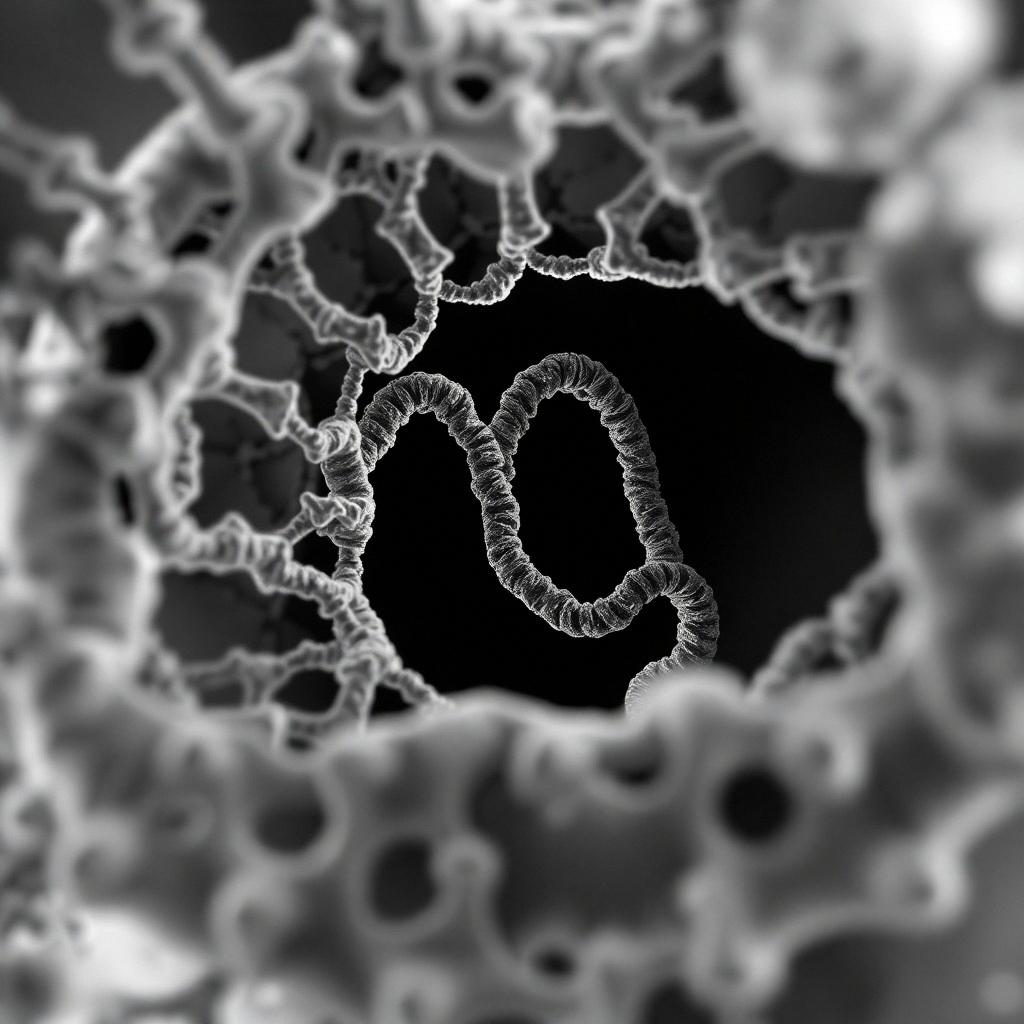
    Paper Review: Transfer of T-DNA from Agrobacterium to the Plant Cell Science Art

     Science Movie


    Make a narrated HD Science movie for this answer ($32 per minute)


     Discussion


    Get Ahead With Science Insights

    Custom summaries of the latest cutting edge Science research. Every Friday. No Ads.


    My BGPT