Why BGPT?
logo

Review papers with raw data transparency

Quickly verify claims by accessing the underlying experimental data and figures.


Press Enter ↡ to solve


    Fuel Your Discoveries


     Quick Explanation


    Paper reviewed: oral microbiome ↔ respiratory disease cross-talk
    This is a narrative review arguing that oral dysbiosis may influence pneumonia, COPD, asthma, and lung cancer via aspiration of oral microbes and host immune/inflammatory responses, while also emphasizing a β€œvicious cycle” between oral and respiratory pathology .


     Long Explanation


    Long Visual Paper Analysis

    Target paper: The role of oral microbiome in respiratory health and diseases .
    Conceptual scope (what respiratory diseases the review covers)
    Derived from the paper’s section coverage (qualitative presence/absence, not effect-size).
    Mechanistic claims the review emphasizes
    Focus on stated pathways; causal strength is not inferred beyond what is written.

    What the review claims (structured, with skepticism)

    Below, each row is limited to what is explicitly stated in the paper text provided. Because this is a narrative review, evidence quality varies substantially across cited studies, and the review’s own statements should not be treated as causal conclusions.
    Review emphasis Specific mechanism (as written) What kind of evidence typically appears in cited literature Where causality is uncertain
    Oral cavity as a reservoir Oral cavity connects with upper respiratory tract; oral microbes have access to respiratory system Observational correlations; microbiome profiling with 16S/metagenomics; lung aspirate comparisons Disentangling aspiration from shared confounders (age, smoking, hospitalization severity) is not solved by a narrative review.
    Aspiration + immune inflammation Direct aspiration plus immune/inflammatory response (including TH17 activation discussion) Human mechanistic plausibility via immunology reviews + microbiome-to-inflammation associations Mechanisms remain non-quantified at the level of β€œwhich taxa/metabolites drive which cytokine programs,” per narrative framing.
    Bidirectional β€˜vicious cycle’ Respiratory disease worsens oral dysbiosis and oral disease worsens respiratory disease Longitudinal associations across clinical states (varies by what individual studies included) Without unified longitudinal design and consistent sampling, directionality and mechanism can be ambiguous.
    Disease-specific sections Separate discussion for pneumonia, COPD, asthma, lung cancer Mixture of meta-analyses, observational studies, and experimental animal work (as described in the paper) Comparability is limited; narrative synthesis can over-weight suggestive signals relative to null or inconsistent findings.

    Evidence type inventory (from the review’s described approach)

    The review discusses profiling methods (e.g., 16S rRNA gene sequencing; metataxonomics; metagenomics) and cites studies that detect oral DNA/taxa in lung samples. This matters for interpretation because 16S/metagenomic signals can reflect association, dispersal, and contamination riskβ€”not necessarily active disease causation.

    Known vs inferred vs uncertain (epistemic humility)

    The review is clear that the field is early and calls for better characterization of oral-origin lung habitat and for identifying pathways connecting colonization to immune responses .

    Critical appraisal (skeptical, science-first)

    • Narrative review limits causal inference. The paper synthesizes heterogeneous studies (observational, sequencing-based, and some mechanistic animal models), but narrative format generally prevents systematic risk-of-bias assessment across studies. The paper itself characterizes the field as still early and calls for further research to unravel pathways .
    • Correlation vs causation remains a key blind spot. While the review argues aspiration/immune activation mechanisms, it does not (as presented here) quantify how much of respiratory disease variance can be explained by oral microbiome differences after controlling for major confounders (smoking, age, comorbidities, hospitalization context). Those confounders are discussed as factors that impair host defense and facilitate microbial infiltration but does not establish causal mediation by oral taxa.
    • Taxonomic signals may reflect dispersal, not disease-driving activity. The review emphasizes that culture-independent methods detect oral anaerobes’ DNA/taxa in lungs of some subjects, supporting that the lower respiratory tract is not always sterile . This complicates interpretation: detection does not prove pathogenic causation.
    • Measurement heterogeneity is a repeat risk. The review describes multiple sampling sites and approaches (16S variable regions, metataxonomics, metagenomics), but narrative synthesis across platforms can create apparent β€œsignals” driven by differing primer regions, extraction chemistry, and analytic pipelines . Without harmonized pipelines and consistent controls, cross-study comparisons can be fragile.
    • Unstated standardization needs. The review calls for better characterization of the oral-origin lung habitat and for identifying crucial colonization pathways . However, it does not operationalize a concrete standard protocol (sampling cadence, contamination controls, or harmonized functional readouts).

    Where this review is strong vs weak

    Strengths
    • Clear, integrative narrative linking anatomical continuity (oral β†’ upper airway) to plausible entry (aspiration) and immunological consequences .
    • Disease-bucket structure (pneumonia, COPD, asthma, lung cancer) helps readers navigate the broad literature landscape .
    Weaknesses / blind spots
    • Reproducibility constraints: narrative synthesis across sequencing methods without harmonization makes β€œsignal transfer” uncertain .
    • Causality remains unproven: detection of oral taxa in lung does not equal lung-pathogen driving activity; the review calls for future mechanistic pathway identification .


    Feedback:   

    Updated: April 13, 2026

    BGPT Paper Review


    Study Novelty

    60%

    The narrative frames a well-known oral–lung conceptual pathway (reservoir/aspiration/inflammation) and organizes disease-specific links; novelty is mainly in synthesis scope rather than new methodology or datasets .


    Scientific Quality

    60%

    Scientific quality is limited by narrative-review constraints and heterogeneous underlying study designs; the paper signals that the field is still early and calls for mechanistic clarification rather than providing standardized, methodologically audited evidence .


    Study Generality

    70%

    The paper is general across multiple respiratory disease categories (pneumonia, COPD, asthma, lung cancer), but remains constrained by its narrative scope and by not isolating a single unifying, testable causal mechanism .


    Study Usefulness

    60%

    Useful as a high-level map of oral–respiratory hypotheses and candidate taxa/processes, but the review does not supply quantitative effect sizes or standardized selection criteria that would directly support rigorous meta-analysis or reproducible translational decision-making .


    Study Reproducibility

    40%

    Because this is a narrative review without new primary data, reproducibility mainly depends on the completeness and reproducibility of its cited study set and whether readers can audit selection/quality; the provided excerpt does not show a systematic protocol (e.g., PRISMA flow, explicit inclusion/exclusion) .


    Explanatory Depth

    60%

    Mechanistic framing (aspiration + immune inflammation; TH17 discussion; bidirectional cycle) is presented, but the review does not operationalize metabolite/taxon→immune→disease causal links in a way that yields deep mechanistic predictions .


    🎁 Authors: Collect 72 Free Science Tokens (β‰ˆ $7.2 USD)

    Claim My Author Tokens

    Use for 18 days of free BGPT access (4 tokens = 1 day) or trade/sell (β‰ˆ $7.2 USD)

     Top Data Sources ExportMCP


     Analysis Wizard


    It computes a qualitative β€œscope presence” matrix (pneumonia/COPD/asthma/lung cancer vs review sections) and generates Plotly charts summarizing which diseases the review covers, enabling fast reader navigation.


     Hypothesis Graveyard


    A simple model where β€œmore oral pathogens in saliva β‡’ more respiratory disease” will likely fail because the review itself indicates oral taxa/DNA can be present in healthy lungs, so presence alone is not sufficient .


    A model asserting TH17 activation is the universal downstream mechanism for all respiratory diseases is unlikely to hold without disease-specific pathway validation; the review presents TH17 as an example of immune interaction but does not unify all diseases to a single immune program .

     Science Art


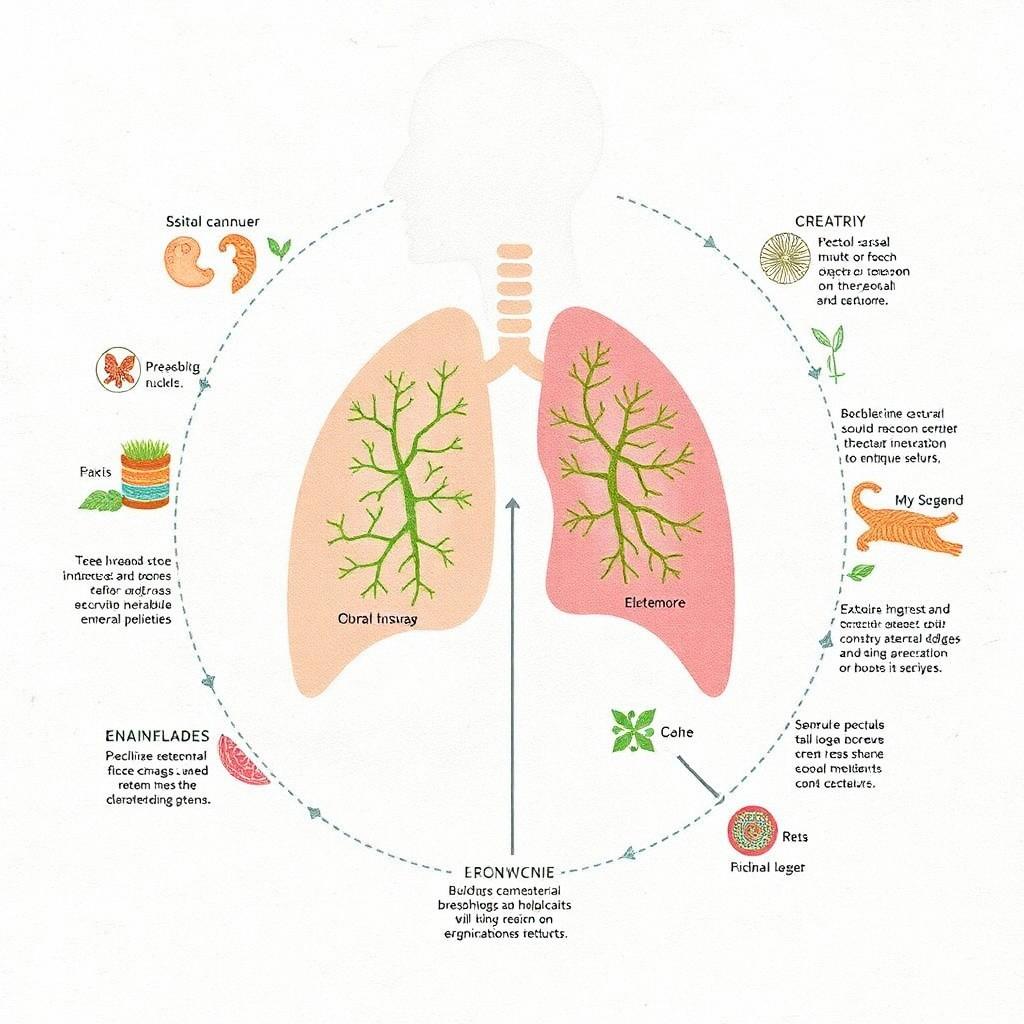
    Paper Review: The role of oral microbiome in respiratory health and diseases Science Art

     Science Movie


    Make a narrated HD Science movie for this answer ($32 per minute)


     Discussion


    Get Ahead With Science Insights

    Custom summaries of the latest cutting edge Science research. Every Friday. No Ads.


    My BGPT