Why BGPT?
logo

Review papers with raw data transparency

Quickly verify claims by accessing the underlying experimental data and figures.


Press Enter ↵ to solve



    Fuel Your Discoveries


     Quick Explanation


    What this paper argues (and what it can’t yet prove)
    • Immune cells in specific CNS border compartments (meninges, perivascular spaces, choroid plexus) can influence developmental processes and neurodevelopmental disease risk, despite the BBB limiting broad parenchymal infiltration.
    • A central developmental thesis is that B cell subtype “B-1a” promotes oligodendrogenesis/myelination via secreted IgM that acts on OPCs via Fcα/μR.
    • The review also proposes mechanistic routes for T cells (notably IFN-γ-driven modulation of inhibitory synapse formation; and Th17/γδ T cells in injury contexts) but repeatedly flags that many disease connections remain unclear or speculative.


     Long Explanation


    Paper Review (Critical, Visual): Immune cells in brain development & neurodevelopmental disease
    Today: 2026-04-09
    Target paper: Tanabe & Yamashita, “The role of immune cells in brain development and neurodevelopmental diseases” (International Immunology, 2018; DOI: 10.1093/intimm/dxy041).
    1) Visual map of the paper’s core claims
    The review frames (i) a boundary/interface-centric localization model for most immune cells (meninges, choroid plexus, perivascular spaces) contrasted with (ii) microglia resident within parenchyma, then assigns each major immune class a set of developmental functions under physiologic and pathogenic conditions.
    2) Evidence strength by immune cell type (as presented)
    How to read this (critical):
    The bar colors are not a statistical meta-analysis; they only reflect whether the review presents mechanistic/experimental support with relative confidence versus more speculative disease connections.
    3) Mechanism-by-mechanism critique (what’s strong vs uncertain)
    B cells: B-1a drive oligodendrogenesis & myelination
    • Known from the review (strong mechanistic chain as stated): neonatal brain has more B cells than adulthood; B cells localize to meningeal space, lateral ventricle, and choroid plexus (not parenchyma); CXCL13 neutralization reduces neonatal brain B cell number; B-1a is the neonatal B subtype characterized by a specific marker set; B cell depletion reduces mature oligodendrocytes and suppresses OPC proliferation; OPCs express Fcα/μR; Fcα/μR inhibition reduces proliferating OPCs and mature oligodendrocytes; and effects persist into juvenile stages with reduced myelinated axons at P21.
    • Skeptical check (limits within the review’s framing): the review acknowledges that B cell function may differ between adult and neonatal brain and that neonatal disease roles remain unclear, so even a strong developmental mechanism does not automatically establish disease causality.
    T cells: developmental plasticity via inhibitory circuitry & IFN-γ (as proposed)
    • Known from the review: T cells are present in meninges and choroid plexus; T-cell deficiency (e.g., RAG-deficient mice) shows impairments in social recognition memory and social/cognitive phenotypes; cognitive tasks can increase T cell numbers in meningeal space; IFN-γ-producing T cells regulate neuronal connectivity/social behavior; T cells modulate inhibitory synapse formation in prefrontal cortex via IFN-γ in the review’s proposed mechanism.
    • Uncertainty flagged by the review: it repeatedly notes that whether observed dysfunction is “developmental in nature” and whether meninges/choroid plexus-resident CD4+ T cells exist/act the same way during embryogenesis remains unclear.
    • Disease-relevant caveat: for schizophrenia linkage, the paper frames B-cell-related speculation through a neurodevelopment model but explicitly says whether/how B cells contribute “remains unclear.”
    Microglia & macrophages: synapse remodeling & neurovascular support, with reported contradictions
    • Known from the review: microglia are derived from primitive macrophages (yolk sac route) and appear after E9; they are implicated in synapse pruning (electron microscopy/electrophysiology), synapse engulfment (complement-dependent in some contexts), and synapse formation (reported in early neonatal somatosensory cortex).
    • Contradiction the review highlights: microglia depletion/activation manipulation effects on neural progenitor counts via minocycline or CSF-1R-related models are described as partially contradictory, but it still states there is broad consensus that microglia regulate neural progenitor numbers during development.
    • Macrophage claim: non-parenchymal macrophages at choroid plexus/meninges/perivascular spaces can present antigen to activate T cells; macrophage depletion impairs brain angiogenesis; meningeal macrophages are implicated in cognition enhancements through BCG/enriched environment via secretion of BDNF/IGF-1 (as presented).
    4) Bias & blind-spot audit (from within what’s provided)
    The review itself emphasizes interface localization constraints (early BBB prevents broad infiltration), subtype differences, and explicitly notes unknowns (e.g., neonatal B cell functions in neonatal brain disease; schizophrenia causality; embryonic residency questions).
    5) Practical synthesis: “If you only remember 5 things”
    • Interfaces matter: most immune cells (except microglia) are described as positioned at CNS boundary compartments (meninges/choroid plexus/perivascular space).
    • B-1a is developmental: the IgM→Fcα/μR axis is presented as promoting OPC proliferation and later myelination/axon myelination.
    • T cells sculpt inhibitory circuitry: IFN-γ is proposed to promote inhibitory synapse formation and regulate connectivity/plasticity tied to behavior in T-cell deficient contexts.
    • Microglia are not one thing: synapse pruning vs synapse formation and progenitor-count effects can differ by age/region and are not always consistent across models, but the review maintains a regulatory consensus.
    • Disease links are uneven: the review provides mechanistic developmental anchors but often stops short of firm causal claims for specific psychiatric disorders, explicitly stating that key connections remain unclear.


    Feedback:   

    Updated: April 09, 2026

    BGPT Paper Review


    Study Novelty

    50%

    The paper is a 2018 review synthesizing an already-emerging neuroimmunology framework (CNS immune interfaces, cell-type roles, MIA/GWAS associations) rather than introducing a new, quantified mechanism at system scale; novelty is moderate mainly due to its detailed B-1a developmental axis narrative.


    Scientific Quality

    70%

    Scientific quality is strengthened by (i) clear interface-based organizing principles, (ii) concrete mechanistic detail for B-1a→IgM→Fcα/μR developmental effects, and (iii) explicit statements of uncertainty for disease links; however, as a review it cannot fully resolve causal questions, and many disease connections remain speculative or context-dependent as acknowledged.


    Study Generality

    60%

    The organizing concepts (immune interfaces, subtype specialization, developmental timing/state dependence) are broadly general across neuroimmunology, but the mechanistic depth is strongest for specific developmental axes and model contexts, limiting generality across all neurodevelopmental disorders.


    Study Usefulness

    70%

    Usefulness is high for generating hypotheses and structuring experimental thinking (which immune subtype where, and which developmental output), but limited for making definitive, disorder-specific predictions because the review emphasizes unresolved causality for psychiatric outcomes.


    Study Reproducibility

    30%

    As a review, it is not directly reproducible as an experiment; while it summarizes depletion/blocking and mechanistic experiments, it does not provide the full methodological detail needed to independently replicate those specific findings from the manuscript alone.


    Explanatory Depth

    70%

    Depth is substantial at the level of mechanistic pathways for certain immune subsets (notably B-1a→IgM→Fcα/μR and T-cell IFN-γ inhibitory synapse modeling) and at the level of interface logic, but it remains limited for system-level causal accounting of psychiatric disease.


    🎁 Authors: Collect 61 Free Science Tokens (≈ $6.1 USD)

    Claim My Author Tokens

    Use for 15 days of free BGPT access (4 tokens = 1 day) or trade/sell (≈ $6.1 USD)

     Top Data Sources ExportMCP


     Analysis Wizard


    No code executed: the provided paper review text contains no raw omics/quantitative tables to analyze into graphs or pipelines.


     Hypothesis Graveyard


    “All neurodevelopmental immune mechanisms require BBB breakdown/infiltration into parenchyma.” This is weakened by the review’s emphasis that most immune actions occur at CNS interface compartments when early BBB development restricts systemic infiltration.


    “B cells have a uniform effect on CNS development and disease.” The review explicitly argues subtype-dependent functions and states that neonatal disease roles for B cells remain unclear.

     Science Art


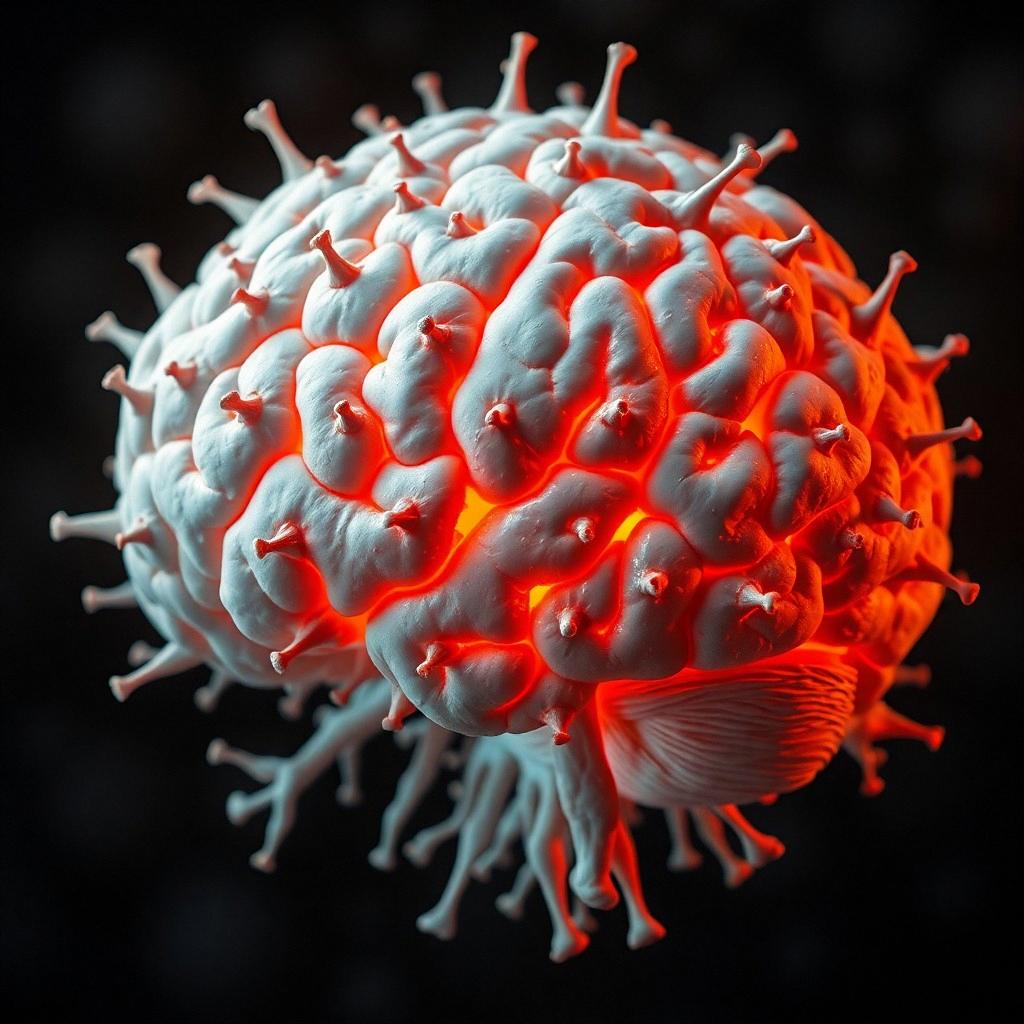
    Paper Review: The role of immune cells in brain development and neurodevelopmental diseases Science Art

     Science Movie


    Make a narrated HD Science movie for this answer ($32 per minute)


     Discussion


    Get Ahead With Science Insights

    Custom summaries of the latest cutting edge Science research. Every Friday. No Ads.


    My BGPT