Why BGPT?
logo

Review Papers Claim by Claim

Check each claim against its experiments, reported results, scope, and stated limitations.Know what the science actually supports before you trust the answer.

Press Enter ↵ to start review


     Quick Explanation


    Paper review (mechanistic + critical)

    This review argues that MLL (KMT2A) fusion proteins drive mixed lineage leukemia primarily by rewiring transcriptional regulation—especially transcription elongation and chromatin state—through recurrent molecular “modules” involving DOT1L / H3K79 methylation, SEC / P-TEFb activity, and polycomb pathway suppression.
    Key skeptical point: because this is a narrative review, many mechanistic claims are inferred across heterogeneous model systems; the review itself flags uncertainty about how many modules co-occur simultaneously at a given locus.


     Long Explanation


    The molecular mechanics of mixed lineage leukemia — visual critique

    Article (review): Oncogene, advance online publication Feb 29, 2016.

    1) What the review claims (structured)

    • Clinical rarity → molecular beacon: 11q23/MLL rearrangements define an especially aggressive leukemia subtype with distinctive incidence patterns in infants and therapy-related cases.
    • MLL as a chromatin modulator: wild-type MLL functions via domain-specific interactions (e.g., menin/LEDGF targeting and reader/writer modules around H3K4 methylation and related chromatin regulation).
    • Fusions concentrate into a few elongation/chromatin pathways: the review emphasizes that many MLL fusion partners converge on transcription elongation modules (DOT1L complex → H3K79 methylation; SEC/P-TEFb → RNA Pol II CTD phosphorylation; and ENL/AF9–CBX8 effects that counteract PRC1 repression).
    • Therapeutic hypothesis: blocking biochemical vulnerabilities at these module-level interfaces may suppress MLL-driven proliferation, with DOT1L and BET/BRD4 being the most clinically advanced examples mentioned.

    2) Visual: incidence & burden patterns summarized in the review

    These are summary-level proportions stated in the manuscript (not new estimates).

    3) Visual: “molecular mechanics” as a module map

    The manuscript’s organizing claim is that diverse fusion partners converge on a small set of transcription/chromatin modules.

    4) Skeptical assessment: what is strong vs uncertain

    Strengths (within a review)

    • Coherent mechanistic through-line: repeated emphasis that elongation and chromatin state are central, integrating multiple biochemical modules into a single conceptual framework.
    • Explicitly acknowledges mechanistic exclusivity: it states that biochemical interactions among effector modules may be mutually exclusive (e.g., ENL/AF9 interactions with different partners) rather than simultaneously engaged.

    Uncertainties / blind spots

    • Narrative-review overreach risk: as a literature synthesis, it cannot fully control selection/weighting of studies; mechanistic “modules” are assembled from different experimental contexts. (This is a general epistemic limitation of reviews.)
    • Locus- and fusion-specific coordination remains unresolved: the review explicitly notes uncertainty about whether DOT1L, SEC/P-TEFb, and PRC1 suppression act together at the same loci in the same time window.
    • Therapeutic translation caveat: targeted vulnerabilities are framed as promising, but the review itself relies on early clinical-stage signals and preclinical/toxicology arguments; resistance and long-term safety are not guaranteed by mechanism alone.

    5) Visual: example targeted intervention points (qualitative)

    This figure is a conceptual mapping of intervention sites described in the review, not a dosing/outcome plot.
    Note: The “emphasis level” is only a visual organizer of what the review highlights; it is not an evidence-based ranking with numeric metrics.

    6) What would falsify / change the review’s central mechanistic framing?

    • Module independence: if rigorous, locus-resolved experiments in relevant hematopoietic contexts show that blocking one module (e.g., DOT1L/H3K79, SEC/P-TEFb) does not materially alter the transcriptional programs required for transformation, then the “convergent-module” model would need revision.
    • Simultaneity counterexample: if evidence shows that the same fusion-driven target loci are activated without mutual exclusivity constraints (contradicting the disordered interaction logic described), then the model’s constraints would require adjustment.
    • Target gene redefinition: if HOX/MEIS1/PBX3 axes are not causally required in the majority of patient-derived contexts (or alternative driver programs dominate), therapeutic targeting strategies emphasized here would become less generally applicable.

    7) BGPT “next questions” (science-forward)

    • Which module (DOT1L vs SEC/P-TEFb vs PRC1 suppression) shows the strongest causal effect on transcriptional initiation vs elongation for each major fusion partner subgroup described in the review?
    • Do the review’s mutually exclusive interaction constraints predict experimentally measurable temporal ordering of module engagement at HOX loci?


    Feedback:    

    Updated: July 14, 2026

     BGPT Paper Review


    Study Novelty

    70%

    As a 2016 narrative review, it is not proposing a completely new mechanism; its novelty is in the synthesis emphasis on convergence toward transcription elongation/chromatin modules and the framing of actionable biochemical vulnerabilities.


    Scientific Quality

    80%

    High conceptual organization and explicit statement of mechanistic uncertainty (e.g., mutual exclusivity/simultaneity). Main limitation is inherent to reviews: conclusions depend on study selection and heterogeneous experimental systems, with no new primary data or reproducibility artifacts.


    Study Generality

    60%

    The focus is specific to MLL/11q23 fusion-driven leukemogenesis and related biochemical modules; it generalizes moderately via broad transcription/chromatin principles but remains anchored to particular pathways and targets.


    Study Usefulness

    80%

    Useful as a mechanistic map for designing mechanistic experiments and for selecting biochemical intervention points (DOT1L, BET/BRD4, CDK9, menin–MLL) to test causal roles. It does not supply quantitative trial outcomes or new datasets.


    Study Reproducibility

    60%

    Reproducibility is limited because it is a review (no methods section for new experiments, no deposited raw data). Mechanistic claims are traceable only through the cited literature.


    Explanatory Depth

    80%

    Mechanistic detail is fairly deep: it breaks down MLL domains, the DOT1L/SEC/PRC1-related modules, mutual exclusivity of interactions, and major target gene families (HOX/MEIS1/PBX3). It still leaves open questions about coordination and locus-specific timing.


    🎁 Authors: Collect 258 Free Science Tokens (≈ $25.8 USD)

    Claim My Author Tokens

    Use for 64 days of free BGPT access (4 tokens = 1 day) or trade/sell (≈ $25.8 USD)

     Top Data Sources ExportMCP


     Hypothesis Graveyard


    A “single-module-at-once” model where only one module ever matters per locus at any time could be weakened by the review’s own emphasis on convergent elongation/chromatin themes and its discussion of multiple possible recruitment architectures (dimerization/multimerization).


    A “fully simultaneous three-module engagement” model is directly challenged by the review’s biochemical evidence that many underlying interactions do not occur at the same time and are mutually exclusive.

     Science Art


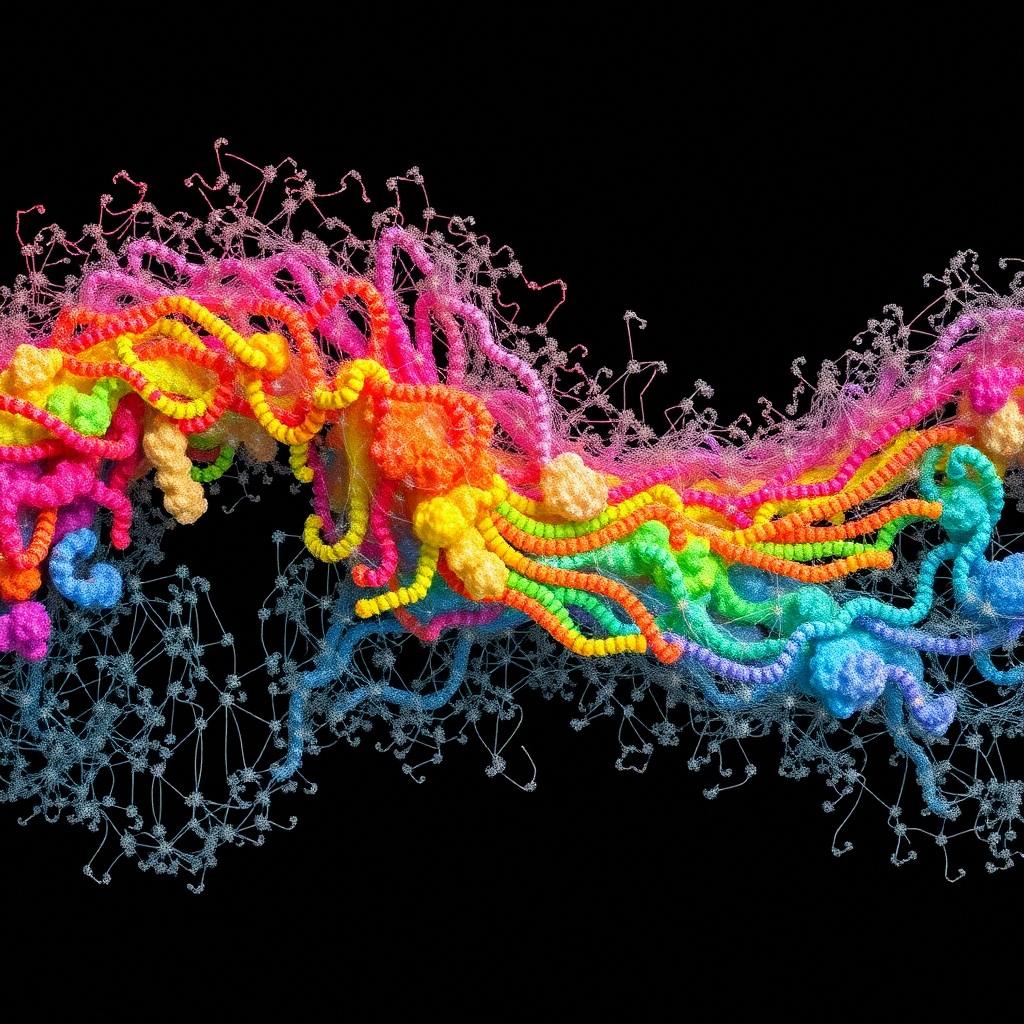
    Paper Review: The molecular mechanics of mixed lineage leukemia Science Art

     Science Movie


    Make a narrated HD Science movie for this answer ($32 per minute)


     Discussion


    Stay current without chasing every paper.

    Know what changed, what holds up, and what remains uncertain. Every Friday. No ads.


    My BGPT