Why BGPT?
logo

Review papers with raw data transparency

Quickly verify claims by accessing the underlying experimental data and figures.


Press Enter ↵ to solve


    Fuel Your Discoveries


     Quick Answer


    Microbiota–microglia axis: mechanistic synthesis, but causal edges are often model-dependent
    This accepted narrative review organizes a large, heterogeneous literature around a “microbiota–microglia axis” spanning germ-free/antibiotic perturbations, FMT, and metabolite signaling (notably SCFAs and AhR ligands) to explain microglial maturation and disease-associated phenotypes across many CNS disorders.
    Key recurring strength: it repeatedly links microbiota-state → microglial transcription/epigenetics → altered immune functions (e.g., phagocytosis) → disease-relevant outcomes in animal models. Key recurring limitation: several conclusions hinge on how well specific mouse microbiota manipulations map onto human CNS disease biology, and some experiments suggest mechanism-shifts between GF vs ABX vs FMT contexts.
    Primary anchor paper:


     Long Answer


    Paper Review (Visual + Critical): “The microbiota–microglia axis in central nervous system disorders”
    Accepted Article • 2020
    Purpose (as stated): Summarize recent findings linking gut microbiota states and microbiota-derived signals to microglial maturation/phenotypes in health and CNS disorders, framed as a “microbiota–microglia axis.” Primary review anchor:
    1) “Axis map” (gut state → microglia state → CNS disease phenotypes)
    Citation basis: The review’s central framing and named mechanisms (SCFAs, AhR ligands; microglial maturation/phenotypic switching; routes like BBB/vagus) motivate the schematic.
    2) Evidence pillars emphasized by the review (what kinds of studies it leans on)
    Important skepticism note: This bar chart is a schematic depiction of the review’s recurring methodological motifs (GF/ABX/FMT/metabolites/omics/functional assays). The review itself is narrative, and it does not provide counts suitable for statistical inference.
    3) Coverage breadth across CNS disorders (qualitative)
    Citation basis: This figure reflects that the review includes these disorder categories in its narrative scope.
    4) What the paper does well (and what remains uncertain)
    4.1 Known (from the review’s synthesis): microbiota inputs shape microglial maturation/immune tone
    The review emphasizes that germ-free and microbiota-altered settings can shift microglial gene programs and morphology, and that recolonization or supplementation with microbiota-derived metabolites (notably SCFAs) can partially rescue those features.
    It also highlights sex-specific microbiota effects on prenatal vs adult microglial programs.
    4.2 What’s mechanistically plausible but still uncertain: “axis = universal causal driver” is not established
    A major cross-cutting theme is context dependence. In Alzheimer’s disease, the review describes that GF and ABX can reduce amyloid burden, yet the isolated microglia phenotype can differ between GF vs ABX contexts—suggesting multiple mechanistic routes.
    More broadly, the review reports disease-to-disease variability in whether FMT changes microbiota diversity, whether particular taxa correlate with outcomes, and whether microglial functional directionality (pro-/anti-inflammatory, phagocytic activity) is consistent.
    4.3 Epistemic humility: narrative review limits
    Because this is a narrative synthesis, the review necessarily depends on heterogeneous primary studies and does not guarantee systematic inclusion, standardized effect sizes, or uniform mechanistic definitions.
    5) Skeptical checklist (what would strengthen or break the axis story)
    Domain Strength emphasized Key fragility / unknowns
    Microglial maturation GF and metabolite (SCFA) supplementation can reverse microglial phenotype and functional responses in described models. Timing dependence (prenatal vs adult perturbations) and receptor-specific mediation may create partial or non-equivalent effects across GF vs ABX paradigms.
    Mechanism plausibility SCFAs via GPCRs/HDAC activity and tryptophan-derived AhR ligands are presented as convergent mechanistic routes to microglial states. Cross-pathway compensation and off-target effects are plausible, and mechanistic readouts vary by study (transcriptomics vs functional assays), limiting confidence in a single “best” causal chain.
    Transferability to humans Correlative links (e.g., microbiota composition diversity changes; disease-associated taxa) are presented alongside causal animal-model work (GF/ABX/FMT). Observational correlations and FMT donor variability can’t by themselves confirm CNS microglial causality; prion disease section highlights direct contradictions.
    6) “Model-context sensitivity” pattern (schematic)
    The review repeatedly suggests that GF vs ABX vs FMT can produce non-identical microglial phenotypes and can even decouple pathology changes from isolated microglia readouts in some diseases (example described in AD).
    Citation basis (example of decoupling described): AD section describes reduced Aβ with both GF and ABX, but microglia isolated phenotype patterns are not always equivalent, motivating caution.
    Author-focused follow-ups on BGPT


    Feedback:   

    Updated: April 07, 2026

    BGPT Paper Review


    Study Novelty

    70%

    Novelty is moderate-to-high for a narrative review: it explicitly frames a unified “microbiota–microglia axis,” organizes multi-disorder evidence, and emphasizes specific mechanistic nodes (SCFAs/HDAC, AhR ligands) and routes (BBB/vagus). However, it is not a new primary dataset or a mechanistically complete causal proof across all disorders.


    Scientific Quality

    70%

    Strength: broad mechanistic coherence and consistent emphasis on microglial maturation/immune functions across models. Weakness/red-flag: narrative synthesis without formal systematic-method constraints; cross-study heterogeneity and model-context discrepancies limit causal certainty (explicitly noted in places, e.g., GF vs ABX mechanistic differences in AD). No injected content detected; accuracy limited by reliance on the heterogeneous primary literature it summarizes. Primary anchor:


    Study Generality

    80%

    High generality because it spans many CNS disorders under a shared immunologic/microglial framework and proposes cross-cutting mechanisms (metabolites, receptor signaling, barrier routes). Still constrained by disorder-by-disorder differences in strength of evidence and by translational uncertainty inherent to microbiota work.


    Study Usefulness

    80%

    Useful as a map of mechanisms and evidence types (GF/ABX/FMT/metabolite signaling/omics/functional assays) and as a guide for which experimental motifs recur across diseases. Less useful for precise quantification or for resolving which single mechanism is causally dominant in any one disorder.


    Study Reproducibility

    60%

    As a narrative review, reproducibility is limited to traceability of referenced studies; the paper does not generate new primary data or provide a standardized systematic-review protocol in the provided text. Therefore, reproducibility of the synthesis itself is moderate at best.


    Explanatory Depth

    80%

    Mechanistic depth is good: it connects microbiota-derived signals to microglial maturation/epigenetics and to downstream immune functions implicated in multiple CNS disease processes, while also flagging that mechanisms can differ between paradigms.


    🎁 Authors: Collect 301 Free Science Tokens (≈ $30.1 USD)

    Claim My Author Tokens

    Use for 75 days of free BGPT access (4 tokens = 1 day) or trade/sell (≈ $30.1 USD)

     Top Data Sources ExportMCP


     Analysis Wizard


    I will extract the review’s disease-wise mechanistic nodes (GF/ABX/FMT, SCFAs, AhR) and generate an evidence-flow network to highlight where microglial readouts decouple from pathology across paradigms.


     Hypothesis Graveyard


    A single, universal “SCFAs always protect by HDAC inhibition” rule explains all described disorders. This weakens because the review includes context-dependent outcomes (e.g., SCFA supplementation can promote Aβ pathology in a stated AD context) and differences between GF and ABX pathways.


    FMT outcomes are reliably determined by gut alpha diversity alone. The review indicates discrepancies across models and notes that diversity changes may not be robust or not consistently linked to microglial mechanisms in all settings.

     Science Art


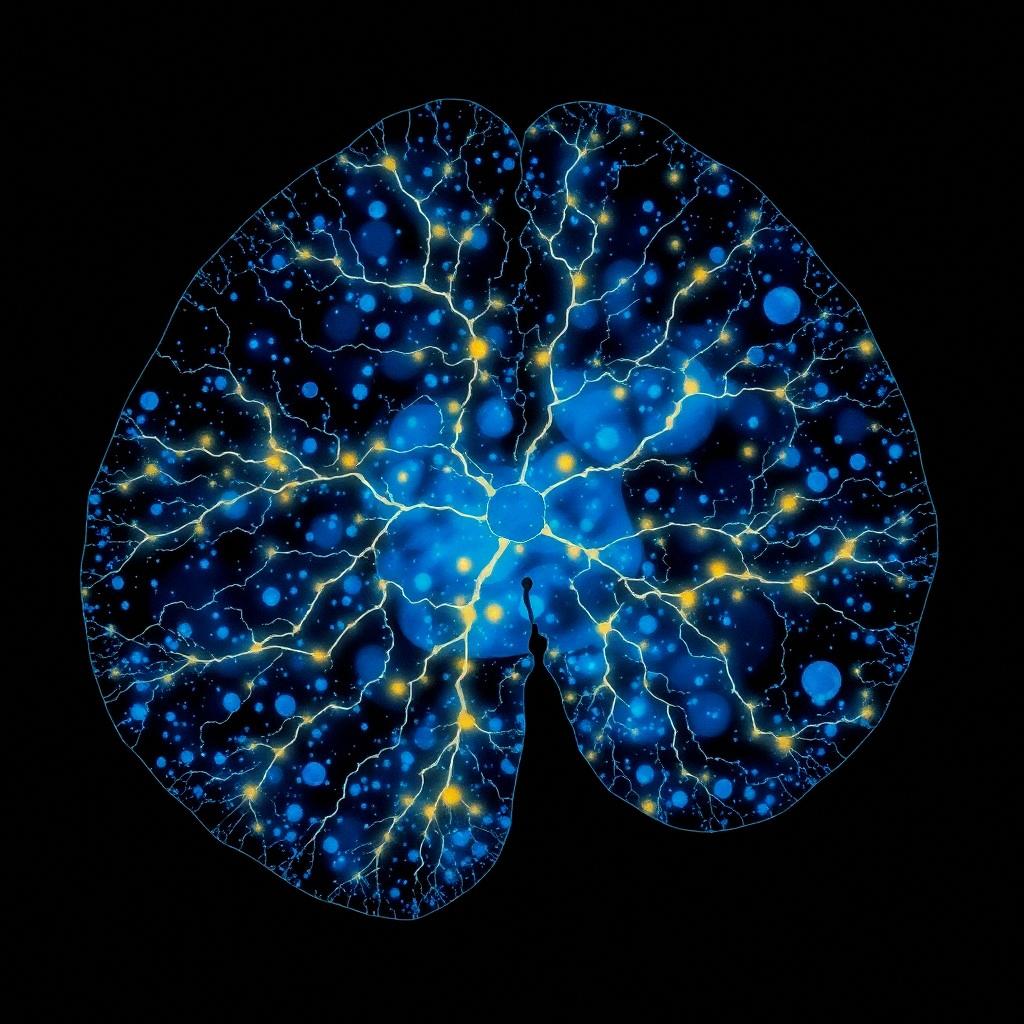
    Paper Review: The microbiota–microglia axis in central nervous system disorders Science Art

     Science Movie


    Make a narrated HD Science movie for this answer ($32 per minute)


     Discussion


    Get Ahead With Science Insights

    Custom summaries of the latest cutting edge Science research. Every Friday. No Ads.


    My BGPT