Why BGPT?
logo

Deconstruct Scientific Papers

Go beyond summaries to locate specific, verifiable claims and sources within research.Know what falsifiable science actually supports before you trust the answer.

Press Enter ↡ to search paper


     Quick Explanation


    This 2008 Cell Division review usefully consolidated the then-nascent field of histone H2A deubiquitination, correctly predicting that uH2A-regulating enzymes would prove central to transcription, DNA damage signaling, and cell-cycle controlβ€”a framework largely vindicated by later structural and mechanistic studies.


     Long Explanation


    Verdict

    Written by authors embedded in the primary discoveries (Nicassio, Citterio, Van Lohuizen, Di Fiore), this review delivers an honest synthesis of a field at an inflection point: uH2A had just been mechanistically linked to Polycomb silencing via Ring1A/B as E3 ligases, and five H2A DUBs had just been identified .

    Core Claims Assessed

    • Transcriptional antagonism: The review's central framingβ€”that uH2A deposited by PRC1 Ring1A/B represses developmental genes, while DUBs (Ubp-M, USP21, 2A-DUB, USP22) counteract thisβ€”was well-supported by the then-recent PRC1 ligase work .
    • Stage-of-transcription ambiguity: The authors candidly flag an internal tension: uH2A inhibits H3K4 methylation by MLL3 in vitro (initiation model, USP21/Nakagawa), yet at bivalent ES-cell promoters uH2A and H3K4me coexist while initiation proceedsβ€”implying elongation or promoter-escape inhibition instead (Ring1A/B, 2A-HUB data). This honest acknowledgment of a mechanistic contradiction is a strength.
    • DDR signaling cascade: The ATMβ†’MDC1β†’RNF8-Ubc13β†’H2A/H2AX ubiquitinationβ†’BRCA1/53BP1 recruitment pathway is accurately reconstructed, with appropriate caution about whether uH2A itself directly recruits DDR factors. Subsequent structural work confirmed sophisticated ubiquitin–nucleosome readout mechanisms the review anticipated as a key open question .

    H2A DUB Inventory (Table 1 of the review)

    DUBFamily/DomainSubstratesKey InteractorsProcess
    USP3ZnF-UBP, UCHH2A, H2Bn.d.DDR; S-phase progression
    USP16/Ubp-MZnF-UBP, UCHH2An.d.HoxD10 transcription; G2/M
    USP21UCHH2An.d.Transcription (liver regeneration)
    USP22ZnF-UBP, UCHH2A, H2BSAGAMyc/AR/ER coactivation; G1/S
    2A-DUB (MYSM1)SANT, SWIRM, JAMM/MPN+H2Ap/CAF, Trip5/KIF11, Rbm10AR coactivation

    Example of the pre-2008 dynamic-ubiquitination evidence the review cites: a ~2-fold transient uH2A increase at 4–6 h in DMSO- or hypoxanthine-induced murine erythroleukemia cells, single cell line, semi-quantitative densitometry .

    Blind Spots and What Followed

    • Antibody specificity: The authors themselves note difficulty generating specific anti-uH2A antibodiesβ€”a genuine confounder for nearly all ChIP/IF-based claims in the cited literature.
    • Missing players: RNF168 was identified only in 2009; the review's DDR section credits RNF8 as the DSB E3 ligase, an incomplete picture later refined by RNF168's discovery and its acidic-patch/Ξ±1-extension-directed specificity for K13/15 across H2A variants .
    • Crosstalk bidirectionality: The review presents uH2Aβ†’H3K4 inhibition unidirectionally; later work showed H2A-tail acetylation and H2A.Z also dampen H2BK120 ubiquitination itself, i.e., chromatin context gates the writers .
    • Structural mechanism of spreading: The review's speculation that uH2A may act as a "landing platform" for ubiquitin-binding regulatory proteins was prescientβ€”cryo-EM later showed RYBP-PRC1 reads H2Aub1 via RYBP while writing new H2Aub via RING1B:BMI1 on opposing nucleosome faces, a genuine read-write spread mechanism .
    • Stress dynamics unexplored: The cell-cycle section omits broader stress-dependent uH2A dynamics (e.g., rapamycin/hydroxyurea increase, MMS-induced deubiquitination in HeLa), which would later complicate simple repressor/activator dichotomies .

    Bottom line: As a 2008 snapshot, the review is accurate, candid about contradictions, and its open questions (ubiquitin-receptor identification, DUB recruitment, genome-wide uH2A mapping) mapped the field's next 15 years well. Confidence: moderate-highβ€”primary claims trace to well-replicated studies; the review contains no primary data, so conclusions inherit the heterogeneity of the cited in vitro/in vivo systems.


    Feedback:    

    Updated: November 27, 2026

     BGPT Paper Review


    Study Novelty

    70%

    Review article synthesizing then-recent discoveries (PRC1 E3 ligase, five H2A DUBs, RNF8 DDR axis); not itself a discovery, but consolidated a genuinely new subfield in 2008.


    Scientific Quality

    90%

    Well-organized, candid about contradictions (initiation vs elongation models), transparent funding, no competing interests declared; limitations are those inherent to the cited heterogeneous literature, which the authors largely acknowledge themselves.


    Study Generality

    80%

    Covers transcription, DNA damage response, and cell-cycle control across yeast, fly, mouse, and human systems; general chromatin-dynamics implications extend beyond uH2A itself.


    Study Usefulness

    90%

    Served as a field-defining roadmap; its stated open questions (ubiquitin receptors, DUB recruitment, genome-wide uH2A mapping) accurately predicted the next decade of research.


    Study Reproducibility

    70%

    As a review, reproducibility rests entirely on the cited primary studies, which include strong (Cell, Nature, Science) mechanistic work but also single-cell-line, semi-quantitative experiments.


    Explanatory Depth

    80%

    Moves beyond cataloguing DUBs to mechanistic models (H3K4 crosstalk, H1 phosphorylation, FACT exclusion, AuroraB inhibition), while honestly flagging where models conflict.


    🎁 Authors: Collect 500 Free Science Tokens (β‰ˆ $50.0 USD)

    Claim My Author Tokens

    Use for 125 days of free BGPT access (4 tokens = 1 day) or trade/sell (β‰ˆ $50.0 USD)

     Top Data Sources ExportMCP


     Hypothesis Graveyard


    uH2A uniformly blocks initiation via H3K4 methylation inhibition: contradicted by bivalent promoters where uH2A and H3K4me coexist and initiation proceeds.


    RNF8 as the sole DSB H2A/H2AX E3 ligase: superseded by RNF168 discovery (2009) and structural delineation of RNF168/169/RAD18 recognition.

     Science Art


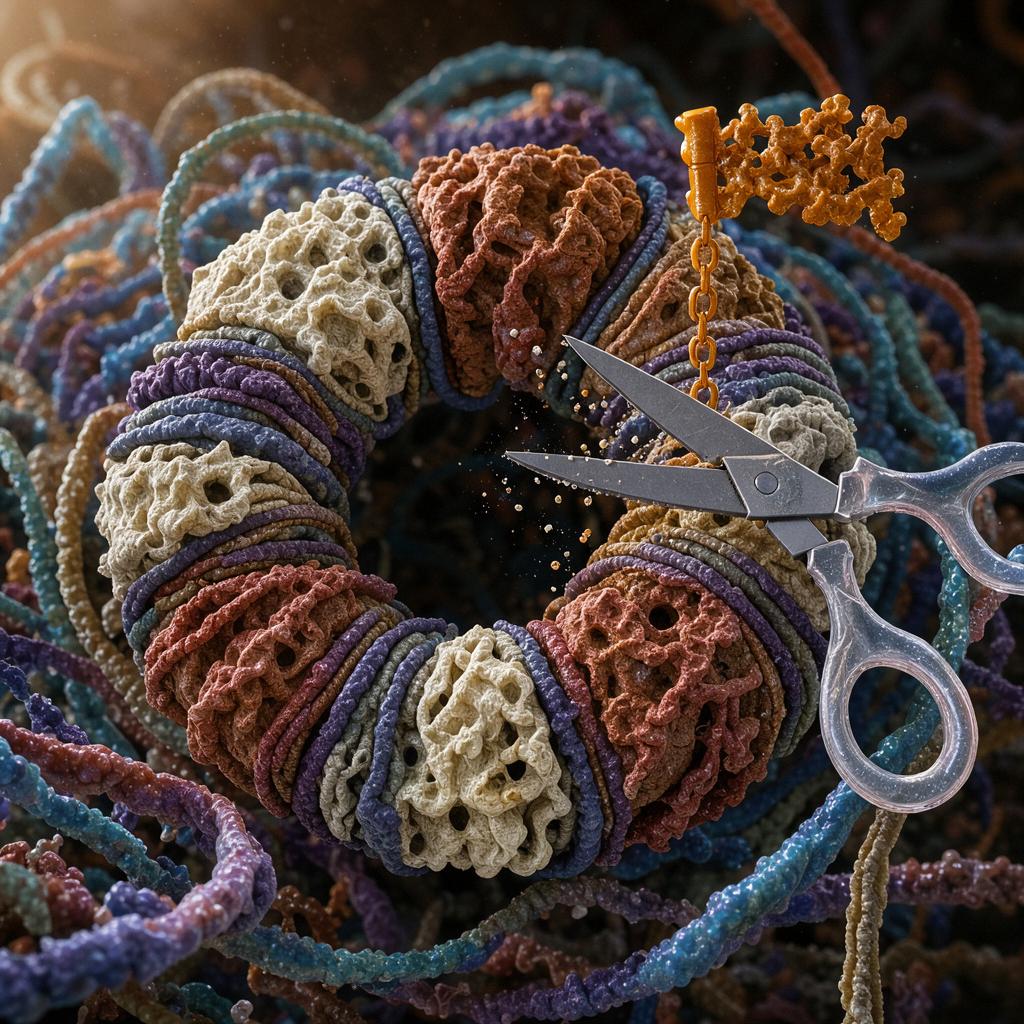
    Paper Review: The many faces of ubiquitinated histone H2A: insights from the DUBs Science Art

     Science Movie


    Make a narrated HD Science movie for this answer ($64 per minute)


     Discussion


    Stay current without chasing every paper.

    Know what changed, what holds up, and what remains uncertain. Every Friday. No ads.


    My BGPT