Why BGPT?
logo

Review papers with raw data transparency

Quickly verify claims by accessing the underlying experimental data and figures.


Press Enter ↵ to solve


    Fuel Your Discoveries


     Quick Explanation


    What this review claims (and what’s uncertain): It argues that host–microbiome interactions (gut + oral + periodontal) and specific probiotic strains may modulate cardiovascular risk factors (lipids, blood pressure, obesity/inflammation) and occasionally cardiovascular outcomes, but it repeatedly relies on heterogeneous evidence and many mechanistic links that are not yet proven causally in humans.
    Key quantitative anchor in the provided text: Lactobacillus reuteri NCIMB 30242 is reported as lowering LDL-C by 11.6% in hypercholesterolemic adults in a randomized controlled trial.


     Long Explanation


    Paper Review (Evidence-grounded): “The influence of the human microbiome and probiotics on cardiovascular health”

    DOI: 10.4161/19490976.2014.983775 • Published: 01 Feb 2015
    Paper type (from provided text): narrative review
    No new primary data collected; synthesis of prior human/animal/in-vitro studies is the core method.

    Visual: Interventions & mechanistic claims mapped to cardiovascular-relevant endpoints

    Skeptical note: This mapping is a theme diagram, not a quantitative causal model. The review itself emphasizes that “many of these activities remain to be proven in humans” (as reflected by its figure description).

    Visual: Strain/model examples explicitly listed in the review’s Table 1

    Species Strain Model (as stated) Benefit (as stated)
    Lactobacillus rhamnosusGGMouseWeight reduction; prevent ischemia in I/R injury
    L. rhamnosusGR-1RatAttenuate heart failure; cardiac hypertrophy
    L. rhamnosusPL60MouseReduce adipose tissue mass
    Lactobacillus sakeiNR28MouseWeight reduction
    Lactobacillus/Bifidobacterium sppMulti-strainHumanReduce BMI in obese adults; reduce serum cholesterol
    Lactobacillus/Bifidobacterium sppMulti-strainIn vitro cultureProduce ACE-inhibitory peptides
    Lactobacillus plantarumPL62 (and 299v)Mouse/RatReduce adipose tissue mass; reduce I/R ischemia severity
    Lactobacillus reuteriNCIMB 30242HumanLower serum cholesterol
    Source of table content: the review’s provided Table 1.

    Visual: One extracted effect size (LDL-C) with explicit trial context

    The 11.6% figure is reported in the review as an RCT effect in hypercholesterolemic adults.
    Uncertainty: The review excerpt provided does not include confidence intervals, sample size details, or duration for this extracted effect in-line; those details require checking the primary RCT report.

    Core claims (what’s known vs inferred vs uncertain)

    1) Human microbiome baseline structure is supported by large cohort work (known).
    • Human microbiome projects established that different body sites have characteristic microbial communities and functional capacities (reviewing HMP-era evidence).
    2) Oral/periodontal disturbances may relate to cardiovascular risk through inflammation and immune mechanisms (partly known; causality uncertain).
    • The review states epidemiological/molecular evidence linking periodontal disease to cardiovascular disease risk, while noting difficulty establishing a definitive causative link between periodontitis and specific CVD events.
    • It highlights plausible pathways: bacterial DNA in atherosclerotic lesions, TLR interactions, metalloproteinases, and cross-reactive antibodies against heat shock proteins.
    Skeptical framing: “Bacterial DNA in lesions” is consistent with multiple explanations (past infection, translocation, or incidental co-localization). Without rigorous causal experiments and human temporality, causal inference remains limited.
    3) Diet and gut microbial metabolism can influence lipid and cardiometabolic risk pathways (known mechanisms; human translation varies).
    • The review discusses obesity-associated microbiome patterns, energy harvesting, and transmissibility in animal models.
    • It also discusses microbe-dependent conversion of dietary precursors into metabolites that may be pro-atherogenic (in mice) and suggests that microbiome differences between diet patterns correlate with risk markers.
    4) Probiotics: the review leans heavily on “strain-specific effects” (known concept) and suggests cardiometabolic benefit (partly supported; clinical cardioprotection uncertain).
    • Cholesterol lowering: the review cites a meta-analysis and multiple mechanisms (cholesterol assimilation/removal; bile acid deconjugation via bile salt hydrolase; downstream signaling such as FXR).
    • Blood pressure: it cites a meta-analysis of probiotic fermented milk effects and ACE-inhibitory peptide concepts.
    • Cardioprotection: it describes preclinical ischemia/reperfusion and heart failure models; some effects are described as microbiome-dependent and others as potentially direct probiotic–host interactions.
    Critical gap: The review discusses cardiovascular outcomes largely from animal studies and intermediate risk factors from clinical studies; human evidence for preventing heart attacks or reducing hard cardiovascular endpoints due to microbiome/probiotics remains limited in this 2015 narrative.

    Skeptical critique (mechanistic plausibility vs causal proof)

    Important: The bar chart is a text-excerpt emphasis proxy (based on what appears in the provided full text you pasted), not a measure of effect magnitude or study quality.
    • Strain-specificity is both a strength and a trap: The review correctly emphasizes variability across probiotic strains; however, this also means “probiotic” is not a single intervention class with uniform cardiovascular effects. Evidence for any particular strain cannot be generalized without strain-level data.
    • Confounding & reverse causality risk: Microbiome composition correlates with diet, medications, inflammation, oral health, and metabolic status—factors that themselves drive CVD risk. Without rigorous temporality and causal designs, observational associations remain uncertain.
    • Animal-to-human translation: The review describes cardioprotection in rat/mouse I/R and heart failure models; mechanisms in rodents may not map quantitatively to humans. The review’s figure text itself notes human proof gaps.
    • Hard endpoints vs biomarkers: Several claims address LDL-C, blood pressure, and inflammatory markers. Those are plausible causal intermediates but do not automatically imply reductions in MI/stroke/hard outcomes.
    • Publication & narrative bias risk inherent to reviews: Narrative reviews are sensitive to selection and framing; pooling can inflate apparent coherence. (This is a methodological critique, not a claim about any single dataset.)

    What would most strongly disprove the review’s central optimism?

    Disproof targets (causal falsification):
    • Well-powered, strain-specified RCTs showing no meaningful change in validated intermediate risk markers (LDL-C, blood pressure, inflammatory markers) for the purported probiotic strains in populations at risk.
    • Even more crucial: RCTs or causal designs demonstrating no change in cardiovascular events attributable to microbiome-targeted interventions in humans.
    • Mechanism tests: interventions that alter the proposed upstream mechanism (e.g., oral nitrate reduction) without changing the cardiovascular outcome would weaken causal interpretation. (Example of mechanism relevance: antiseptic mouthwash abolishes nitrate BP effects, supporting the mechanism in that specific system.)
    Use this to have an autonomous agent extract/organize additional mechanisms, map them to risk-factor categories, and produce further visual breakdowns.


    Feedback:   

    Updated: April 14, 2026

    BGPT Paper Review


    Study Novelty

    50%

    The topic (microbiome–cardiovascular links; strain-specific probiotics; oral–systemic pathways) was already actively studied by 2012–2014; this 2015 work primarily consolidates mechanistic and clinical themes rather than introducing a new framework or dataset. (Novelty estimate is therefore moderate.)


    Scientific Quality

    60%

    Moderate quality for a narrative review: it includes mechanistic plausibility and cites foundational microbiome work (e.g., HMP) and some RCT-level lipid evidence (L. reuteri NCIMB 30242). However, narrative synthesis is vulnerable to selection/confirmation bias, and the excerpt shows reliance on heterogeneous observational and preclinical evidence without explicit causal quantification in humans. The review also makes broad translational claims while many human-proof gaps are explicitly noted in its figure description. Quantitative extraction is limited in the provided text, restricting effect-size transparency.


    Study Generality

    70%

    It covers multiple body sites (gut + oral), multiple risk pathways (lipids, blood pressure, obesity/inflammation), and multiple probiotic mechanisms. This broad scope supports general conceptual usefulness, though it risks shallow mechanistic specificity for any single endpoint.


    Study Usefulness

    60%

    Useful as an integrative map of candidate mechanisms and strain examples relevant to cardiovascular risk factors. Practical impact is limited by the narrative nature and by the emphasis on biomarkers/preclinical findings relative to hard clinical endpoints.


    Study Reproducibility

    50%

    As a narrative review, it is not designed for replication via code/data. Reproducibility would require re-running the literature selection/synthesis strategy, which is not provided in the excerpt. The paper does not generate new datasets.


    Explanatory Depth

    60%

    Mechanistic depth is mixed: bile acids/BSH and oral nitrate–nitrite–NO are grounded in plausible biology and some causal evidence exists in specific systems (e.g., mouthwash abolishing nitrate BP effects). But the translation from these mechanisms to overall cardiovascular outcomes remains uncertain in the review’s framing.


    🎁 Authors: Collect 75 Free Science Tokens (≈ $7.5 USD)

    Claim My Author Tokens

    Use for 18 days of free BGPT access (4 tokens = 1 day) or trade/sell (≈ $7.5 USD)

     Top Data Sources ExportMCP


     Analysis Wizard


    Not provided: the review excerpt contains no machine-readable microbiome abundance tables or effect-size datasets to transform into computational results without additional raw numeric inputs.


     Hypothesis Graveyard


    “All probiotics reduce cardiovascular risk similarly.” This conflicts with the review’s own strain-specificity emphasis and with evidence that even closely related strains can show contrasting biological effects in humans/animals.


    “Periodontal disease causes atherosclerotic cardiovascular events via a single linear mechanism.” This is too simplistic given confounding risk factors (shared smoking/age/oral hygiene determinants) and because mechanistic evidence (bacterial signatures, antibodies) does not automatically establish temporality or causation in humans.

     Science Art


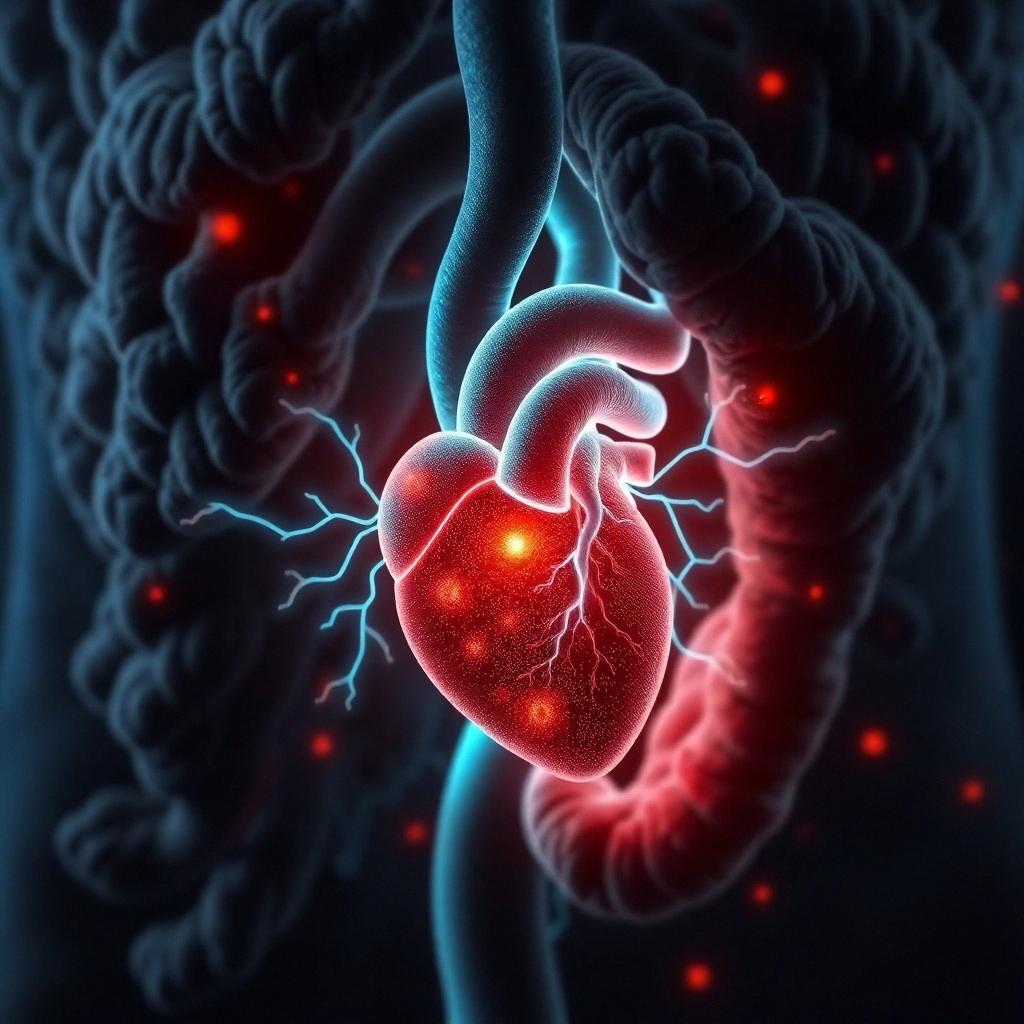
    Paper Review: The influence of the human microbiome and probiotics on cardiovascular health Science Art

     Science Movie


    Make a narrated HD Science movie for this answer ($32 per minute)


     Discussion


    Get Ahead With Science Insights

    Custom summaries of the latest cutting edge Science research. Every Friday. No Ads.


    My BGPT