Check each claim against its experiments, reported results, scope, and stated limitations.Know what the science actually supports before you trust the answer.
Press Enter ↵ to start review
Explore by Goal
"In nature, nothing exists alone."
- Rachel Carson
Quick Explanation
Copied
Skeptical takeaway
This 2019 Lancet Neurology review argues the microbiota–gut–brain axis plausibly contributes to multiple neurological disorders, but it largely synthesizes heterogeneous (often underpowered, cross-sectional, and/or preclinical) evidence—so causality and “actionable signatures” remain unresolved.
Long Explanation
BGPT Critical Visual Paper Review
“The gut microbiome in neurological disorders” — Lancet Neurology (2019-11-18)
These scores summarize how BGPT assessed novelty/quality/etc. They are not clinical effect sizes.
2) What the paper claims (mechanistic framing + disorder coverage)
Core premise: The gut microbiota and its genetic/functional output (microbiome) can regulate major body systems including the CNS via the microbiota–gut–brain axis, and dysregulation is implicated in several neurological disorders.
Systems-level comms: The review organizes plausible communication routes including neuroactive pathways, immune signaling, short-chain fatty acids and microbial metabolites, neural routes (vagus nerve/ENS/spinal nerves), HPA axis/endocrine routes.
Where evidence is strongest in the review: The review states that germ-free mouse studies are “strongest evidence” for a role of the microbiota in brain function, while it also argues human evidence is still emerging and difficult to interpret.
3) Visual pathway map (reproducing the paper’s pathway logic)
This figure is a concise graphified restatement of the review’s pathway list (not new mechanistic data).
4) Skeptical critique: where the review is strong vs where evidence is fragile
Explicit acknowledgment of interpretive difficulty: The abstract states diet/exercise influence microbiome composition, and it calls for longitudinal and randomized controlled trials.
Cross-species mechanistic triangulation: The review uses germ-free and antibiotic depletion models to support causality plausibility, while pairing that with human observational/clinical literature coverage.
4.2 Fragility / blind spots (what could mislead a reader)
Correlation ≠ causation in human datasets: The review itself stresses underpowered and heterogeneous cohort designs and the challenge of confounders.
Taxonomic “signals” may reflect ecology, not mechanism: The review repeatedly lists taxa-level differences but—per its own caveat—exact molecular pathways “have not been defined yet.”
Sampling mismatch risk: It warns that stool bacteria are not a reliable surrogate for the small-intestine microbiome.
Therapeutic translation difficulty: It calls for longitudinal studies and RCTs to determine whether targeting the microbiome yields novel therapeutic strategies.
5) Disorder-by-disorder evidence emphasis (from the review’s narrative emphasis)
This visualization encodes the review’s qualitative emphasis: the review explicitly singles out strongest evidence areas and then addresses others as more nascent.
The review reports that microbiota transfer into experimental autoimmune encephalomyelitis models implicates IL-10–producing CD4 T cells in immunomodulatory effects.
It also notes that germ-free mice are resistant to experimental autoimmune encephalomyelitis, which can be reversed by fecal microbiota transplantation.
The review emphasizes that α-synuclein pathology is detectable in gut-associated sites and discusses vagal routes as plausible conduits.
It further points to registry-based epidemiology suggesting truncal vagotomy is protective against Parkinson’s disease.
The review also describes microbiome effects on PD-like motor deficits and neuroinflammation in model systems.
6.3 Autism spectrum disorder (microbiota transfer & germ-free behavioral phenotypes)
The review states germ-free mice show deficits in social behavior and increased repetitive behavior, and that human ASD microbiota transplanted into germ-free mice can induce autistic-like behaviors.
7) How this review positions next research (and what would disprove it)
Trajectory to causality: shift from correlational human observational studies toward causative functional outcomes via interventional (probiotic/prebiotic/FMT) and longitudinal designs.
“Healthy microbiome” problem: it frames defining a healthy microbiome as a major conundrum due to large inter-individual differences, limiting universal one-size-fits-all targeting.
Disproof criteria (conceptual falsification): evidence that microbiome manipulation fails to change brain-relevant endpoints over time in well-controlled human studies would undermine “microbiome as susceptibility factor/therapeutic conduit” claims. This follows directly from the review’s stated need for longitudinal RCTs to determine whether targeting yields therapeutic strategies.
8) Bayesian-style confidence statement (what would change my mind)
My confidence (based on the text you provided)
High confidence that the review correctly captures the broad state of the field up to 2019: lots of mechanistic plausibility + strong animal-model dependence, but limited human causality evidence and major confounding/heterogeneity concerns.
Lower confidence in any specific “microbial signature → disorder” mapping because the review itself flags small cohorts, disparate methods, and undefined molecular signaling details.
The review discloses invited speaker roles and research funding for several authors (notably tied to nutrition/microbiome-related companies). This does not prove bias, but it is a reason to weigh causal claims conservatively and to look for rigorous RCT/longitudinal substantiation rather than relying on correlational or preclinical-only narratives.
Author review links (bespoke)
Open specialized BGPT “Author Review” pages for major named contributors.
Feedback:
Updated: March 19, 2026
BGPT Paper Review
Study Novelty
60%
The topic (microbiota–gut–brain axis in neuro disorders) was already active by 2012–2019; this review’s novelty is mainly integrative synthesis and updated framing rather than new primary evidence.
Scientific Quality
80%
Scientifically solid as a narrative review with explicit caution on confounding/heterogeneity and a mechanistic pathway framework; weaker reproducibility expectations are typical for narrative syntheses. Quality is reduced by dependence on the small/heterogeneous nature of underlying studies and by limited molecular-pathway specificity in the schematic.
Study Generality
70%
Covers multiple neurological disorders and broad mechanistic routes, increasing scope beyond a single disease while still constrained to microbiome–brain themes (not a fully pan-neuroscience generalization).
Study Usefulness
70%
Useful as a structured map of mechanisms and evidence types, but not sufficient to guide causal conclusions or clinical targeting because it emphasizes that longitudinal RCT evidence is still needed.
Study Reproducibility
40%
As a narrative review, it does not generate new public datasets or reproduce a single computational pipeline with accessible raw outputs; reproducibility largely depends on the transparency of its search strategy and on the underlying primary studies’ methods.
Explanatory Depth
70%
Provides mechanistic pathway organization (neuroactive/immune/SCFA–metabolite/neural/HPA/endocrine) and connects evidence types (germ-free/transfer/clinical cohorts), but admits that exact molecular signaling pathways are not fully defined.
Creates a Plotly “evidence dashboard” from this review’s extracted metadata (scores, citation counts, disorder emphasis) and outputs an interpretable HTML figure set for rapid literature triage.
Get emailed when your analysis is done!
We'll email you the results when your analysis is finished.
Hypothesis Graveyard
The “single universal dysbiosis signature” hypothesis is unlikely because the review explicitly notes large inter-individual variability and method/diet confounding; consistent genus-level signatures across disorders are therefore more likely to be epiphenomenal.
The “gut bacteria act only through one pathway (e.g., vagus nerve alone)” hypothesis is weakened by the review’s own multi-route schematic and the lack of fully defined molecular signaling pathways.

 Explore by Goal
 Quick Explanation
 Long Explanation
 Top Data Sources
 Ask a Follow-Up
 Key Insight
 Keep Exploring
 Analysis
  Hypothesis Graveyard
 Potential Experiments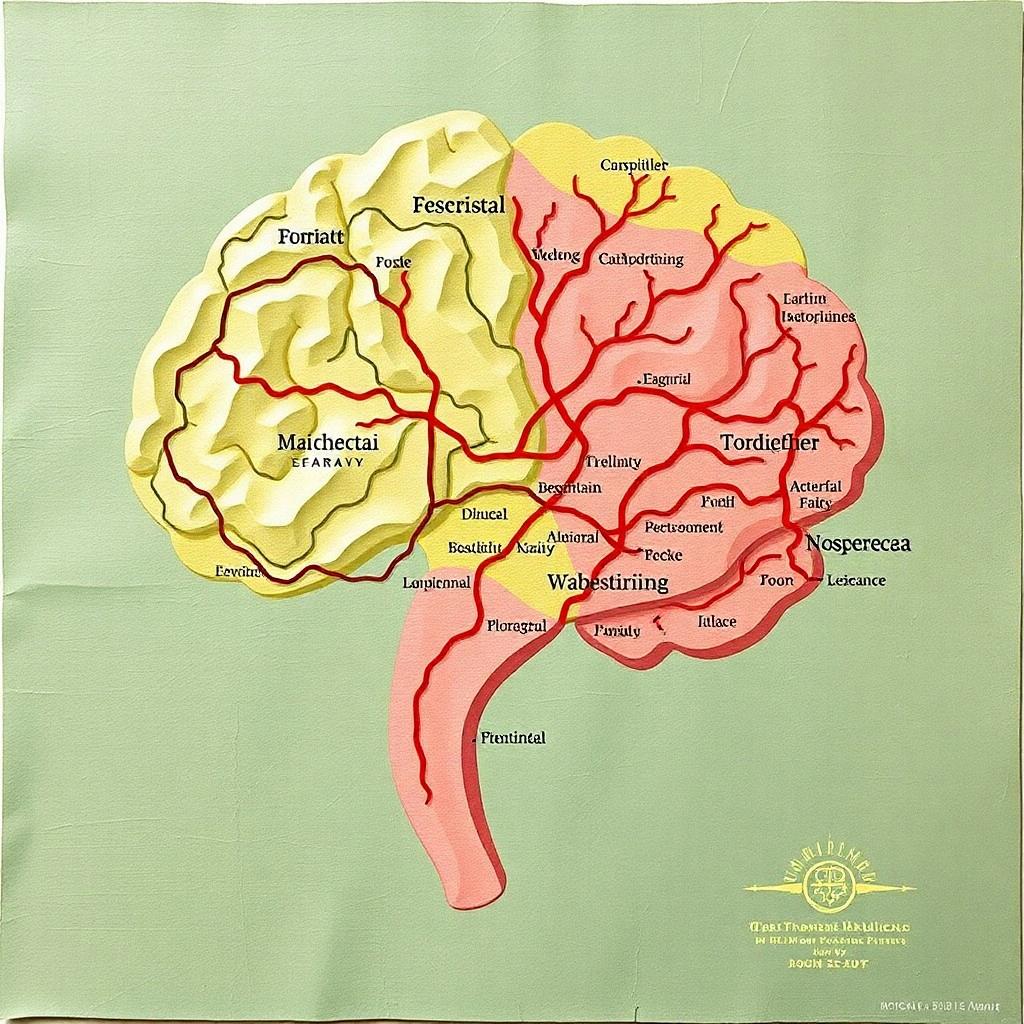
 Discussion