Check each claim against its experiments, reported results, scope, and stated limitations.Know what the science actually supports before you trust the answer.
Press Enter ↵ to start review
Explore by Goal
"The biology of mind bridges the sciences – concerned with the natural world – and the humanities – concerned with the meaning of human experience."
- Eric Kandel
Quick Explanation
Copied
Two experiments (N=131 eye-tracking lab; N=869 web panel) show questions placed at the end of web surveys receive less fixation time, shorter response times, and lower response differentiation than identical questions at the beginning — a solid, honestly-reported finding with modest scope and partial data availability.
Long Explanation
What the Paper Reports
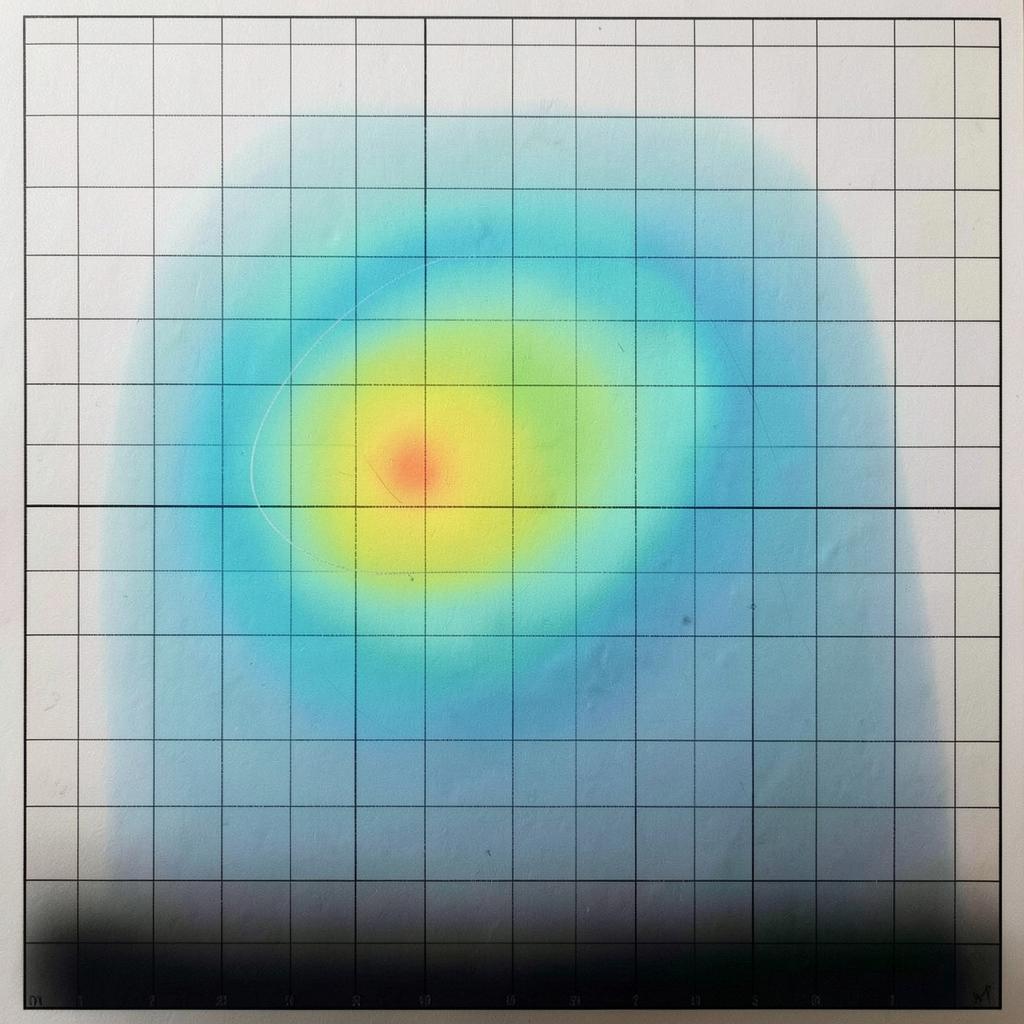
The paper tests whether the position of a question within a web survey affects data quality. In Experiment 1 (lab eye-tracking, N=131, 30-minute questionnaire), the 8-item impulsive-behavior scale placed early vs. late showed: higher response differentiation (Pd=.641 vs .599; p=.037), longer response times (60.9s vs 46.0s; p<.001), longer fixation time on the question text (4.15s vs 2.44s; p<.001), and higher fixation counts (169.1 vs 144.5; p=.006). No item nonresponse occurred, and no item means survived Bonferroni correction. Notably, fixation differences appeared only for the second half of the item list (time: p=.028; count: p=.014), suggesting attention decays even within the question when placed late .
Experiment 2 (Respondi online panel, N=869, ~8.5-minute survey) replicated the effect in a shorter questionnaire: differentiation Pd=.597 vs .549 (p<.001), response times 46.6s vs 39.4s (p<.001), and four of eight item means survived Bonferroni correction (items 1, 2, 5, 7). Item nonresponse remained low (<1%) and did not differ by position. The randomization check revealed a sex imbalance between conditions (p=.006), addressed by including sex as a covariate .
Critical Analysis
Strengths: Pre-registered-style hypothesis testing, randomization balance checks, covariate control, Bonferroni corrections, outlier handling, and a direct (eye-tracking) indicator of cognitive effort rather than only indirect proxies — directly addressing a gap the author herself flags in prior literature .
Blind spots: Item order within the grid was never varied, so the "second half" attention drop could reflect fixed item difficulty rather than within-question fatigue — the author acknowledges this .
Generalizability: Only German-speaking samples (one lab, one panel), one grid scale, self-administered mode. The paper's own literature review (Burchell & Marsh 1992 finding opposite direction) shows position effects are context-dependent — yet no moderators were tested. Data are available "by contacting the author," limiting independent verification .
Statistical caution: Experiment 1 fixation results use ANCOVA with reading-rate/fixation-rate covariates on N≈120; with 8.4% of eye-tracking data excluded for technical quality, selection effects cannot be excluded. The Experiment 2 sex imbalance is a real (if handled) deviation from successful randomization.
Mechanistic leap: The eye-mind assumption (fixation time = depth of processing) is a working hypothesis from cognitive psychology, not a validated law in survey contexts — longer fixations could reflect confusion, not deeper processing.
What Would Change the Conclusion
A preregistered replication varying item order, testing mid-position placements and non-German/non-panel populations with null results on both behavioral and eye-tracking outcomes would falsify the satisficing-by-position mechanism. A demonstration that fixation-time differences predict measurement error against an external criterion would alternatively strengthen it.
Feedback:
Updated: October 19, 2026
BGPT Paper Review
Study Novelty
60%
Positioning effects on data quality were documented decades ago (Krosnick, Galesic & Bosnjak); the genuinely new contribution is direct eye-tracking evidence of processing depth and the within-question second-half attention gradient — incremental rather than groundbreaking.
Scientific Quality
70%
Clean two-experiment design with randomization checks, covariates, Bonferroni correction, and honest limitation disclosure. Deducted for: no item-order manipulation (acknowledged), sex imbalance in Experiment 2, data on-request rather than deposited, and reliance on the unvalidated eye-mind assumption as a mechanistic bridge.
Study Generality
60%
Findings are confined to self-administered web surveys in German samples with one grid-format scale; the author's own citation of opposite-direction prior results (Burchell & Marsh 1992) implies context-dependence, but no moderators are tested.
Study Usefulness
80%
Directly actionable for questionnaire designers: place critical items early, rotate blocks, modularize, or allow resumption. The eye-tracking method offers a reusable template for studying survey response burden.
Study Reproducibility
50%
Methods are clearly described (SPSS 24, BeGaze 3.6.57, AOI definitions) but the eye-tracking data file is available only by contacting the author; no public repository, no analysis code shared.
Explanatory Depth
60%
The satisficing framework provides a plausible causal story, but the mechanism connecting position → attention → data quality is inferred through the eye-mind assumption rather than independently validated; the second-half gradient is a genuinely interesting mechanistic clue left underdeveloped.
We'll email you the results when your analysis is finished.
Hypothesis Graveyard
Boredom alone explains the effect — rejected because Experiment 2 used a short (~8.5 min) survey well within recommended web-survey length, yet effects persisted; burden must arise from cumulative micro-fatigue rather than overt boredom.
Item difficulty differences explain the second-half gradient — rejected as an explanation for the position effect because the same items showed no gradient when placed early; only position changed.

 Explore by Goal
 Quick Explanation
 Long Explanation
 Top Data Sources
 Ask a Follow-Up
 Key Insight
 Keep Exploring
 Hypothesis Graveyard
 Potential Experiments
 Discussion
