Analyze how experimental results and claims are presented, scoped, and limited in a paper.Know what the science actually supports before you trust the answer.
Press Enter ↵ to analyze
Explore by Goal
"Science is the acceptance of what works and the rejection of what does not. That needs more courage than we might think."
- Jacob Bronowski
Quick Answer
Copied
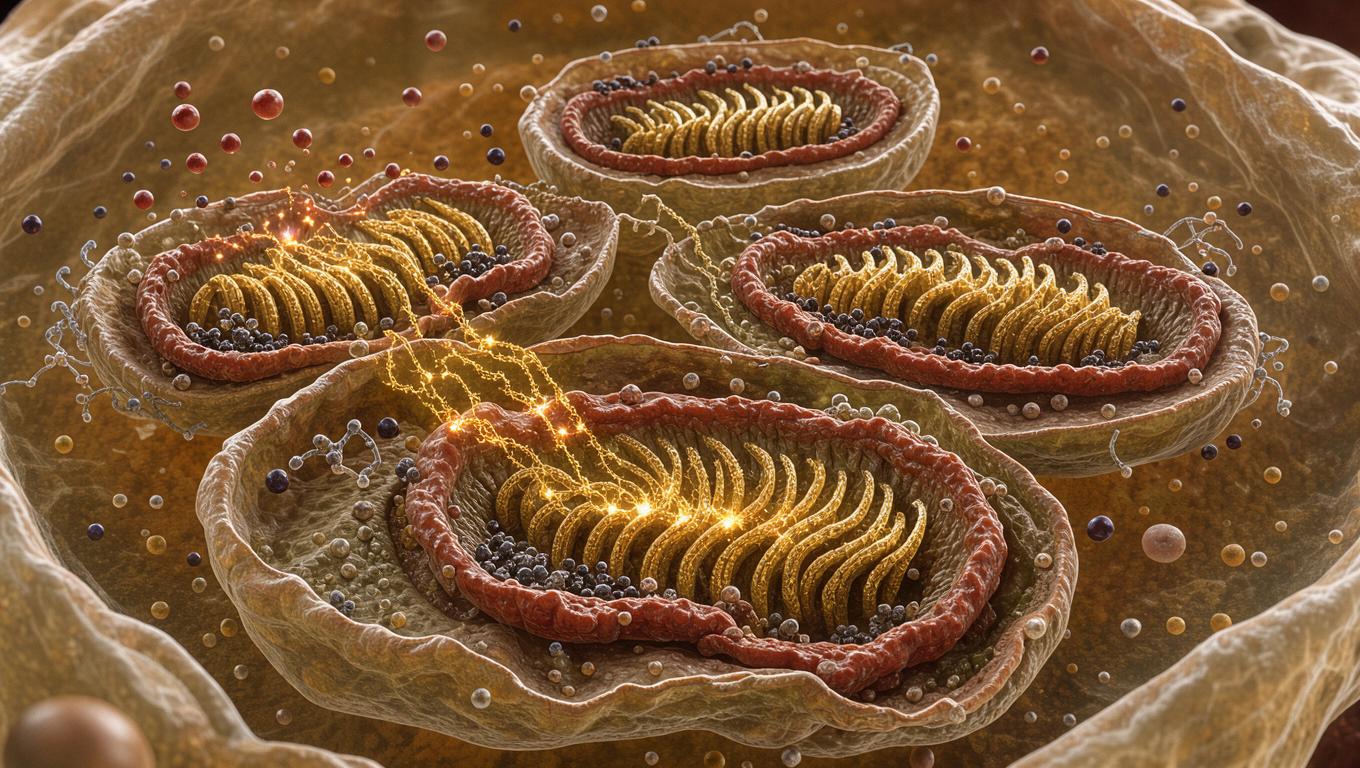
The 1972 Linnane et al. review in Annual Review of Microbiology remains a landmark synthesis of mitochondrial biogenesis in microorganisms, organizing three nascent fields—membrane assembly, mitochondrial genetics, and organelle macromolecular synthesis—at a time when the dual genetic origin of mitochondria was only beginning to be understood. Its core insight that mitochondrial and cytoplasmic protein-synthesizing systems operate in a tightly coupled interlock has been fully vindicated by subsequent molecular biology.
Long Answer
Historical Significance and Scope
This 1972 review by Linnane, Haslam, Lukins, and Nagley from Monash University appeared at a pivotal moment: the dual genetic origin of mitochondria was established, but the molecular details of how nuclear and mitochondrial genomes coordinate organelle assembly remained almost entirely unresolved. The authors organized the field into three pillars—(a) membrane composition, assembly, and function; (b) genetic studies; (c) synthesis and control of macromolecular components—that still frame mitochondrial biology today .
Key Scientific Contributions
The review's most enduring conceptual contribution is the explicit articulation of the "interlock" between mitochondrial and cytoplasmic protein-synthesizing systems. The authors demonstrated that when cytoplasmic products become unavailable, the mitochondrial system rapidly becomes inhibited, and that mitochondrial translation contributes only 4–15% of total mitochondrial protein—establishing that the vast majority of mitochondrial proteins are nuclear-encoded . This quantitative framing was prescient and remains accurate today.
The genetic section provides the first systematic treatment of mitochondrial recombination and vegetative segregation in yeast, including the polarized transmission of mitochondrial genomes in crosses and the concept of mitochondrial "sex" (omega+ and omega-) .
Notable Specific Findings
The review documented that petite-positive yeasts (S. cerevisiae) have P:O ratios of 2 (lacking Site I phosphorylation), while petite-negative obligate aerobes (Candida utilis) achieve P:O ratios of 3 for NADH-linked substrates. Iron or sulfate limitation in chemostat cultures of C. utilis reversibly abolishes Site I energy conservation and piericidin A sensitivity .
Critical Assessment and Blind Spots
The review exhibits several epistemological limitations inherent to its era. The concept of "structural proteins" and "miniproteins" (2600–8800 Da oligopeptides comprising 10–13% of mitochondrial protein) proposed by Munkres and colleagues is presented with appropriate caution but has not survived—these were almost certainly degradation artifacts rather than functional components . Similarly, the reported sizes of mitochondrial DNA molecules (~50 × 10⁶ daltons for S. cerevisiae) were later revised substantially as more accurate methods became available.
The review also reveals the technical limitations of the era: conflicting reports on mitochondrial ribosome sedimentation values, inability to isolate intact circular mtDNA from grande strains, and uncertainty about whether mitochondrial RNA polymerase is rifampicin-sensitive. These contradictions—honestly acknowledged by the authors—reflect genuine methodological challenges rather than scientific error.
Legacy and Modern Perspective
Modern mitochondrial genomics has confirmed the broad architecture the 1972 authors proposed. The yeast mitochondrial genome is indeed extraordinarily AT-rich (now known to be ~82 kb with extreme AT content), the interlock between two protein-synthesizing systems is now understood at the molecular level through the TIM/TOM import machinery, and the bacterial-like nature of mitochondrial translation (N-formylmethionine initiation, 70S-type ribosomes, sensitivity to chloramphenicol) is fully established. Modern work on Paramecium mitochondrial genomes confirms the strong purifying selection on mitochondrial genes that the 1972 authors could only infer from phenotypic data . The extreme mitochondrial genome reduction seen in some microbial eukaryotes—such as the 22.7 kb mitogenome of planktonic foraminiferans with only 6 protein-coding genes—represents an evolutionary endpoint of the reductive processes the 1972 authors began to characterize in petite mutants .
What Would Disprove the Core Framework
The central interlock model would be falsified if: (1) mitochondria were shown to synthesize the majority of their own proteins (contradicted by modern proteomics showing ~1% mitochondrial-encoded); (2) mitochondrial translation products were dispensable for assembly of respiratory complexes (contradicted by the essential role of mitochondrially-encoded cytochrome oxidase subunits); or (3) anaerobic promitochondria were shown to be artifacts rather than genuine precursors (contradicted by modern electron cryotomography confirming their existence).
Feedback:
Updated: November 01, 2026
BGPT Paper Review
Study Novelty
70%
For 1972, this was a field-defining synthesis that organized mitochondrial biogenesis into a coherent framework. It was not the first review on the topic but was the most comprehensive and systematic treatment of microbial mitochondriogenesis at that time, coining concepts like the interlock and mitochondrial sex.
Scientific Quality
80%
Exceptionally thorough for a review of its era, covering ~370 references with critical evaluation of conflicting data. The authors explicitly flag uncertainty (e.g., on miniproteins, rifampicin sensitivity) rather than overreaching. The main weaknesses are era-dependent: inability to resolve molecular mechanisms, reliance on indirect inhibitor studies, and some concepts (structural proteins) that did not survive.
Study Generality
80%
Covers multiple organisms (S. cerevisiae, Neurospora, Candida, Euglena, Tetrahymena, Paramecium, Physarum, Blastocladiella), multiple approaches (genetic, biochemical, ultrastructural), and frames principles that transcend any single organism. The dual-genetic-origin framework is universal to all eukaryotes.
Study Usefulness
80%
Served as the definitive entry point into mitochondrial biogenesis for a generation of researchers. Its systematic organization of mutants, methods, and concepts guided experimental design for years. Still valuable as historical context for understanding how modern mitochondrial biology emerged.
Study Reproducibility
70%
As a review, reproducibility refers to how faithfully it represents the primary literature and whether its conceptual frameworks can be tested. The authors cite specific data (P:O ratios, recombination frequencies, % protein synthesis contributions) that are traceable. Some claims about structural proteins remain unverified.
Explanatory Depth
70%
The review achieves good mechanistic depth for its era, particularly in the genetic and protein-synthesis sections. It proposes testable models (interlock, membrane self-determination) and explicitly identifies gaps (mechanism of suppressiveness, nature of RNA polymerase rifampicin sensitivity). It cannot achieve molecular-level mechanistic explanation because the tools did not yet exist.
Compiling comparative mitochondrial genome statistics (size, GC content, gene count) from modern microbial eukaryote datasets to quantify how mitochondrial genome reduction has proceeded since the 1972 review's initial characterizations.
Get emailed when your analysis is done!
We'll email you the results when your analysis is finished.
Hypothesis Graveyard
'Miniproteins' as functional structural proteins organizing mitochondrial enzyme localization: Falsified because subsequent proteomics showed these were degradation products of larger proteins, and modern understanding of protein targeting via N-terminal presequences made the proposed binding mechanism unnecessary.
Mitochondrial membranes having literal 'self-determination' independent of genetic systems: Not falsified per se but superseded by the molecular understanding that membrane identity is determined by protein-lipid interactions specified by both genomes, not by an autonomous membrane-level deterministic system.

 Explore by Goal
 Quick Answer
 Long Answer
 Top Data Sources
 Ask a Follow-Up
 Key Insight
 Keep Exploring
 Analysis
 Hypothesis Graveyard
 Potential Experiments
 Discussion
