Why BGPT?
logo

Review papers with raw data transparency

Quickly verify claims by accessing the underlying experimental data and figures.


Press Enter ↡ to solve


    Fuel Your Discoveries


     Quick Explanation


    Paper focus:
    β€œTargeted Therapy for Non-Small Cell Lung Cancer” is a narrative, driver-by-driver synthesis centered on EGFR mutations (incl. T790M and C797S resistance), ALK rearrangements, ROS1 fusions, and additional actionable alterations (BRAF, RET, MET, HER2, KRAS), emphasizing molecular testing (tissue & liquid biopsy) and mechanisms of resistance that motivate next-generation and combination strategies.
    Evidence is mostly drawn from published trials and cohorts, with quantitative trial figures summarized in tables (not newly generated data).


     Long Explanation


    Visual Paper Review β€” Targeted Therapy for NSCLC
    Citation:
    1) Visual Map: What this review covers
    The conceptual scope is taken directly from the review’s narrative structure.
    2) Visual extraction from the review: First-line EGFR TKI vs chemotherapy (Table 1)
    Data points used (from the provided Table 1 text in the full paper)
    Each row below uses: EGFR-TKI response rate, median PFS, and the reported hazard ratio p-value.
    Critical note (data-use rigor): These graphs reproduce values exactly as presented in the extracted Table 1 text. They do not correct for cross-trial differences in endpoints/eligibility and should be treated as descriptive summaries rather than a meta-analysis.
    3) Mechanistic storyline: why resistance matters (EGFR: T790M β†’ osimertinib, then C797S, bypass, transformation)
    3.1 What the review claims mechanistically
    • T790M is described as a β€œgatekeeper” resistance mutation arising after first/second generation EGFR TKIs, detected in ~50–60% of patients at progression (as cited in the review).
    • Osimertinib is described as selective for mutant EGFR including exon 20 T790M and as having CNS penetration, with the review highlighting AURA3 and FLAURA outcomes.
    • C797S (a tertiary mutation) and other resistance routes are presented as limiting factors after osimertinib, with discussion of allele configuration (cis vs trans) and potential implications for inhibitor combinations.
    Skeptical calibration: The review’s mechanistic framing is plausible and consistent with molecular pharmacology logic, but because this is a narrative synthesis, the strength of mechanistic causality vs correlation depends on the underlying cited experimentsβ€”many are preclinical or early clinical.
    4) Resistance & next-step decision logic (liquid biopsy and re-testing)
    This figure intentionally uses qualitative attributes because the provided full text excerpt does not supply consistent numeric sensitivity/specificity across all modalities. The underlying qualitative claims about advantages/limitations are taken from the review’s narrative discussion of liquid biopsy vs tissue biopsy for detecting acquired resistance mutations.
    5) Critical appraisal (what’s strong vs what’s uncertain)
    5.1 Strengths
    • Wide driver coverage with trial anchoring: The review systematically traverses major actionable NSCLC alterations (EGFR/ALK/ROS1 plus BRAF/RET/MET/HER2/KRAS) and repeatedly ties claims to named clinical trials and summarized outcomes (response rates, PFS/OS, and toxicity).
    • Resistance-centric framing: It emphasizes that resistance mechanisms (e.g., T790M, C797S, bypass signaling, transformation) are the key driver of therapy evolution.
    5.2 Uncertainties / blind spots
    • Narrative review limits reproducibility: Because the review is not a systematic review/meta-analysis and does not generate new primary data, the conclusions are constrained by which studies were included and how outcomes were selectively summarized.
    • Endpoint comparability: Cross-trial differences (eligibility, line of therapy, CNS assessment methods, comparator treatments) limit direct inference from descriptive comparisons.
    • Generalizability across mutation heterogeneity: Although the review discusses tumor heterogeneity and the rationale for liquid biopsy, the precision of β€œwho benefits” from specific strategies remains sensitive to assay performance and clonal dynamics.
    6) Practical synthesis (decision-relevant scientific takeaways)
    Known vs inferred vs uncertain (from the review text)
    • Known (trial-level summaries in the review): EGFR-mutated NSCLC shows higher response and longer median PFS on EGFR TKIs vs chemotherapy in the trials listed in Table 1.
    • Inferred (mechanistic rationale): Resistance mutation discovery (e.g., T790M) motivates inhibitor switching; subsequent resistance (e.g., C797S, bypass, transformation) motivates new generation inhibitors and combinations.
    • Uncertain (translation durability/generalization): Whether combination strategies for resistance and specific CNS-upfront strategies will produce sustained OS advantage remains described as maturing/under investigation in the review.


    Feedback:   

    Updated: March 30, 2026

    BGPT Paper Review


    Study Novelty

    60%

    Primarily a comprehensive narrative synthesis of an established precision-oncology framework (EGFR/ALK/ROS1 and other drivers) rather than introducing fundamentally new therapeutic mechanisms or datasets; novelty is mainly in consolidation and resistance/CNS framing.


    Scientific Quality

    70%

    Quality is moderate-high for scope and trial-based organization, but limited by narrative (non-systematic) methodology and lack of new analyses/data; thus epistemic uncertainty and cross-trial endpoint heterogeneity are not formally quantified.


    Study Generality

    70%

    Covers major actionable NSCLC drivers and general clinical decision themes (testing, resistance, CNS, special populations), but remains bounded by the specific driver set and the evolving standards of the era reflected in the review.


    Study Usefulness

    80%

    Useful as a structured, driver-by-driver knowledge map and resistance narrative; the included trial table enables quick comparative inspection of PFS/response trends.


    Study Reproducibility

    30%

    Reproducibility is limited because it is a narrative review and (in the provided text) does not provide a systematic search strategy, standardized extraction rubric, or accessible underlying dataset for quantitative re-analysis.


    Explanatory Depth

    80%

    Depth is strong in mapping molecular alterations to drug generation sequencing and resistance logic, including EGFR T790M β†’ osimertinib and later resistance routes (C797S, bypass, transformation) plus CNS considerations.


    🎁 Authors: Collect 112 Free Science Tokens (β‰ˆ $11.2 USD)

    Claim My Author Tokens

    Use for 28 days of free BGPT access (4 tokens = 1 day) or trade/sell (β‰ˆ $11.2 USD)

     Top Data Sources ExportMCP


     Analysis Wizard


    Extract Table 1 EGFR trial PFS/response values into arrays, generate comparison plots for TKI vs chemotherapy, and output a machine-readable summary table for audit and downstream meta-analysis.


     Hypothesis Graveyard


    Strongman: β€œLiquid biopsy always replaces tissue biopsy for actionable resistance detection.” The review itself emphasizes heterogeneity representation advantages but also notes assay sensitivity limitations for some alterations and the need for clinical judgment.


    Strongman: β€œOS benefits will be uniformly realized once PFS improves for every targeted driver.” The review explicitly notes settings where OS benefit is absent or still maturing, suggesting that crossover, biology, and resistance dynamics can uncouple PFS from OS.

     Science Art


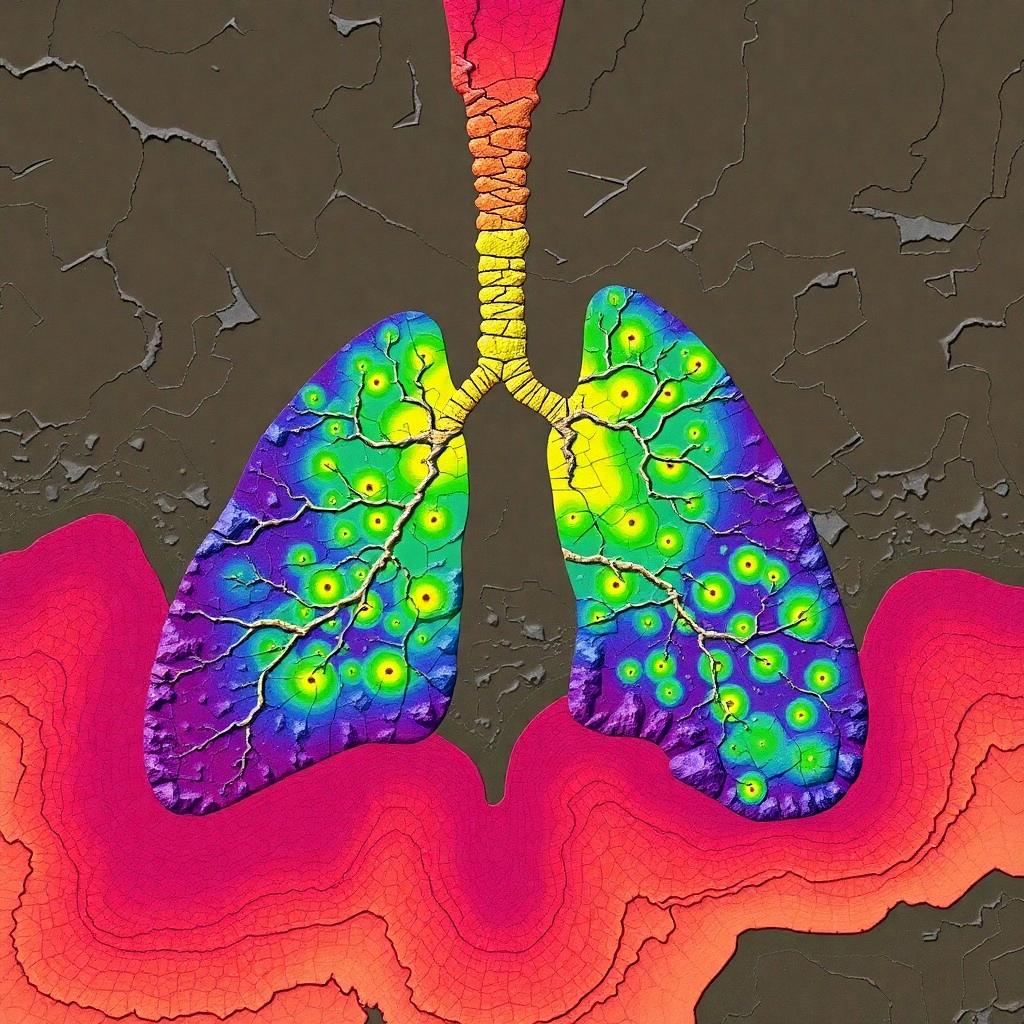
    Paper Review: Targeted Therapy for Non-Small Cell Lung Cancer Science Art

     Science Movie


    Make a narrated HD Science movie for this answer ($32 per minute)


     Discussion


    Get Ahead With Science Insights

    Custom summaries of the latest cutting edge Science research. Every Friday. No Ads.


    My BGPT