Why BGPT?
logo

Instant paper reviews from raw data

Automatic extraction and concise summaries of methods, figures, and raw results for any paper.


Press Enter ↵ to solve


    Fuel Your Discoveries


     Quick Explanation


    Skeptical take on the review
    The paper argues that TMEM16A (ANO1) is overexpressed in advanced prostate cancer and promotes proliferation, migration, invasion via MAPK/ERK signaling and androgen receptor (AR) regulation, while TMEM16A inhibition shows anti-tumor effects in preclinical models—yet it heavily relies on heterogeneous, often preclinical, and sometimes off-target–prone evidence.


     Long Explanation


    Paper Review (Evidence-First, Skeptical): TMEM16A in prostate cancer
    Mechanistic insights & therapeutic implications — literature review (no new datasets generated)
    What the paper is (and is not)
    • Type: narrative literature review; no primary experiments, and explicitly no datasets were generated or analyzed.
    • Claim scope: it integrates mechanistic studies (ion channel biology, AR/MAPK connections) and therapeutic rationale (TMEM16A inhibition) while acknowledging translational caveats (model mismatch, off-targets, assay inconsistency).
    Visual: mechanistic thesis the review proposes
    “TMEM16A → ionic signaling → MAPK/ERK + AR co-regulation → aggressive phenotypes”
    The review frames TMEM16A (ANO1) as a Ca2+-activated chloride channel whose elevated expression aligns with aggressive prostate cancer features, and whose activity/connectivity links to ERK1/2 activation and cyclin D1 induction, plus AR-driven transcription. These mechanistic connections are plausible in principle given the channel’s established Ca2+-activated chloride conductance identity and broader ion-channel–cancer roles.
    Figure 1. Expression/clinical association & functional inhibition signals cited by the review
    Evidence anchoring (from cited studies inside the review)
    • Correlation between TMEM16A mRNA and TNM stage: r = 0.68, p < 0.01 is attributed to Liu et al.
    • Dual inhibition effect on migration is stated as a larger reduction versus single agents (review cites Fraser et al.).
    • ERK1/2 phosphorylation impact under TMEM16A knockdown is attributed to Seo et al. (as described by the review).
    Note: this plot intentionally mixes different metric types (correlation coefficient and percent changes), so it is for quick visual scanning of “signals,” not for direct quantitative comparison.
    Figure 2. Mechanistic pathway map (AR → TMEM16A → ERK/cyclin D1 → aggressiveness)
    Key mechanistic claims are attributed by the review to: (i) Ca2+-activated chloride conductance identity of TMEM16A (ANO1). (ii) AR-associated regulation and MAPK/ERK linkage as discussed in the review and tied to the included prostate cancer literature.
    Skeptical note: the review sometimes discusses “direct physical interactions” and multi-step signaling models, but it does not always provide primary-protocol-level detail in the text shown here; those exact mechanistic steps should be validated directly in the cited primary papers (e.g., binding sites, phosphorylation sites, whether effects depend on channel conductance vs non-conducting scaffolding roles).
    Therapeutic implications: where the logic is strong vs fragile
    What looks reasonably supported (but still not conclusive)
    • Functional inhibition reduces aggressive phenotypes in prostate cancer models in the cited literature the review summarizes (e.g., shRNA knockdown reduces tumor growth/invasiveness).
    • MAPK/ERK pathway involvement is consistent with ERK being a common proliferation/survival axis downstream of many receptor/channel-mediated mechanisms; the review claims TMEM16A affects ERK1/2 and cyclin D1.
    • Luteolin is highlighted as a TMEM16A/ANO1 inhibitor with cytotoxic effects in PC-3 cells in the cited literature.
    Where the therapeutic inference is most fragile
    • Off-target and pleiotropy risk for small molecules (e.g., luteolin) is explicitly acknowledged by the review as a concern: luteolin may inhibit other kinases (EGFR/Src) or modulate MAPK independently of TMEM16A, which can confound “TMEM16A-targeted” interpretations.
    • Model-to-human translation: the review points to mismatches among cell lines and immunodeficient mouse models (and delivery differences like intratumoral vs systemic administration), any of which can overestimate efficacy and underestimate toxicity or adaptive immune effects.
    • Mechanistic ambiguity: the review notes discrepancies in whether TMEM16A’s tumor promotion stems primarily from its channel activity vs non-conducting scaffolding interactions, and suggests additional mechanistic clarification is needed.
    Critical methodological blind spots (review-level)
    • No new data: the strongest mechanistic/editorial contribution should be judged by how well the cited primary studies are integrated and by whether conflicts are actually resolved—not simply listed.
    • Standardization gap: the review states that measurement methods for TMEM16A expression differ (qPCR vs IHC), impairing consensus-building.
    • Inference chain risk: if TMEM16A inhibition phenocopies MAPK/ERK suppression, the interpretation still must disambiguate: (a) direct TMEM16A conductance dependence, (b) off-target kinase effects, and (c) pathway compensation in different models/tumor microenvironments. This is a general causal-inference concern, and the review itself flags off-target/translation issues.
    Counterfactual “what would disprove the main thrust?”
    Disproving experiments (as test targets)
    • Specificity tests: show that phenotypes attributed to TMEM16A loss are not reproduced by altering unrelated pathways (and vice versa) under highly controlled, TMEM16A-specific perturbations (e.g., conductance-dead vs expression-dead distinctions). This directly targets the review’s acknowledged uncertainty about channel activity vs nonconducting roles and about inhibitor off-targets.
    • Clinical association robustness: demonstrate TMEM16A association with aggressive outcomes withstands multivariable adjustment, consistent assay calibration, and independent cohorts; the review signals that assay heterogeneity can impede this.
    • Translation feasibility: show that efficacy persists with clinically relevant delivery routes and in immune-competent and microenvironment-relevant models, addressing the review’s translation gaps (intratumoral vs systemic; immune surveillance).


    Feedback:   

    Updated: April 06, 2026

    BGPT Paper Review


    Study Novelty

    60%

    As a narrative review, its novelty is mainly in synthesis rather than introducing new mechanistic or structural data; the core mechanistic themes (ANO1/TMEM16A as CaCC; AR/MAPK links; inhibitor rationale) are grounded in earlier studies, so the originality is moderate.


    Scientific Quality

    70%

    Strengths: mechanistic plausibility anchored in TMEM16A’s Ca2+-activated chloride conductance identity and multiple prostate-cancer-focused cited studies; it also acknowledges key translational/off-target limitations. Weaknesses: being narrative (not systematic) limits confidence in completeness; causal specificity (channel conductance vs other roles; off-target effects) is repeatedly implicated as uncertain rather than resolved in a way that would substantially raise mechanistic certainty.


    Study Generality

    70%

    The paper focuses on prostate cancer but repeatedly places TMEM16A in broader multi-cancer and inflammatory contexts; that increases generality, while staying tied to cancer cell behaviors and signaling cascades.


    Study Usefulness

    70%

    Practically useful as a mechanistic map and translational checklist (biomarker potential, MAPK/AR links, preclinical inhibition examples, and limitations). However, without new datasets and without explicit systematic review methods, it is less useful for quantitative prioritization compared to meta-analyses or systematic reviews.


    Study Reproducibility

    60%

    Reproducibility is limited in the usual sense for narrative reviews: there is no analysis pipeline or dataset. The factual traceability depends on the reader’s ability to retrieve and verify each cited primary study, which is possible but not algorithmically reproducible from the review text alone.


    Explanatory Depth

    70%

    It provides a mechanistic narrative (Ca2+-activated anion conductance → ERK/MAPK activation → cyclin D1 → proliferation; AR regulation; TME/immune interactions), but the depth is constrained by review-level integration rather than direct mechanistic validation in the manuscript. The review also notes ambiguous/discrepant aspects (channel activity dependence; signaling pathway details).


    🎁 Authors: Collect 172 Free Science Tokens (≈ $17.2 USD)

    Claim My Author Tokens

    Use for 43 days of free BGPT access (4 tokens = 1 day) or trade/sell (≈ $17.2 USD)

     Top Data Sources ExportMCP


     Hypothesis Graveyard


    The strongman claim that “TMEM16A inhibitors work because they are selective TMEM16A pore blockers” is likely weak unless inhibitor specificity is validated against kinase/phosphatase off-targets; luteolin’s pleiotropy makes this mechanistic attribution fragile.


    The strongman claim that “correlation with TNM/Gleason guarantees TMEM16A is a general prognostic biomarker across patient cohorts” is undermined by assay heterogeneity and the possibility of tumor-context dependence; the review flags inconsistent assay methods and prognostic variability.

     Science Art


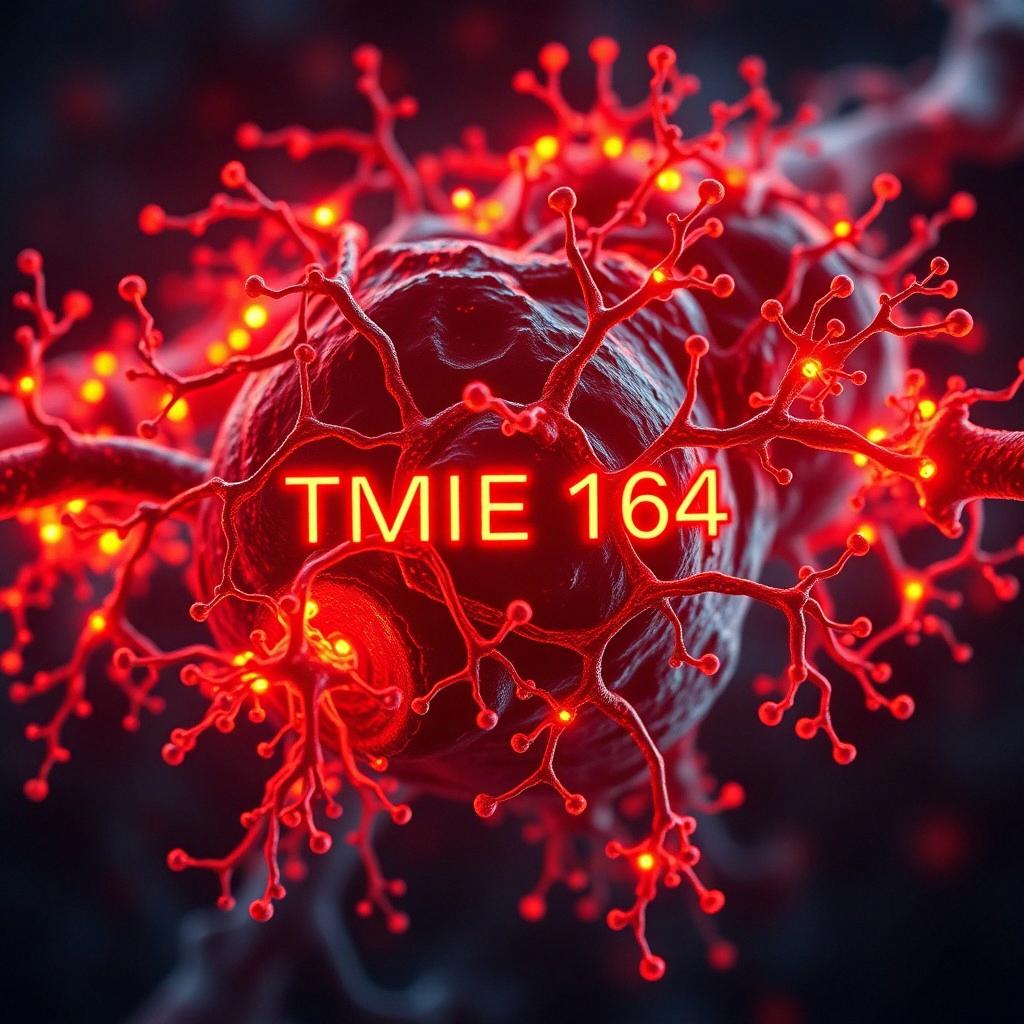
    Paper Review: TMEM16A in prostate cancer: mechanistic insights and therapeutic implications Science Art

     Science Movie


    Make a narrated HD Science movie for this answer ($32 per minute)


     Discussion


    Get Ahead With Science Insights

    Custom summaries of the latest cutting edge Science research. Every Friday. No Ads.


    My BGPT