Why BGPT?
logo

Evidence Paper Review

Analyze how experimental results and claims are presented, scoped, and limited in a paper.Know what the science actually supports before you trust the answer.

Press Enter ↡ to analyze


     Quick Explanation


    This 1993 narrative review by Philip L. Cohen synthesizes decades of SLE immunology, concluding that T cells are activated in vivo yet hyporesponsive in vitro while B cells show antigen-driven autoantibody production, with T-B collaboration central to pathogenesis; its suppression-cell critique proved prescient, but its peripheral-blood-centric, assay-heterogeneous evidence base limits causal inference .


     Long Explanation


    Evidence Base and Central Paradox

    Cohen's review rests on a striking paradox: SLE T cells express HLA-DR/DP activation markers in vivo yet respond poorly to mitogens, antigens, and IL-2 generation in vitro, while B cells show spontaneous polyclonal activation but autoantibodies elevated thousands-fold over normal responses to foreign antigens — arguing against simple over-activation . Somatic mutation in an IgG anti-DNA antibody and epitope spreading on Sm support an antigen-driven mechanism — the review's most durable conclusion.

    What Aged Well vs. Poorly

    • Prescient: The candid history of suppressor-T-cell theory collapse — unclonable cells, elusive I-J gene — is a model of self-correcting science .
    • Aged poorly or unverifiable: Double-negative TCRαβ helper cells and T-cell DNA hypomethylation as causal claims remain mechanistically unresolved at review time.
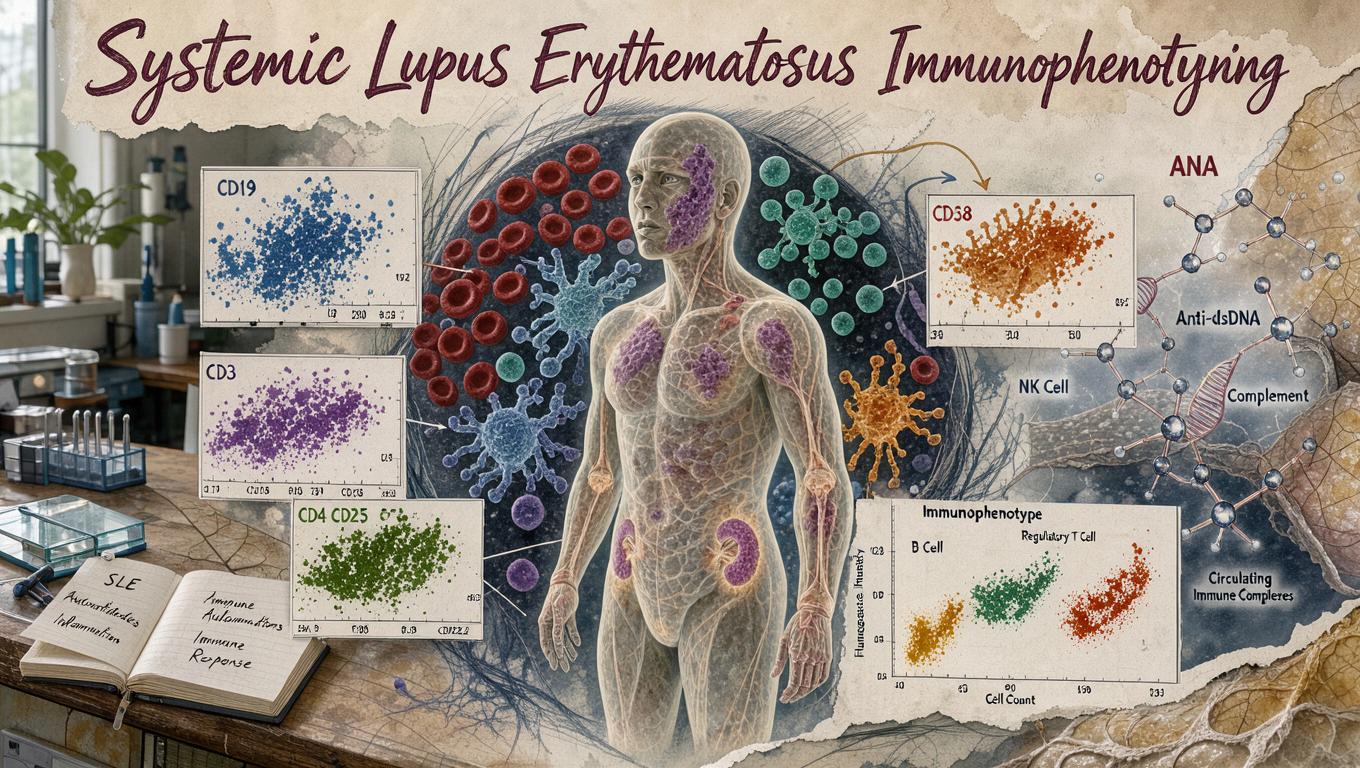
    • Modern contrast: Contemporary SLE reviews now center innate effectors (NETs, impaired DNase clearance) largely absent from the 1993 T/B-cell frame , and precision immunophenotyping now stratifies targeted therapies .

    Blindspots

    Peripheral-blood sampling may miss lesion-resident T cells (Cohen acknowledges this); immunosuppressive therapy confounds functional assays; all evidence is associative narrative synthesis without quantitative meta-analysis. Its antigen-processing hypothesis was speculative and explicitly flagged as lacking experimental basis — appropriately hedged .


    Feedback:    

    Updated: October 29, 2026

     BGPT Paper Review


    Study Novelty

    60%

    A 1993 narrative synthesis of a heavily studied field; novel mainly in its T-B collaboration framing and candid suppressor-cell post-mortem, not new data.


    Scientific Quality

    80%

    Well-referenced (57 sources), balanced, explicitly flags speculation; weakened by narrative format, no quantitative synthesis, and heterogeneous older assays with therapy confounding.


    Study Generality

    70%

    Central T-B collaboration and antigen-driven autoimmunity concepts generalize beyond SLE to autoimmunity broadly, though anchored in SLE-specific serology.


    Study Usefulness

    80%

    Valuable historical synthesis still guiding hypothesis formation; its falsification criteria (T-cell independence of autoantibody) remain testable.


    Study Reproducibility

    60%

    Reviews citable primary studies but provides no datasets, standardized endpoints, or quantitative pooled analysis; claims reflect assay heterogeneity of the era.


    Explanatory Depth

    70%

    Deep mechanistic reasoning on antigen presentation, class II MHC, and cytokine help, but several models are explicitly theoretical without experimental grounding.


    🎁 Authors: Collect 225 Free Science Tokens (β‰ˆ $22.5 USD)

    Claim My Author Tokens

    Use for 56 days of free BGPT access (4 tokens = 1 day) or trade/sell (β‰ˆ $22.5 USD)

     Top Data Sources ExportMCP


     Hypothesis Graveyard


    Loss of suppressor T cells causes SLE: abandoned because suppressor cells were unclonable, I-J was elusive, and receptors did not match the discovered TCR — though Treg biology later partially revived a regulated version.


    Polyclonal B-cell activation alone causes autoantibodies: falsified by the disproportionate (thousands-fold) autoantibody elevation and somatic mutation evidence showing antigen-driven selection.

     Science Art


    Paper Review: T- and B-Cell Abnormalities in Systemic Lupus Science Art

     Science Movie


    Make a narrated HD Science movie for this answer ($32 per minute)


     Discussion


    Stay current without chasing every paper.

    Know what changed, what holds up, and what remains uncertain. Every Friday. No ads.


    My BGPT