Why BGPT?
logo

Review papers with raw data transparency

Quickly verify claims by accessing the underlying experimental data and figures.


Press Enter ↡ to solve


    Fuel Your Discoveries


     Quick Explanation


    Paper review (skeptical, science-focused)

    This scoping review (38 full-text studies found; 19 included) reports a recurring pattern across multiple inflammatory skin diseases: enrichment of Staphylococcus aureus in diseased/lesional skin and, in most conditions (except acne vulgaris), decreased microbial diversity, alongside shifts toward pro-inflammatory bacterial/fungal taxa. However, causality is not established because most included comparisons are cross-sectional (lesional vs nonlesional/healthy), with substantial methodological heterogeneity (sampling, controls, sequencing targets).


     Long Explanation


    Skin Microbiome Shifts in Various Dermatological Conditions β€” Visual + Critical Paper Review

    Type: Scoping review following PRISMA-ScR

    1) What the paper claims (high-level, with skepticism)

    Common taxa signal
    The review states that Staphylococcus aureus is consistently reported as elevated across (nearly) all investigated conditions.
    Diversity direction
    Most conditions (except acne) report decreased diversity in diseased/lesional skin.
    Causality is unresolved
    The paper explicitly notes that microbial shifts may be consequences of pathology rather than the cause, and asks for longitudinal/interventional work.

    2) Visual evidence maps from the paper’s own summary tables

    Below visuals are constructed strictly from the paper’s extracted directionality claims in its summary tables (e.g., Table 2 β€œIncreased/Decreased/Other Changes”).

    Interpretation caution: These bars indicate whether the paper’s summary table reports an β€œIncreased” or β€œDecreased” direction for that condition; they do not encode magnitude, statistical significance, or consistency across all included studies.

    3) Reconstructed β€œrecurring taxa” portrait (paper-level)

    The paper repeatedly emphasizes S. aureus enrichment and often decreased diversity. From the summary tables, the following taxa names appear across multiple conditions (as written in Table 2 snippets provided in the prompt).

    Hard limitation: The frequency is computed only from the taxa names explicitly visible in the prompt’s Table 2 extracts; the full article may include additional taxa in Table 1/other sections.

    4) Methodological quality & β€œepistemic friction” (what may distort conclusions)

    • Scoping review β‰  quantitative meta-analysis. The paper explicitly frames this as scoping and synthesizes heterogenous studies; therefore β€œconsistently elevated” patterns may be influenced by which studies meet inclusion and how they report taxa/diversity metrics.
    • Primary taxonomic methods are dominated by 16S/ITS, often excluding full functional context and may miss strain-level effects. The paper discusses sequencing tradeoffs and notes limits (e.g., 16S focuses on bacteria and ITS on fungi).
    • Lesional vs nonlesional comparisons are highly confounded by disease state, barrier disruption, and prior treatments. The review notes it extracted pre-treatment microbiomes and that many studies are non-randomized or observational, limiting causal inference.
    • Skin microbiome is site- and time-dependent, so β€œsame disease” is not necessarily β€œsame microbiome ecology.” The paper itself emphasizes diversity and barrier context, and broader skin-microbiome ecology shows strong topographical and temporal structure.

    5) A cautious mechanistic framework (what could be true vs unproven)

    Known biology (supported by citations)
    • The skin hosts diverse microbes that can interface with innate immune defenses and influence tissue repair and inflammation.
    • Skin microbes can participate in innate immune defense and homeostasis.
    Unproven in this paper (what you should not over-infer)
    • Directionality (cause vs effect): enrichment of S. aureus could reflect barrier disruption/disease state rather than initiating it. The review itself warns about this.
    • β€œPro-inflammatory strain proportion”: the review reports pro-inflammatory enrichment, but strain- and functional-level claims are constrained by marker-gene sequencing and heterogeneity.

    6) β€œWhat would change my mind?” (falsification targets)

    Disconfirming evidence to look for
    • Reversal in high-quality longitudinal cohorts: If longitudinal samples show that S. aureus enrichment does not track flare onset/severity better than other confounders, then β€œmicrobial signature of progression” weakens. (The review calls for longitudinal testing.)
    • Mechanistic functional evidence: If strain-level functional assays (not just relative abundance) fail to support increased pro-inflammatory capacity in the enriched taxa, the pro-inflammatory interpretation becomes less credible. The review’s sequencing limitations motivate this caution.
    One-sentence critique (most important red flag)
    The central cross-disease narrative (S. aureus enrichment + diversity decrease) is plausible as an associative ecological signal, but the scoping design and marker-gene heterogeneity make it currently too early to treat as a mechanistic, universal driver of disease progression.

    7) Author/venue checks (from paper metadata)

    Publication date: 30 Aug 2025
    Funding: β€œno external funding” (as declared in the text you provided)
    Conflicts of interest: β€œauthors declare no conflicts of interest”
    Run deeper science (optional, automated)
    Author reviews (clickable)


    Feedback:   

    Updated: March 26, 2026

    BGPT Paper Review


    Study Novelty

    60%

    It is a cross-condition scoping synthesis of skin microbiome shifts using a literature search through April 2024, building on a mature research area rather than presenting a fundamentally new experimental discovery. The key novelty is the breadth across multiple dermatologic conditions and the emphasis on multi-kingdom (bacterial/fungal) shifts, within a scoping-review framework.


    Scientific Quality

    70%

    Strengths: PRISMA-ScR framed scoping approach, clear inclusion/exclusion logic (English, human, full text, pre-treatment microbiome focus), and explicit discussion of limitations (e.g., control heterogeneity, predominance of 16S/ITS). Weaknesses/red flags: scoping design limits quantitative synthesis, heterogeneity across studies limits inference about universality, and marker-gene methods constrain strain/function mechanistic claimsβ€”yet the narrative sometimes sounds causally confident.


    Study Generality

    80%

    Because it spans multiple common and clinically impactful dermatologic conditions and looks for cross-disease patterns (e.g., diversity shifts and repeated taxa enrichment), it has broad conceptual generality for hypothesis generationβ€”even though condition-specific conclusions are limited by heterogeneity.


    Study Usefulness

    70%

    Useful as a structured evidence map for designing longitudinal/interventional studies and for selecting candidate microbial targets (e.g., taxa repeatedly implicated). It is less useful for making effect-size-based decisions or definitive mechanistic conclusions.


    Study Reproducibility

    40%

    Scoping reviews are reproducible in principle (search strategy described; PRISMA-ScR stated), but reproducibility is reduced here because many extracted per-study results depend on heterogeneous reporting, and the provided text indicates no PROSPERO registration. Also, β€œdata provided upon request” limits straightforward reuse of extracted microbiome measurements.


    Explanatory Depth

    60%

    The review provides an ecology-based synthesis and references plausible immune/microbial interactions (e.g., quorum sensing and strain considerations), but it does not deliver deep mechanistic resolution across diseases because the evidence base is mostly marker-gene relative abundance and cross-sectional comparisons.


    🎁 Authors: Collect 112 Free Science Tokens (β‰ˆ $11.2 USD)

    Claim My Author Tokens

    Use for 28 days of free BGPT access (4 tokens = 1 day) or trade/sell (β‰ˆ $11.2 USD)

     Top Data Sources ExportMCP


     Analysis Wizard


    Transforms the paper’s Table 2 directionality into per-condition presence/absence matrices, then generates Plotly bar charts for increased/decreased/other-changes patterns.


     Hypothesis Graveyard


    Universal-cause hypothesis: S. aureus is the initiating causal agent for all listed inflammatory skin diseases. It becomes less tenable if longitudinal designs show S. aureus enrichment occurs after onset/severity changes rather than preceding them.


    Microbiome-universal-probiotic-restoration hypothesis: restoring diversity via probiotics will reliably reverse disease across conditions. It weakens if interventional studies show inconsistent engraftment or no directional clinical benefit despite microbial composition changes.

     Science Art


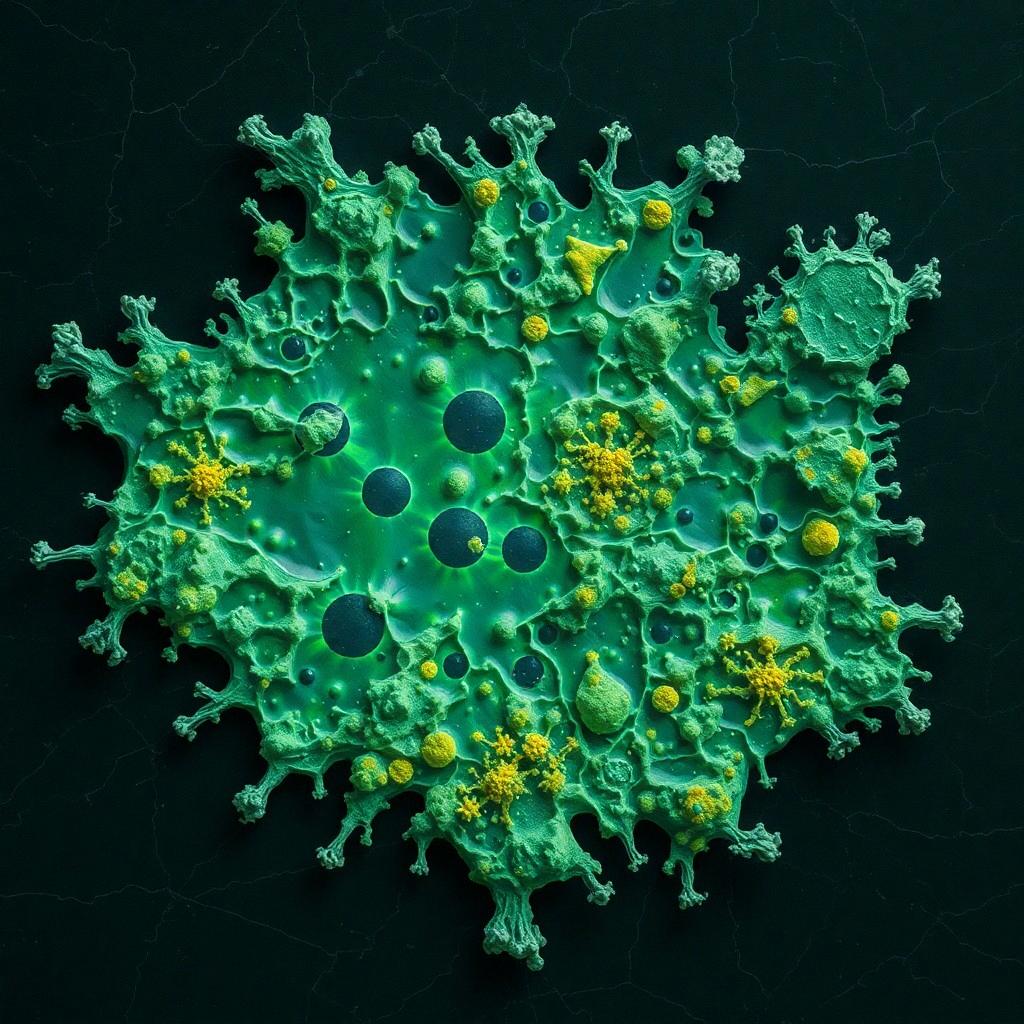
    Paper Review: Skin Microbiome Shifts in Various Dermatological Conditions Science Art

     Science Movie


    Make a narrated HD Science movie for this answer ($32 per minute)


     Discussion


    Get Ahead With Science Insights

    Custom summaries of the latest cutting edge Science research. Every Friday. No Ads.


    My BGPT