Why BGPT?
logo

Review papers with raw data transparency

Quickly verify claims by accessing the underlying experimental data and figures.


Press Enter ↡ to solve


    Fuel Your Discoveries


     Quick Explanation


    What this paper adds

    This PLOS ONE study presents a consumer-FFF (fused filament fabrication) microfluidic platform that targets three specific barriers to adoption: fabrication accessibility, optical transparency, and leak-free high-pressure operation, then demonstrates a biomedical use-case by encapsulating human dental pulp stem cells in alginate droplets while maintaining viability and enabling imaging through transparent devices.


     Long Explanation


    Paper Review (Skeptical, Evidence-Based): Simple and Versatile 3D Printed Microfluidics Using Fused Filament Fabrication

    Paper: Morgan et al., PLOS ONE, DOI: 10.1371/journal.pone.0152023
    Core claim cluster: accessible FFF microfluidics that are (i) transparent enough for observation, (ii) high-fidelity to CAD within small tolerances (for tested regimes), (iii) leak-free at ~2000 kPa+, and (iv) biomedically usable for stem-cell alginate droplet encapsulation.

    1) Visual overview of the device logic

    The paper’s technical narrative can be condensed into a pipeline: FFF print settings + material choice β†’ channel fidelity and transparency metrics β†’ pressure sealing validation β†’ functional droplet generation β†’ stem-cell encapsulation + viability imaging β†’ modular assembly (β€˜Lego-like’ blocks).

    2) Quantitative highlights (from the provided full text)

    The paper provides several numeric anchor points in the droplet and fidelity/pressure narratives that we can visualize directly.

    3) Experimental design & methods: what is solid vs missing

    Device fabrication parameters (as reported)
    The devices were printed on an Ultimaker 2 using PLA with a stated print speed of 30 mm/s and nozzle temperature 215Β°C, with 70Β°C heated build plate, 100% fill density, and alternating 50 ΞΌm thick layers, printed with path alternation to support leak-free and transparent devices. CAD was done in SolidWorks 2013 and converted to print patterns in Simplify3D 2.2.2; SL printed devices were also made (Miicraft, 100 ΞΌm layers, 25 s curing).
    Fidelity measurements (CAD vs measured channel geometry)
    The paper describes fidelity tests where channels were printed with diameters from 400 ΞΌm–1.5 mm (increments of 100 ΞΌm), measured via Nikon AZ100 microscopy, with the printed dimensions compared to the SolidWorks model; FFF printed channels were evaluated in horizontal and vertical orientations and across layer thicknesses (25, 50, 100 ΞΌm).
    The provided narrative claims that with the right print parameters (50 ΞΌm layers), channel width and height fall within ~2.5% of designed dimensions on average, while roughness is an unavoidable layer-by-layer effect. It further states the minimum reliable channel dimension observed was ~500 ΞΌm and relates this bound to nozzle size.
    Transparency: what is quantified vs how it may vary
    The paper describes transparency quantification by comparing visible light transmission through devices to pristine polymer of equivalent transmission path length, and reports that layer height and print speed strongly affect transparency (slower speeds and thinner layers improve transmission). It also describes a mechanistic explanation: under-extrusion forms cavities between layers, increasing light scattering.
    Skeptical point: the excerpted text we were given does not include the exact numeric transmission curves, so we cannot independently judge how close to β€œtruly transparent” the devices are across wavelengths/angles, or whether the improvement is robust across printers, slicers, and print quality states. The supporting discussion does claim visible text legibility and fluorescence imaging capability.

    4) Droplet microfluidics performance (flow focusing)

    Droplet size and frequency stability
    The paper states flow focusing generates droplets of water in oil and extends to alginate droplets in oil and oil droplets in an aqueous carrier phase, demonstrating feasibility across multiphase systems. It reports that droplet diameter can be controlled via inlet flow ratios (higher oil flow relative to water yields smaller droplets).
    For a frequency tuning experiment, the paper reports consistent droplet diameters of 504 ΞΌm (Β±18 ΞΌm) as droplet production frequency increases from 1 to 10.4 Hz, with small fluctuation range 0.2–1.2% (95% CI) in most of the range. At the lowest flow rate, larger variation (~13%) is attributed to a different camera frame rate.
    Skeptical point: the snippet available to us includes endpoint-style numeric details but not a full time-series or the full droplet-size distribution per time point; thus we cannot assess whether occasional rare events (e.g., satellite droplets) exist beyond averaged diameter and frequency metrics. The paper states n=10 droplets per data point for diameter and frequency in the described experiment.

    5) Biomedical demonstration: stem-cell encapsulation in alginate droplets

    Encapsulation protocol & viability readout
    The paper encapsulates human dental pulp stem cells in alginate droplets formed inside the microfluidic device, with a stated encapsulation density of 1Γ—10^6 cells/mL, and alginate gelation driven by exiting into an oil phase containing glacial acetic acid (0.3% v/v). Viability is assessed using a LIVE/DEAD assay kit with calcein-AM (live; esterase activity) and ethidium homodimer-1 (dead; loss of plasma membrane integrity), followed by confocal imaging.
    The narrative conclusion states that confocal imaging revealed the vast majority of encapsulated cells remained live. The paper also describes cell membrane labeling (CellMask Orange) and imaging of individual labeled cells under flow conditions in transparent PLA devices.
    Skeptical point: the provided text does not give explicit viability percentages/timepoints, so β€œvast majority” cannot be independently audited for effect size, variability, or statistical strength. Also, the demonstration is short-horizon (as described) and does not establish long-term culture performance.

    6) Modularity and reconfigurability (β€˜Lego-like’ blocks)

    Modular interlocking with O-ring sealing
    The paper proposes an interconnectable modular system based on β€˜Lego 1 blocks’, with male studs and female reciprocal cavities; modules are snapped together without adhesives. It states an O-ring in the female module port provides sealing, enabling leak-free reconfiguration. It also reports leak-free connectivity down to ~600 ΞΌm channel dimensions (height/width) and shows a 7-component system combining observation chamber, 4 independent inputs, and sequential junction geometries.
    Skeptical point: snap-fit designs can be sensitive to print tolerances and O-ring sizing/compression; the paper reports pressure testing and notes certain failures occurred in tubing connections rather than inter-module leakage, which is encouraging but also implies that system-level reliability depends on the pump/tubing interface and assembly consistency.

    7) Critical appraisal (quality, biases, blind spots)

    Strengths supported by the provided text
    • Multiple evaluation axes are covered: fidelity, transparency, pressure integrity, droplet function, and a biological encapsulation use-case.
    • Transparency optimization is tied to plausible physical causes (under-extrusion β†’ cavities β†’ scattering) and connected to sealing via interlayer gaps.
    • High-pressure sealing is experimentally characterized, and the paper reports a system-level failure mode (pump-side tubing loosening) rather than just claiming β€œno leaks” at extreme pressure.
    Blind spots / limitations explicitly implied by what’s missing in the provided text
    • Quantitative transparency curves are not fully auditable here because the numeric transmission values are not included in the excerpted content we received (only the methodological framing and qualitative outcomes like text legibility).
    • Biological readout granularity: β€œvast majority live” is qualitative in the excerpt; without explicit viability fractions and statistics by timepoint, the effect size and variability remain underdetermined.
    • Generalizability across printers/material batches: the paper is strongly parameter- and material-dependent (PLA transparent grades; print parameters; under-extrusion avoidance). While this is standard for AM/FFF, it means replication may require careful parameter control beyond β€œuse the same design.”
    • Minimum channel dimension bound is tied to current nozzle size, meaning micron-scale droplet and cell-capture regimes may not be directly reachable with the same hardware unless nozzle technology advances are adopted.

    8) What would most credibly change the conclusion?

    • Independent replication failures showing that transparent operation and leak-free high-pressure sealing do not hold across different lab printers (including their calibration drift and filament differences) would weaken the adoption barrier argument.
    • Quantitative transparency metrics that show only marginal transmission for microscopy across realistic optical setups (e.g., confocal excitation/emission) would challenge the β€œfirst truly transparent FFF microfluidic device” framing in practice.
    • Biology durability: if encapsulated cells show acceptable acute viability but poor longer-term functional performance (proliferation, differentiation, or phenotype maintenance), then β€œutility” would be narrower than claimed.

    10) Run an agent for deeper iterative analysis (optional)


    Feedback:   

    Updated: May 01, 2026

    BGPT Paper Review


    Study Novelty

    90%

    The paper’s novelty is asserted around achieving truly transparent, leak-free FFF microfluidics with modular droplet generation and biomedical encapsulation using accessible hardwareβ€”i.e., combining transparency optimization, pressure sealing, and functional droplet + stem-cell demonstrations in the same accessible FFF framework.


    Scientific Quality

    80%

    Scientific quality is supported by a multi-axis evaluation (fidelity, transparency quantification approach, pressure tests with failure-mode description, droplet performance with reported variability, and a biological viability readout). Main quality deductions are from the provided excerpt: lack of auditable numeric transparency curves and missing quantitative viability fractions/statistical outcomes in the text we received (limits independent re-auditing here).


    Study Generality

    80%

    Generality is relatively high for life-science labs interested in accessible microfluidics because the platform targets common barriers (specialized fabrication skill/equipment) and includes modular assembly and standardized port integration. However, it is still parameter/material-dependent (transparent PLA, print settings, nozzle size), which constrains generality to comparable printer/filament ecosystems.


    Study Usefulness

    90%

    Practical usefulness is high because it directly reports how to obtain transparent and high-pressure leak-free FFF microfluidics, demonstrates functioning droplet generation, and shows a biomedical workflow (encapsulation + imaging). The modular system further improves usability for iterative device construction.


    Study Reproducibility

    80%

    Methods are fairly detailed (printer model, nozzle temperature, print speed, bed temperature, layer strategy, CAD/slicing tools, and described measurement modalities). Reproducibility may still vary due to filament batch differences, slicer defaults, and the sensitivity of transparency to under-extrusion and print quality; nevertheless, the paper provides an experimental framework and references Supporting Information for additional details.


    Explanatory Depth

    70%

    Mechanistic explanations are present for transparency (under-extrusion/cavities increasing scattering and harming sealing). Explanatory depth is limited by the excerpted content for detailed quantitative relationships (e.g., full transmission dependence on layer speed/thickness) and by limited long-term biological outcome analysis in the provided text.


    🎁 Authors: Collect 500 Free Science Tokens (β‰ˆ $50.0 USD)

    Claim My Author Tokens

    Use for 125 days of free BGPT access (4 tokens = 1 day) or trade/sell (β‰ˆ $50.0 USD)

     Top Data Sources ExportMCP


     Hypothesis Graveyard


    The hypothesis that β€œtransparency mainly requires thin walls” is weakened by the paper’s own emphasis that avoiding under-extrusion (rather than merely wall thickness) is key for transparency in their system.


    A β€œprinter-agnostic general recipe” interpretation is weakened because fidelity and transparency are described as depending on print parameters (layer height and speed) and nozzle-size-limited channel dimensions, implying transfer requires calibration/optimization.

     Science Art


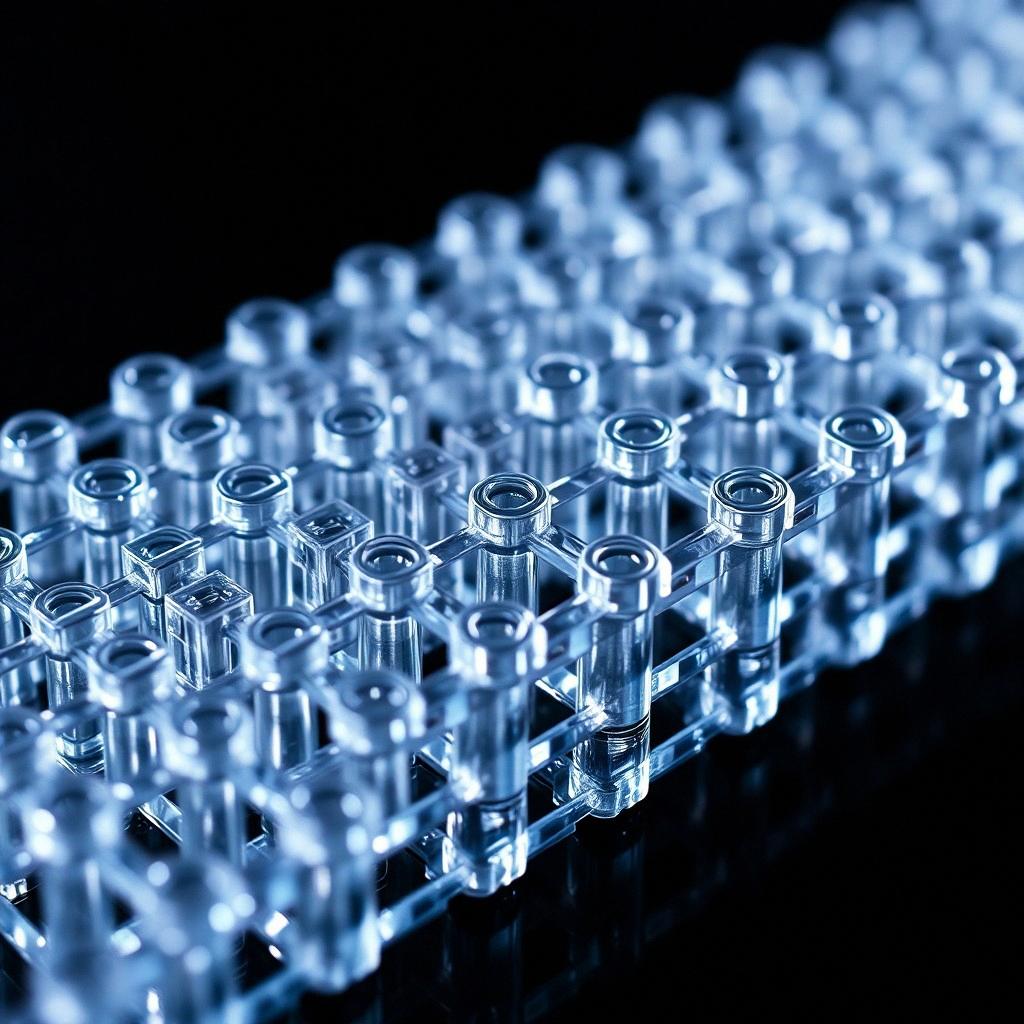
    Paper Review: Simple and Versatile 3D Printed Microfluidics Using Fused Filament Fabrication Science Art

     Science Movie


    Make a narrated HD Science movie for this answer ($32 per minute)


     Discussion


    Get Ahead With Science Insights

    Custom summaries of the latest cutting edge Science research. Every Friday. No Ads.


    My BGPT