Check each claim against its experiments, reported results, scope, and stated limitations.Know what the science actually supports before you trust the answer.
Press Enter ↵ to start review
Explore by Goal
"Nothing in life is to be feared, it is only to be understood. Now is the time to understand more, so that we may fear less."
- Marie Curie
Quick Explanation
Copied
Concise verdict
This is a careful, up-to-date narrative review (Desselberger 2021) that synthesizes observational and mechanistic literature linking gut microbiome composition, diet-derived microbial metabolites, and viral diarrheal disease/vaccine responses — useful as a roadmap but limited by being narrative (no systematic search or new data) and by translational gaps between animal models and human causality
Visual, evidence-focused review — "Significance of the Gut Microbiome for Viral Diarrheal and Extra-Intestinal Diseases" (Desselberger, 2021)
Core claims (paper) and evidence strength
Microbiome composition correlates with vaccine/immunity outcomes: The review cites multiple infant cohort and humanized animal studies showing associations between taxa (Bifidobacterium, Clostridia, Proteobacteria) and rotavirus/poliovirus vaccine responses; correlation evidence is consistent but heterogeneous across settings
Microbial metabolites mediate host effects: SCFAs, bile acids, tryptophan derivatives and imidazole propionate are highlighted as plausible mediators linking diet→microbiome→immunity; mechanistic animal and molecular data support these pathways but human causality remains limited
Diet shapes microbiome and downstream phenotypes: The review stresses that basal diet often outweighs transplanted community composition in setting long-term colonization and host phenotype (rodent evidence) — a crucial experimental caveat for translation
Therapeutics (probiotics, synbiotics, FMT) are promising but uneven: Positive gnotobiotic pig and small human trials exist (Lactobacillus, Bifidobacterium), and FMT is effective for recurrent C. difficile, but randomized high-quality RCT evidence for viral diarrhea or vaccine augmentation in humans is limited and mixed (some large RCTs find null effects for standard probiotics in acute pediatric gastroenteritis)
Strengths: timely synthesis across virology, vaccinology, metabolites, and diet; draws attention to causal directions and to metabolite-mediated mechanisms rather than taxonomy-only claims
Key weaknesses / limitations:
It is a narrative review: no systematic search, selection criteria, or quantitative synthesis were reported — raises selection and publication-bias risk.
Heavy reliance on animal gnotobiotic models (mice, pigs) with recognized translational gaps (differences in diet, immunity, microbiome resilience) — the review notes this but still extrapolates to human vaccine strategies.
Limited discussion of negative trials and null results for probiotics or microbiome-based vaccine augmentation in large RCTs (risk of positive-result bias).
Reproducibility: methods/data are not provided (not applicable for a review), reducing direct re-analysis; some mechanistic conclusions remain speculative absent human interventional data.
What would change my confidence or falsify key conclusions?
Large, well-powered randomized controlled trials in humans showing that targeted microbiome modulation (defined consortium or metabolite supplementation) fails to change vaccine immunogenicity or enteric viral disease outcomes would reduce confidence in the proposed causal model.
Mechanistic human studies (e.g., metabolite infusions or blocking metabolite receptors) showing no effect on mucosal immune readouts would falsify metabolite-mediated pathways.
Short actionable recommendations for researchers
Prioritize human interventional designs that manipulate single variables (dietary fiber, defined consortia, single metabolite) with mucosal immune endpoints and clear pre-specified causal paths.
Use standardized metadata (diet, antibiotics, coinfections, host genetics) and preregister protocols to reduce bias and improve reproducibility.
Combine targeted metabolomics (SCFAs, bile acids, tryptophan metabolites) with functional readouts (IFN signaling, IgA, IL-22) in the same subjects to move beyond taxonomic correlations.
Comprehensive mechanistic review describing how microbiota and metabolites influence viral infections and immunity (useful background)
Diet dominantly shapes long-term colonization and host phenotype in mouse FMT experiments (experimental caveat)
Paper-level quantitative metadata (from supplied research data)
Final judged scores (objective-critical)
Novelty: 6 — synthesizes recent metabolite-focused thinking but is not conceptually revolutionary (many cited reviews already existed by 2021)
Quality: 7 — clear writing, up-to-date citations, balanced, but limited by narrative methodology and absence of formal bias controls.
Generality: 7 — covers broad topics (enteric viruses, extraintestinal disease, vaccines), useful across fields but limited in specific mechanistic depth for any single pathogen.
Usefulness: 7 — good roadmap for researchers and clinicians seeking interpretive synthesis and future directions, but insufficient as a basis for clinical action without new trials.
Reproducibility: 4 — being a review with no methods or data deposition, cannot be reproduced as an analysis; reproducibility of claims depends on primary literature quality.
Explanatory depth: 7 — provides mechanistic proposals (metabolites, IL-22/IL-18, SCFAs, bile acids) with animal model support but limited direct human mechanistic validation.
How to improve this review (one-sentence)
A pre-registered systematic search with explicit inclusion/exclusion criteria, a structured evidence table contrasting human RCTs vs animal mechanistic studies, and a quantitative evidence-grade for each proposed causal link (e.g., GRADE-style) would markedly strengthen the paper's claims and reduce selection bias.
Key insight (concise)
Diet → microbiome → circulating metabolites → mucosal IFN/IL-22/IL-18 axis is the most actionable causal chain suggested; interventions that target single metabolites or receptor pathways (e.g., GPR43/FFAR2 for acetate/SCFAs, bile acid–FXR pathways) are the clearest, testable next steps to translate microbiome science into vaccine/antiviral strategies.
Two falsifiable novel hypotheses to test
In infants with poor rotavirus vaccine seroconversion, short-term supplementation with butyrate-prodrugs (or fiber that selectively increases butyrate producers) given during vaccination will increase IgA seroconversion rates versus placebo, measured by standardized mucosal and systemic endpoints.
Blocking microbial imidazole propionate production (or inhibiting its signaling on host mTORC1) in a high-risk metabolic cohort will reduce markers of vaccine hyporesponsiveness and improve oral vaccine antigen replication and immunogenicity compared with controls.
Two concrete experiments (concise, testable)
Randomized, double-blind trial in infants (LIC setting) testing a defined fiber supplement designed to increase Bifidobacterium/butyrate producers vs isocaloric placebo given for 2 weeks before and during oral rotavirus vaccination; primary outcome: rotavirus IgA seroconversion and viral shedding; secondary: stool metabolomics (SCFAs), microbiome 16S/shotgun — falsifiable and clinically interpretable.
Human challenge-style mechanistic study in adults: cross-over acetate (or selective FFAR2 agonist) vs placebo, with an intranasal/inactivated oral viral antigen and serial mucosal sampling (biopsies / secretory IgA, type I/III IFN transcription) to test if acetate receptor activation amplifies mucosal adjuvant responses — short timeline and mechanistic readouts allow falsification.
Confidence & answer quality
Confidence in this critique applies to the accuracy of the review synthesis and appraisal given the provided text and referenced literature; primary limitation is dependence on the supplied paper and related high-quality reviews rather than re-extraction of every primary dataset. Key primary mechanistic claims (metabolites influence immunity) are supported by strong experimental literature but human causal evidence remains moderate.
All claims above cite the review itself and recent mechanistic reviews; for deeper bioinformatic or re-analysis tasks press the Run AI Scientist Analysis button.
Feedback:
Updated: March 10, 2026
BGPT Paper Review
Study Novelty
60%
Puts metabolite-mediated microbiome–host links into a virology and vaccinology context (useful emphasis in 2021) but builds on prior mechanistic reviews and animal-model literature, so novelty is moderate.
Scientific Quality
70%
Well-referenced and balanced narrative synthesis with clear mechanistic framing; limitations: narrative (not systematic), selection bias risk, and dependence on animal models — reduces methodological rigor versus a systematic review/meta-analysis.
Study Generality
70%
Covers a broad array of enteric viruses, vaccine responses, metabolites and extraintestinal disease axes (general), but does not deliver pathogen-specific mechanistic depth for each virus (limits maximal generality).
Study Usefulness
70%
Useful roadmap for research directions (metabolite targets, diet–microbiome interplay) and for designing mechanistic human trials, but not sufficient alone to change clinical practice.
Study Reproducibility
40%
As a narrative review with no deposited methods or datasets, the review itself is not reproducible; reproducibility depends on primary studies cited, some of which are variable in quality and translatability.
Explanatory Depth
70%
Gives mechanistic hypotheses linking metabolites to immune axes (IFNs, IL-22/IL-18, Tregs), citing animal mechanistic evidence; depth is good for a review but lacks human mechanistic proof and quantitative modeling.
Generating differential taxa and metabolite–immune correlation matrices from paired 16S/shotgun and targeted metabolomics to prioritize candidate metabolite–taxa links for interventional tests.
Get emailed when your analysis is done!
We'll email you the results when your analysis is finished.
Hypothesis Graveyard
Microbiome composition alone (taxonomic signatures without metabolite context) fully explains vaccine hyporesponsiveness — rejected because metabolite and host-diet interactions mediate functional consequences; taxonomy is insufficient without metabolomics data.
Single-strain probiotics will universally boost oral vaccine efficacy — falsified by mixed RCT evidence and context-dependence shown in gnotobiotic vs field studies.

 Explore by Goal
 Quick Explanation
 Long Explanation
 Top Data Sources
 Ask a Follow-Up
 Key Insight
 Keep Exploring
 Analysis
  Hypothesis Graveyard
 Potential Experiments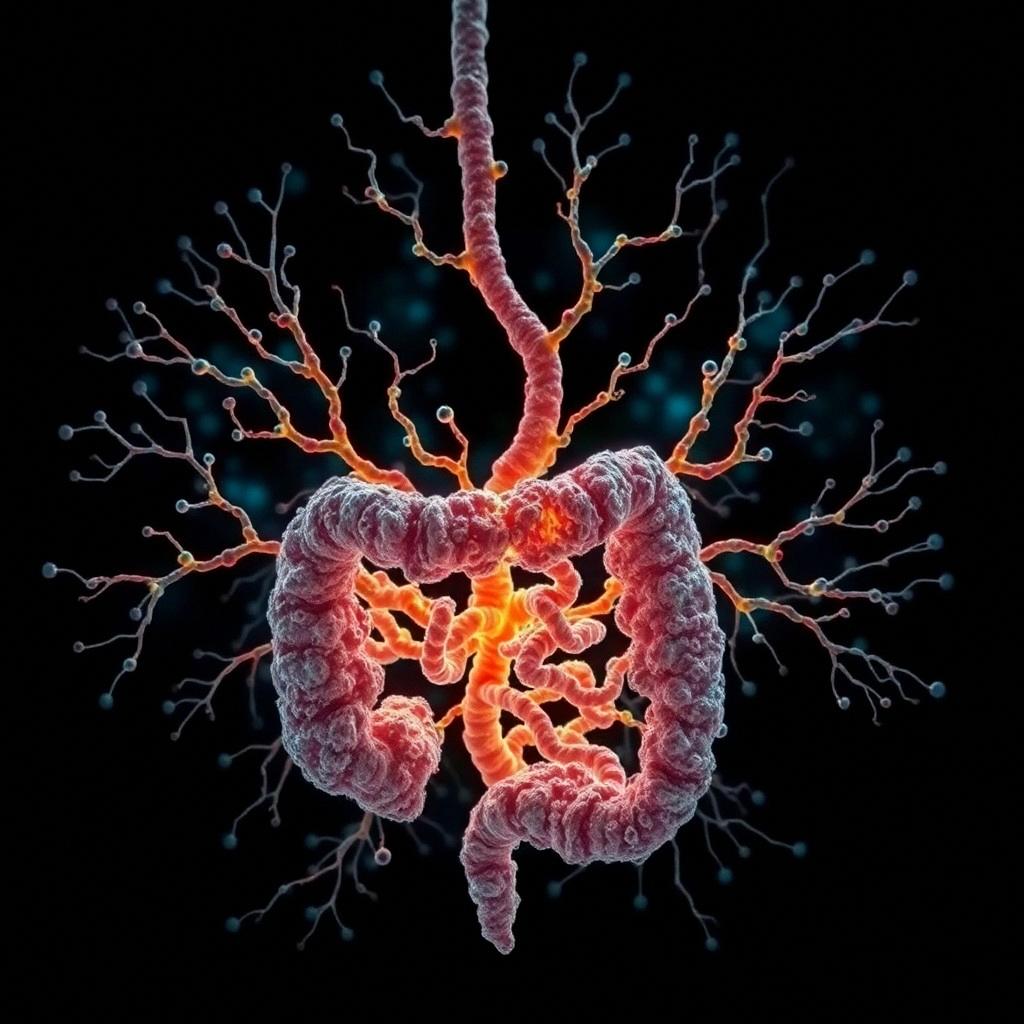
 Discussion