Why BGPT?
logo

Review papers with raw data transparency

Quickly verify claims by accessing the underlying experimental data and figures.


Press Enter ↵ to solve



    Fuel Your Discoveries


     Quick Explanation


    Paper focus (skeptical read)
    The paper proposes that a selective autophagy route (“chromophagy”) targets whole micronuclei with nuclear envelope (NE) defects for lysosomal acidification and chromatin digestion, producing non‑reciprocal chromosome loss in sister cells and thereby suppressing intergenerational chromosomal instability (CIN).
    Main mechanistic axis: NE defects at mitotic exit → BAF/LaminB1 tether disruption → VRK1-dependent BAF dissociation → acidification → chromophagy digestion → non-reciprocal CIN restraint.
    Skeptical take: claims are compelling but still mostly in vitro; the key missing piece is whether the recognition/targeting logic and the CIN-suppression outcome hold in vivo across tumor contexts, and whether alternative explanations (e.g., global stress, altered micronucleus composition, imaging/reporting artifacts) can mimic the fate-linked chromosome loss.


     Long Explanation


    Selective autophagy of whole micronuclei (“chromophagy”) — rigorous paper review
    Date: 2026-05-06 • Evidence basis: full-text extracts provided in the prompt data (plus cited background reviews in the dataset)
    What the paper claims (structured)
    1. Selective target: a subset of micronuclei (~10–30%) undergo autophagy-mediated lysosomal acidification, with whole-micronucleus capture preceding lysosome fusion.
    2. Fate partitioning: rupture and autophagy are largely non-overlapping fates.
    3. Mechanism proposal: NE defects at mitotic exit drive dissociation of chromatin–NE tethering proteins (BAF/Lamin B1), enabling acidification; VRK1 activity promotes BAF dissociation and acidification; strengthening tethering or inhibiting VRK1 reduces acidification.
    4. Genomic consequence: “chromophagy” yields non-reciprocal loss of whole chromosomes or chromosome arms in fate-matched sister cells, suppressing intergenerational transmission of micronucleus-derived chromosomal material and constraining CIN.
    5. Positioning: suggested as a genome-surveillance mechanism with possible tumor-suppressive consequences, but also acknowledges potential dual roles in cancer context.
    Note: Some quantitative details (e.g., exact effect sizes per condition) are not included in the prompt data, so the review below focuses on logical structure, internal coherence, and skepticism about inferential gaps.
    FIGURE 1 — Reported chromophagy “acidification subset” range
    The paper reports acidification in ~10–30% of micronuclei; the plot visualizes this reported subset size.
    FIGURE 2 — Mechanistic logic chain (paper’s proposed pathway)
    The chain is built from the provided mechanistic description: NE defects → BAF/Lamin B1 dissociation, VRK1 support for BAF dissociation, whole-MN autophagosomal capture, lysosomal acidification/chromophagy digestion, and non-reciprocal chromosome/arm loss that constrains intergenerational CIN.
    Skeptical critique: what is strong vs what is underdetermined
    Strengths (internal coherence + fate-linked measurements)
    • Fate linkage exists: the paper uses fate-matched MN sister-cell logic (Strand-seq) and reports non-reciprocal chromosome/arm loss tied to acidified-chromophagy events, rather than inferring CIN changes only from bulk endpoints.
    • Mechanistic partitioning attempt: the claim that rupture and autophagy are largely non-overlapping fates helps reduce the simplest confound where “everything bad” simultaneously causes both effects.
    • Perturbation triangulation: genetic (ATG7KO; siRNA of autophagy components) and pharmacologic autophagy perturbations are described, alongside VRK1/tether modulation, providing multiple angles on whether the acidification step is causally downstream of the proposed upstream events.
    Under-determination / alternative explanations to challenge
    • Cell-line generality gap: conclusions are constrained by largely in vitro human cell lines; in vivo relevance is explicitly stated as remaining to be shown. This matters because CIN dynamics and autophagy wiring are highly context- and tumor-state dependent.
    • Reporter/instrumentation bias risk: the paper uses chromatin acidification reporters (e.g., H2B-mKeima) and multiple imaging reporters. Such tools can bias detection towards environments with particular pH dynamics or chromatin accessibility, potentially shifting which MN are classified as “acidified/chromophagic.” (This is a logical risk; the provided prompt does not supply validation details like independent orthogonal acidification assays for every condition.)
    • “Rupture vs autophagy” causality: non-overlap reduces simple co-occurrence, but it does not prove ordering or exclusivity. Without full mechanistic timing (not provided in the prompt extracts), one alternative remains: a subset of MN is intrinsically prone to acidification due to chromatin composition or NE protein retention, and rupture probability may correlate without being mechanistically upstream/downstream.
    • Mechanistic signal still incomplete: the recognition/targeting “signals” for MN chromophagy are not fully defined (explicit limitation). Therefore, VRK1/BAF tether dissociation may be sufficient in some settings but not necessary or specific as a universal upstream detector.
    Contextual background that supports the plausibility (not a proof)
    • Micronuclei ↔ cGAS–STING ↔ innate immunity: the dataset includes reviews linking cytosolic DNA sensors (cGAS–STING) to micronucleus-derived DNA signaling and highlighting spatial regulation of STING (activation sites, trafficking, palmitoylation, PI3P-rich membranes). This provides a plausible “parallel fate” framework (immune sensing may accompany MN processing) but does not automatically validate chromophagy’s CIN-specific outcome.
    • Therapy-induced micronuclei and STING: another review summarizes that conventional cancer therapies can activate cGAS–STING through DNA damage and micronuclei formation, suggesting MN fates couple to innate signaling. Again: supports plausibility of MN-linked signaling, not the specific “chromophagy → non-reciprocal chromosome loss” logic.
    FIGURE 3 — What would most strongly falsify the core CIN mechanism?
    This figure encodes falsification targets that are logically implied by the paper’s central claims (autophagy-mediated acidification + chromophagy digestion + fate-linked non-reciprocal chromosome loss). The prompt data also lists a falsification scenario in the extracted fields for this paper (e.g., if autophagy inhibition does not alter the acidification/rupture balance or chromophagy fails to yield non-reciprocal chromosome losses).
    Quantitative sampling note (what we can and cannot infer from the prompt data)
    The prompt includes some experimental population sizes (e.g., >100 micronuclei per replicate; Strand-seq: 15 fate-matched MN pairs with acidification and 19 non-acidified MN pairs; EdU/Hoechst timecourse: 83 acidified MN and 33 non-acidified MN).
    However, the prompt data does not include: per-condition effect sizes, p-values, confidence intervals, or the full distribution of non-reciprocal losses across individuals. Therefore, the review cannot grade the statistical robustness beyond the presence of fate-matched logic and stated limitations.
    Useful next steps (actionable questions to run)
    • Causal timing: Is acidification preceded by whole-micronucleus capture in the same MN instances that later show chromosome loss? (Requires per-cell/per-MN temporal linkage.)
    • Specificity: Do VRK1/tether manipulations alter only the acidification/chromophagy fraction, or do they also change MN composition in ways that could mechanically bias Strand-seq outcomes?
    • Orthogonal digestion readout: If “chromophagy” is digestion within acidified MN, are there acidification-independent digestion markers or alternative assays that confirm DNA/chromatin depletion rather than imaging-reporting shifts? (Not specified in prompt data.)
    • In vivo falsification: What would it take to show the same non-reciprocal CIN restraint mechanism in tumors or organoids? (The paper flags in vivo relevance as outstanding.)
    Author-review buttons: The prompt data did not include the paper’s full author list, so I cannot reliably generate the required per-author BGPT links.


    Feedback:   

    Updated: May 06, 2026

    BGPT Paper Review


    Study Novelty

    90%

    The core novelty is a mechanistically specified selective autophagy program that targets whole micronuclei for lysosomal acidification/digestion (“chromophagy”) and connects that to non-reciprocal chromosome/arm loss in fate-matched progeny—an unusually explicit bridge from MN fate to intergenerational CIN.


    Scientific Quality

    90%

    High internal coherence: mechanistic ordering (whole-MN capture before lysosome fusion), perturbation logic (autophagy component disruption + VRK1/tether modulation), and fate-linked outcomes (Strand-seq). Skeptical red flags are mainly external-validity/incompleteness: heavy reliance on in vitro models, mechanistic recognition signals not fully defined, and dependence on reporter-based acidification inference.


    Study Generality

    80%

    It covers multiple human lines (U2OS, HeLa, hTERT RPE-1) and uses multiple perturbation types, suggesting some generality within cell culture. But the paper’s own limitations emphasize that in vivo relevance and broad cancer-type generalization remain unproven.


    Study Usefulness

    90%

    Practically useful conceptual framework and testable causal chain: NE defect → BAF/Lamin B1 tether disruption → VRK1 dependence → acidification → chromophagy digestion → fate-linked non-reciprocal CIN restraint.


    Study Reproducibility

    70%

    Reproducibility is likely helped by multiple perturbation approaches and described datasets being available in ENA, but the prompt data indicates some genomic datasets are ‘previously published data re-analyzed’ and others (mass-related data) might not be fully publicly deposited beyond accession(s). Also, imaging/reporters introduce dataset-dependent variance.


    Explanatory Depth

    90%

    Depth is high because the paper attempts mechanistic explanation across multiple layers: structural (whole-MN capture), regulatory (VRK1/BAF tethering dynamics), and phenotypic/genetic (non-reciprocal chromosome-arm loss in fate-matched sister cells). The main remaining depth gap is incomplete definition of recognition signals.

     Top Data Sources ExportMCP


     Analysis Wizard


    Quantifies the mechanistic funnel (NE-defect→acidification subset→non-reciprocal loss categories) from extracted counts, then renders a Bayesian “evidence-weighted support” chart for each causal step using only provided values.


     Hypothesis Graveyard


    “Rupture causes acidification causes chromosome loss” as a universal sequence is less likely given the paper’s stated largely non-overlapping rupture vs autophagy fates; a blanket rupture-first model would overpredict co-occurrence across MN subsets.


    “Any autophagy induction reduces CIN” is unlikely given the pathway is framed as selective (only a subset of MN) and tied to specific upstream NE/BAF/VRK1 logic; a global autophagy model would predict broader and less fate-partitioned effects.

     Science Art


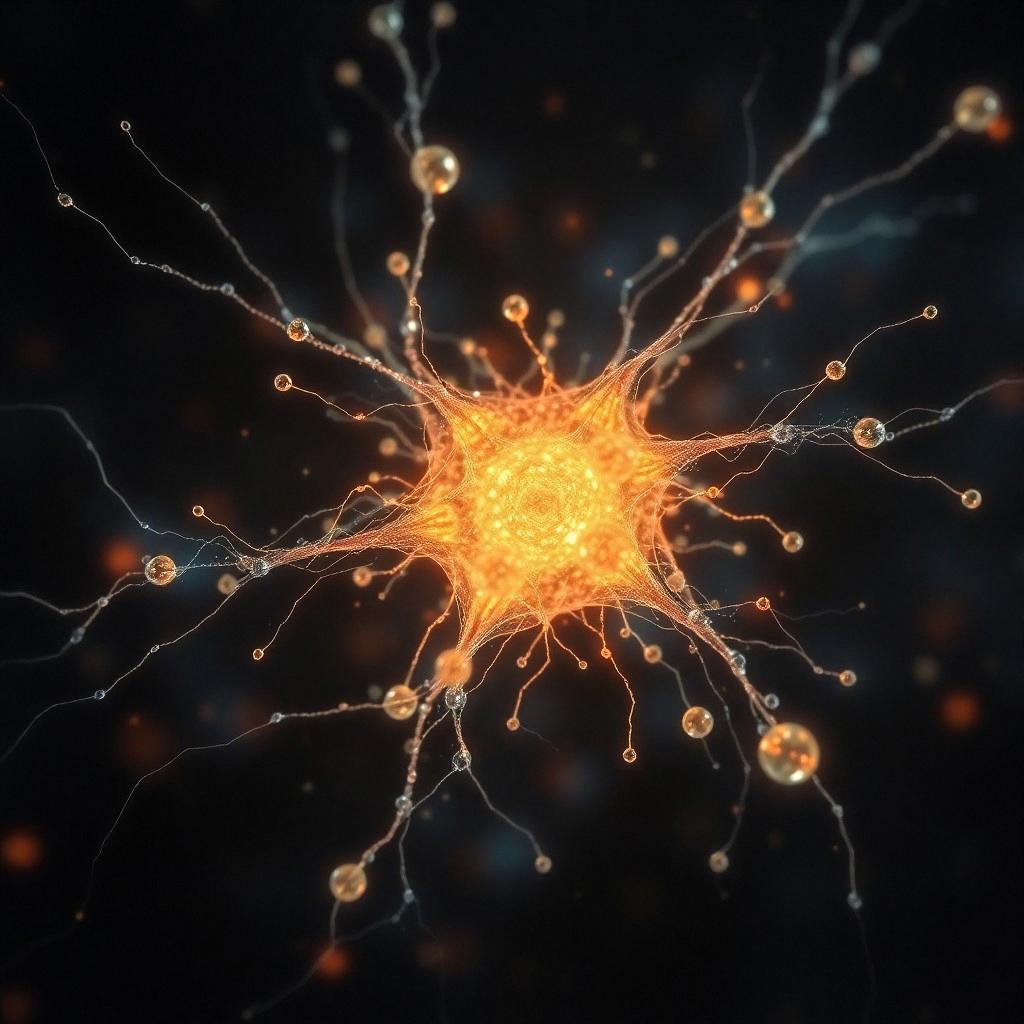
    Paper Review: Selective autophagy whole micronuclei chromophagy skeptical analysis Science Art

     Science Movie


    Make a narrated HD Science movie for this answer ($32 per minute)


     Discussion


    Get Ahead With Science Insights

    Custom summaries of the latest cutting edge Science research. Every Friday. No Ads.


    My BGPT