Check a paper's claims against linked experiments, exact results, stated scope, and limitations.Know what falsifiable science actually supports before you trust the answer.
Press Enter ↵ to search evidence
Explore by Goal
"Mood reflects the biology of the brain. How you feel is affected by the chemicals in the brain, and these are the same chemicals that form the basis of mood-altering drugs."
- Liz Miller
Quick Explanation
Copied
This preprint provides strong in situ cryo-ET evidence that SUN5 forms a conserved ~12.4 nm-spaced hexagonal lattice in the perinuclear space at the sperm head-tail junction, maintaining ~14 nm inner-outer nuclear membrane spacing across human, boar, and mouse sperm . Limitations: small tomogram count, reliance on AlphaFold3 fitting, and an unresolved lattice-assembly mechanism; a concurrent preprint reports a 12 nm spacing and assigns the ONM anchor to a SUN5 KASH-lid β-hairpin plus Nesprin3 .
Long Explanation
What the paper shows and how
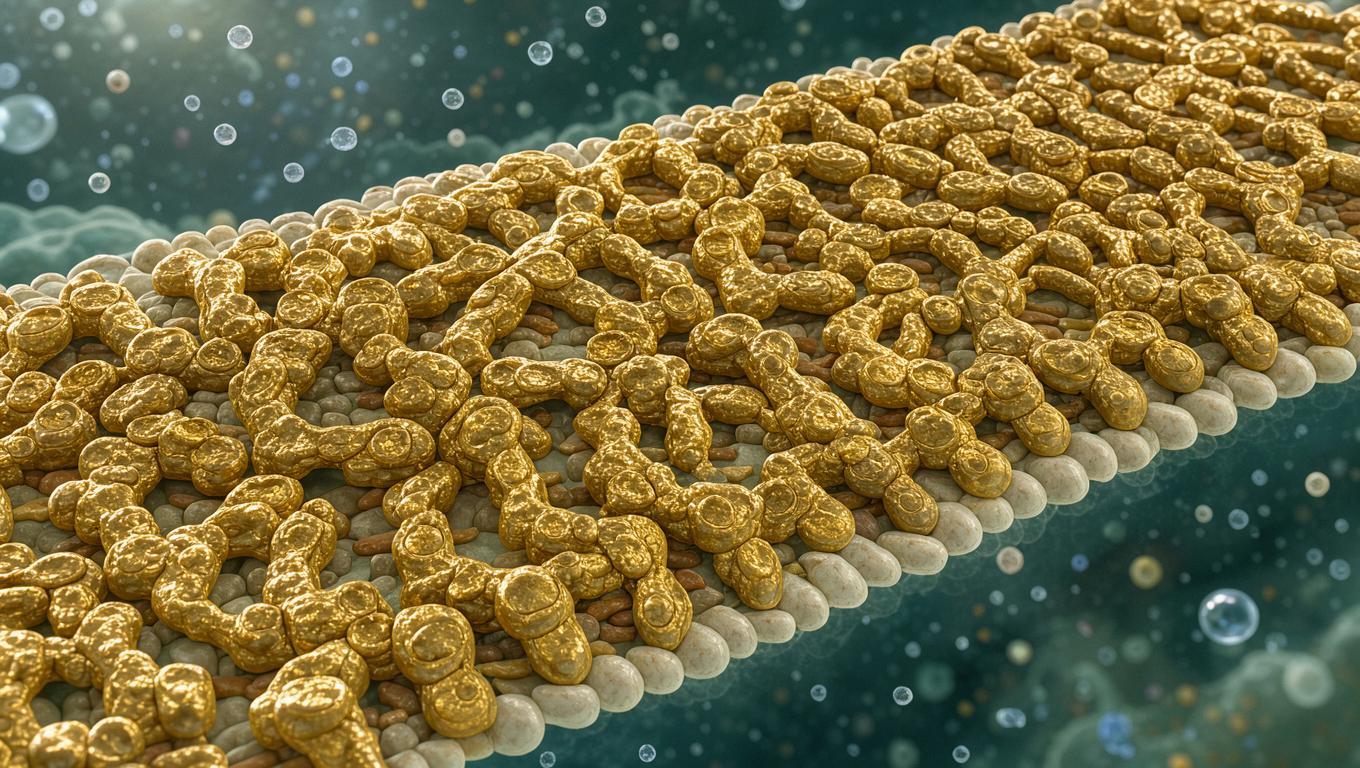
Moecking, Doroshev, Leung and Zeev-Ben-Mordehai combine STED super-resolution localization, in situ cryo-electron tomography of cryo-FIB milled sperm lamellae, and subtomogram averaging in PEET (3,788 particles from eight tomograms, one per cell) to visualize, for the first time in situ, a regular 2D protein lattice in the perinuclear space of the sperm nuclear envelope. The lattice coincides with SUN5 localization at the base of the nucleus, maintains a uniform ~14 nm INM-ONM spacing (versus ~5.5 nm near the postacrosomal sheath), is absent where the outer nuclear membrane bulges and the basal plate is interrupted, and is conserved in boar and mouse sperm — strong internal evidence that the lattice itself enforces spacing and tethers the basal plate .
The structural model — SUN domain trimers as lattice nodes — is supported by fitting SUN1/SUN2 crystal structures and an AlphaFold3 SUN5 trimer prediction into the averaged density, but the density connecting neighboring trimers and the INM-associated density remain unassigned; candidate contributors include SUN5 C-terminal extensions (~7 nm, roughly half the 12.4 nm lattice spacing), Nesprin proteins, or partners such as Septin12 and CENTLEIN .
Critical assessment against the field
The paper correctly identifies in vitro SUN oligomer states as non-decisive and instead determines the in situ oligomer — a real advance over decades of purified-domain crystallography. However, a concurrent preprint reaches a structurally richer interpretation: it resolves a 9.4 Å map, assigns the ONM anchor to a SUN5 KASH-lid β-hairpin plus a Nesprin3 amphipathic helix, demonstrates β-sandwich-mediated lateral SUN5-SUN5 contacts, and maps acephalic spermatozoa syndrome mutations (e.g., Gly259Ser, Arg356Cys) to lattice interfaces, also showing lattice-driven nuclear envelope curvature remodeling . Moecking et al. cite Nesprin interactions but do not model Nesprin3 into the density, so their "SUN5-only trimer lattice" framing is likely incomplete — the modest ~27 Å resolution of their map (achieved with manual particle seeding and C3 symmetry applied only for a single-particle reconstruction) cannot distinguish these hypotheses.
Limitations and blind spots: (1) only eight tomograms from eight human cells, plus fewer boar/mouse datasets — geometric consistency is encouraging but biological variability (including the seven-of-twelve tomograms showing membrane bulging) is under-sampled; (2) sperm identity is confounded by comparing ejaculated human/boar sperm with cauda epididymal mouse sperm, which the authors themselves flag as a possible explanation for SUN4's species-divergent localization; (3) the lattice is imaged in fixed, vitrified mature sperm, so nothing can be said about assembly dynamics during spermatogenesis, where SUN5 redistributes from Golgi to nuclear envelope and manchette ; (4) no direct biochemical identification of the ONM anchor — a gap filled by the concurrent Nesprin3 work. SUN5 also has reported roles beyond head-tail coupling, including an NXF1-Nup93 mRNA-export axis and T2D-linked circulating proteomics associations, so the lattice is not the whole SUN5 story .
What would change the conclusion: if SUN5-null or trimerization-defective sperm lost the lattice yet retained uniform 14 nm spacing, or if independent high-resolution structures excluded Nesprin3 from the lattice, the model would need revision. Given converging evidence, confidence in the core claim (a conserved SUN5-centered LINC lattice reinforcing the head-tail junction) is high; confidence in the precise molecular composition of each density is moderate.
Feedback:
Updated: November 25, 2026
BGPT Paper Review
Study Novelty
90%
First experimental demonstration of LINC complex higher-order organization in situ; decades of prior work only inferred 2D lattices from purified SUN domain oligomers.
Scientific Quality
90%
Rigorous cryo-FIB/cryo-ET workflow with proper controls (NPC regions, PAS/acrosome negative sites) and honest limitation discussion; weaknesses are the modest 27 Å map, small tomogram count, and no direct biochemical identification of lattice components.
Study Generality
70%
Findings generalize across three mammalian species but the lattice is restricted to the sperm head-tail junction niche; broader implications for LINC lattice biology remain inferential.
Study Usefulness
90%
Directly rationalizes acephalic spermatozoa syndrome genetics, validates the molecular-ruler model of nuclear envelope spacing, and sets a mechanistic target for male infertility research.
Study Reproducibility
80%
Detailed methods, deposited pipelines (PEET/IMOD), and cross-species replication support reproducibility; no explicit data/map accession numbers were stated in the provided text, which limits independent verification.
Explanatory Depth
90%
Connects molecular-scale trimer architecture to nanoscale membrane spacing and tissue-scale head-tail mechanical integrity, with falsifiable alternatives enumerated for the lateral connections.
Aligning SUN5 ortholog sequences across human, mouse, and boar to map conserved trimer-interface and KASH-lid residues, cross-referencing acephalic spermatozoa syndrome variant positions against conservation.
Get emailed when your analysis is done!
We'll email you the results when your analysis is finished.
Hypothesis Graveyard
'Molecular ruler' model of coiled-coil length alone determining NE spacing: falsified in part because SUN1/SUN2 have longer predicted coiled-coils than SUN5, yet cannot substitute for SUN5 at the sperm junction, indicating sequence-specific lateral interactions matter beyond length.
'SUN5 spans both nuclear membranes' non-canonical topology: excluded by independent immunogold and protease-protection evidence for canonical INM N-terminus/PNS C-terminus orientation.

 Explore by Goal
 Quick Explanation
 Long Explanation
 Top Data Sources
 Ask a Follow-Up
 Key Insight
 Keep Exploring
 Analysis
 Hypothesis Graveyard
 Potential Experiments
 Discussion
