Why BGPT?
logo

Review papers with raw data transparency

Quickly verify claims by accessing the underlying experimental data and figures.


Press Enter ↵ to solve


    Fuel Your Discoveries


     Quick Explanation


    Paper focus
    The paper argues that the PSF–TFE3 fusion oncoprotein is functionally required for growth, invasion, and survival of the PSF–TFE3–expressing papillary RCC line UOK-145, and that ectopic expression can transform NIH-3T3 cells and induce dedifferentiation in renal proximal tubule epithelial cells.
    Key evidence includes matched vs mismatched siRNA specificity controls, apoptosis readouts after knockdown, and transformation assays (Matrigel invasion + soft agar).


     Long Explanation


    Role of PSF–TFE3 oncoprotein in the development of papillary RCC (2006)
    Single-sentence claim: PSF–TFE3 is proposed as a driver required for maintaining the oncogenic phenotype in PSF–TFE3–expressing papillary RCC cells, while ectopic expression can transform fibroblasts and dedifferentiate renal epithelial cells.
    1) Evidence map (what was tested → what changed)
    Mechanism-level chain (as proposed)
    • PSF–TFE3 knockdown (matched siRNA/shRNA) → PSF–TFE3 protein decreases ~70–80% for matched siRNA; mismatched control shows no effect.
    • ↓ PSF–TFE3 → relocalization of TFE3 and p53 from cytoplasm/extranuclear compartment toward the nucleus.
    • ↓ PSF–TFE3 → reduced growth/proliferation, reduced Matrigel invasion, and apoptosis (TUNEL and DNA fragmentation assays).
    • Ectopic PSF–TFE3 expression in NIH-3T3 → anchorage-independent growth in soft agar and enhanced growth/invasion-like behavior on Matrigel.
    • Ectopic PSF–TFE3 in renal proximal tubule epithelial cells → dedifferentiation (loss of primary cilium) and loss of a transporter marker (NPT2) plus altered AT1 receptor localization.
    2) Visual summaries (from reported numeric ranges / described assay directions)
    2.1 Matched vs mismatched siRNA: reported PSF–TFE3 reduction magnitude
    The authors describe ~70–80% reduction for the perfectly matched siRNA and no effect for the mismatched control (three-base differences). We visualize the matched effect as a midpoint with error bars reflecting the stated range; mismatched is shown as ~0% because the paper states it “failed to have any effect.”
    2.2 Functional assay directional logic (qualitative, as reported)
    This graph encodes the paper’s reported directionality: PSF–TFE3 knockdown is associated with decreased growth/proliferation/invasion and increased apoptosis, while ectopic PSF–TFE3 expression is associated with increased transformation/anchorage-independent growth and dedifferentiation with marker losses.
    3) Critical review (skeptical, mechanistic, and reproducibility-focused)
    3.1 Strengths (internal validity)
    • Specificity control for RNAi: a perfectly matched siRNA to the fusion junction shows ~70–80% reduction, while a closely mismatched version fails to affect PSF–TFE3; the authors also connect these perturbations to functional relocalization of TFE3 and p53.
    • Multiple orthogonal phenotypes: proliferation/growth (colonies + viable counts), invasion (Matrigel), and cell death (TUNEL + DNA fragmentation) all change directionally with PSF–TFE3 inhibition.
    • Model triangulation: human papillary RCC–derived cells (UOK-145), mouse fibroblasts (NIH-3T3), and renal proximal tubule epithelial cells (RPTE) are used to argue “required maintenance” + “sufficiency for transformation/dedifferentiation.”
    • Assays consistent with transformation: the paper uses soft agar for anchorage-independent growth plus Matrigel-based behaviors, and links ectopic PSF–TFE3 to altered subcellular localization of GFP-tagged TFE3/p53.
    3.2 Mechanistic claims: what is known vs inferred
    What the paper directly measures
    • Protein abundance changes for PSF–TFE3 upon matched RNAi (Western blot).
    • Subcellular localization changes for TFE3 and p53 (immunostaining; plus GFP fusion localization in NIH-3T3).
    • Phenotypic changes in growth, invasion, and apoptosis (crystal violet colony staining; Trypan blue viable counts; Matrigel invasion; TUNEL and DNA fragmentation assay).
    • Differentiation marker changes including loss of a high-molecular-weight NPT2 band and altered AT1 distribution; loss of primary cilium in RPTE on Matrigel.
    What the paper infers
    • Causality linking localization to oncogenic phenotypes: the authors suggest that nuclear relocalization of TFE3 and p53 (following PSF–TFE3 inhibition) underlies reduced oncogenic maintenance, but the chain “exact transcriptional program(s) → phenotypes” is not fully resolved in the provided text.
    • Dedifferentiation mechanism: they interpret loss of primary cilium and NPT2/AT1 changes as dedifferentiation linked to PSF–TFE3’s oncogenic initiation role; however, the specific downstream effectors are not enumerated here.
    3.3 Reproducibility and reporting gaps (what could limit independent verification)
    • No explicit public data deposition or accession numbers are stated in the provided text; independent replication would require access to experimental materials, constructs, and full methodological details beyond what’s captured here.
    • Quantitative reporting varies by assay: some outputs are described as “significant decrease” or shown qualitatively (“fail to show any invasion”), while only limited numeric summaries are present in the excerpt (e.g., transformation efficiency formula described, but specific values aren’t included in the provided text).
    • Model limitation: the work is fully in vitro/cell-line based; “tumor initiation and maintenance” is inferred from in vitro phenotypes, which may not fully capture renal tumor microenvironment, immune effects, or drug exposure dynamics.
    • RNAi off-target risk remains theoretically possible even with a mismatched control; the paper mitigates this by linking matched RNAi to expected localization and multiple phenotypic changes, but additional independent knockdown strategies (not shown in the excerpt) could further strengthen causal inference.
    4) What would disprove or materially change the conclusion?
    • Rescue experiment: if reintroducing PSF–TFE3 in knockdown conditions failed to restore growth/invasion/survival phenotypes in UOK-145 cells, that would weaken the “required maintenance” argument.
    • Separating localization from function: if forced nuclear localization of TFE3/p53 (without changing PSF–TFE3 abundance) did not reproduce apoptosis/invasion/growth phenotypes, the proposed mechanism would be incomplete.
    • Context specificity: if PSF–TFE3 ectopic expression in renal epithelial models did not consistently induce dedifferentiation markers (primary cilium loss, NPT2 loss, AT1 redistribution), that would challenge the “initiation” aspect.
    • Transcriptomic linkage: if PSF–TFE3 perturbation did not produce coherent downstream transcriptional programs consistent with TFE3/p53 functional recovery or dedifferentiation, the functional model would need revision.


    Feedback:   

    Updated: April 11, 2026

    BGPT Paper Review


    Study Novelty

    70%

    The central idea—functional requirement of a specific TFE3 fusion (PSF–TFE3) in a TFE3-fusion RCC context—is strengthened here with RNAi specificity controls and multiple transformation/dedifferentiation assays, but it is not a fundamentally new paradigm for oncoprotein fusion function based on the study’s positioning within known TFE3-translocation biology. ()


    Scientific Quality

    70%

    Moderate-to-strong internal validity via a well-designed RNAi specificity comparison and convergent phenotypes (growth, invasion, apoptosis) plus ectopic expression sufficiency. Quality is limited by lack of public data deposition in the provided text and reliance on in vitro models; the mechanistic link to downstream transcriptional programs is not fully resolved in the excerpt alone. ()


    Study Generality

    60%

    Results are compelling for the PSF–TFE3–expressing RCC model (UOK-145) and related engineered systems, but generalizability to all papillary RCC cases and to endogenous untagged PSF–TFE3 dynamics in vivo is not established in the provided content. ()


    Study Usefulness

    70%

    The paper is useful as a mechanistic anchor for designing follow-up studies that test causality (rescue/dissociation), downstream targets (transcriptome/chromatin), and model validity for TFE3-fusion oncogenesis. Therapeutic targeting is mentioned but not experimentally developed in the excerpt. ()


    Study Reproducibility

    60%

    Key experimental approaches are standard (RNAi, retroviral expression, Westerns, TUNEL, Matrigel invasion, soft agar), but reproducibility is harder to judge from the provided text because public datasets, construct details, and full quantitative results are not included here. ()


    Explanatory Depth

    60%

    The study provides a plausible sequestration/localization model tied to functional outcomes, but it does not fully map the downstream molecular programs (e.g., transcriptional targets of TFE3/p53 in this system) within the excerpt, leaving some causal steps inferential. ()


    🎁 Authors: Collect 148 Free Science Tokens (≈ $14.8 USD)

    Claim My Author Tokens

    Use for 37 days of free BGPT access (4 tokens = 1 day) or trade/sell (≈ $14.8 USD)

     Analysis Wizard


    Extract reported numeric ranges/directional outcomes from the paper text, encode them as structured tables, and generate visual summaries comparing knockdown vs ectopic-expression phenotypes across models.


     Hypothesis Graveyard


    A “single-pathway” model where all phenotypes arise only from TFE3 sequestration would predict p53-relocalization and differentiation-marker recovery to be tightly coupled; the excerpt suggests multiple phenotypes (apoptosis, invasion, cilium/NPT2 loss) could have partially separable drivers.


    A “pure overexpression artifact” model would predict ectopic PSF–TFE3 effects to be weak or non-reproducible across Matrigel/soft agar contexts; the paper reports robust transformation-like phenotypes and consistent marker/differentiation effects across engineered systems.

     Science Art


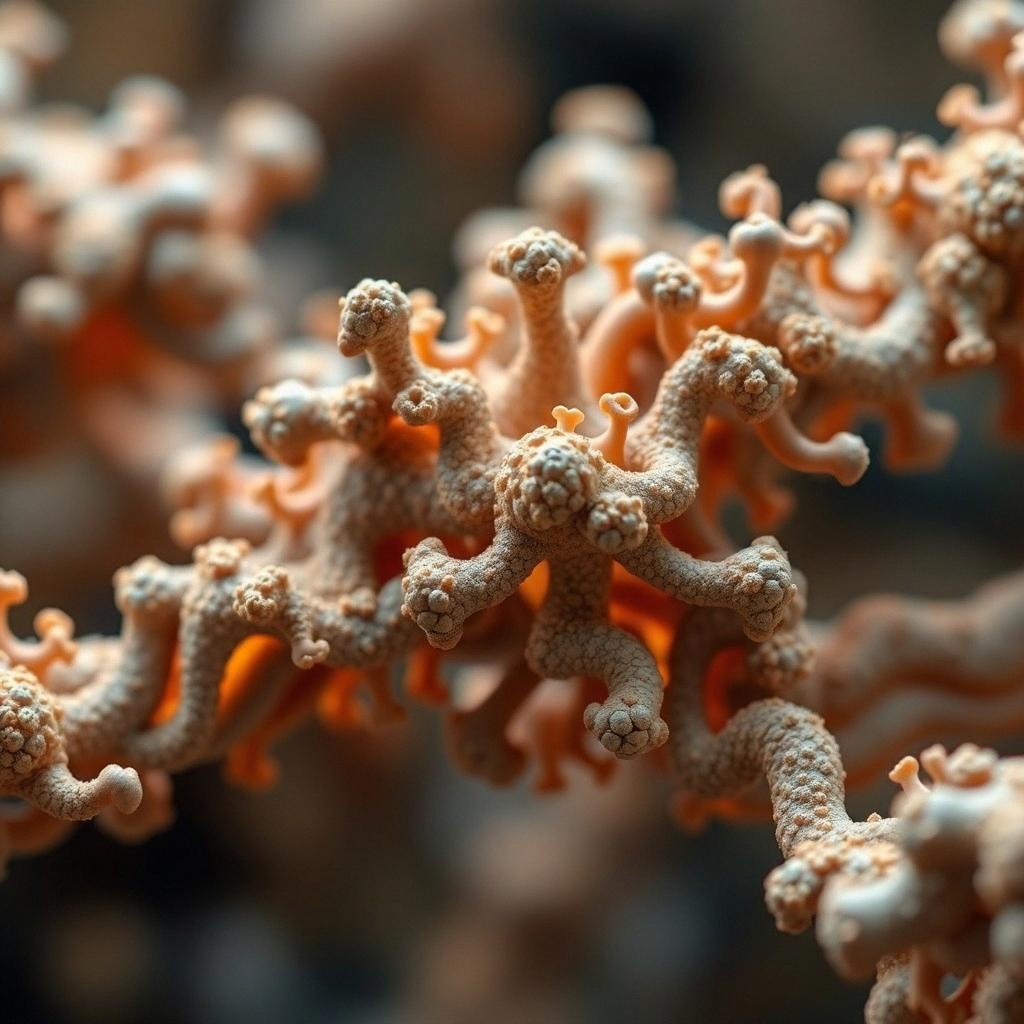
    Paper Review: Role of PSF-TFE3 oncoprotein in the development of papillary renal cell carcinomas Science Art

     Science Movie


    Make a narrated HD Science movie for this answer ($32 per minute)


     Discussion


    Get Ahead With Science Insights

    Custom summaries of the latest cutting edge Science research. Every Friday. No Ads.


    My BGPT