Why BGPT?
logo

Review papers with raw data transparency

Quickly verify claims by accessing the underlying experimental data and figures.


Press Enter ↵ to solve


    Fuel Your Discoveries


     Quick Explanation


    Critical review (older adults)
    Hudson & Hudson synthesize (largely cross-sectional) evidence linking cannabis use—especially frequent/chronic use and higher-THC products—to mental health harms (mood symptoms, psychosis-risk outcomes, suicidality indicators), and they highlight plausible biological mediators such as endocannabinoid system changes and drug–drug interactions via CYP enzymes and cannabinoid modulation. Key limitations are the review’s dependence on heterogeneous designs, limited older-adult-specific causal inference, and incomplete mechanistic coverage for aging neurobiology and genetics. Evidence quality is moderate-to-mixed; causality is often not established.
    Open questions include whether cannabis exposure in late life is etiologic for new/worsening mental disorders vs reflecting shared vulnerability and confounding (e.g., baseline neural function/genetics).


     Long Explanation


    Paper Review
    Risk Factors for Cannabis-Related Mental Health Harms in Older Adults: A Review
    Publication/DOI:
    1) Visual map: proposed risk-factor structure
    The paper groups risk factors into four categories and argues these interact with mental-health vulnerability. The diagram below encodes that conceptual taxonomy (qualitative, not effect sizes).
    2) What the review claims is most supported (vs weaker)
    Most consistently implicated features
    • Frequency/chronicity is linked to increased risk of affective or psychotic symptoms in broader populations, and the review reports similar associations in older adults (e.g., suicidal ideation patterns in those with prior major depressive episodes).
    • Higher-THC / high-potency products are presented as reliably associated with greater risk—particularly for psychosis outcomes.
    Mechanisms the review highlights (plausible but not always directly tested in older adults)
    • Endocannabinoid system differences by sex/age are proposed as a biological basis for differential vulnerability. The review cites evidence of cannabinoid receptor availability patterns and age/sex variation.
    • Drug–drug interactions via CYP metabolism are highlighted as a geriatric-relevant biological pathway. The review specifically cites that cannabinoids can modulate CYP enzymes (including CBD inhibition of CYP2C19/CYP3A4 and effects on CYP1A2) and that CYP1A2 is relevant for several psychiatric medication classes.
    Skeptical note: the mechanistic pathway (enzyme modulation → altered psychiatric medication levels/effects → mental-health outcomes) is plausible, but the review’s older-adult-specific, medication-quantified causal evidence is limited.
    3) Evidence-directionality and causality limits (critical appraisal)
    The review repeatedly notes that many underlying studies are cross-sectional, which prevents determining whether cannabis use causes mental disorders or whether existing vulnerability increases cannabis use (or both are driven by third variables like baseline neural function or genetics).
    Causal DAG (qualitative)
    This diagram encodes the review’s main alternative explanations: vulnerability → cannabis use and vulnerability → harms; plus cannabis exposure → harms. It is a conceptual scaffold, not a quantified model.
    4) Specific content themes from the review (older adults focus)
    4.1 Patterns of use
    • Frequent/chronic use and higher potency are emphasized as key risk features, with systematic review and potency-focused evidence supporting psychosis-related concerns.
    • Older-adult studies cited in the review include associations between cannabis use and distress/suicidality markers, while explicitly cautioning that cross-sectional designs prevent causal inference.
    4.2 Sex and age as vulnerability-linked moderators
    • The review notes sex differences in mental-health symptom domains (mood/suicidal vs psychosis-related outcomes) and motivates further older-adult-specific empirical work.
    • For aging neuroscience plausibility, the review cites PET findings on CB1 binding changing across healthy aging and differing by gender.
    4.3 Psychosocial factors: motives and risk perceptions
    • The review uses motivational models where coping/sleep-related motives correlate with more problematic patterns.
    • Perception of low risk among users is used as a contributor to risky patterns and indicates a potential target for harm reduction messaging (though the review emphasizes more work is needed in older adults).
    4.4 Mental health morbidities and vulnerability factors
    • Vulnerability constructs include trauma histories, existing mental health conditions, family history, and unusual psychological experiences after use.
    • The review also foregrounds psychosis prognosis and worse outcomes for individuals with preexisting psychosis; it also notes unusual experiences (paranoia/dissociation) as markers of susceptibility.
    • Medication interactions are framed as particularly relevant due to polypharmacy in aging. Enzyme-interaction systematic evidence supports biological plausibility for altered psychiatric medication handling.
    Skeptical note: the review’s older-adult causal chain “cannabis → pharmacokinetic change → psychiatric worsening” is plausible but (based on the provided text) not fully proven with older-adult, medication-level outcome studies.
    5) Limitations, blind spots, and what would change the conclusion
    5.1 Limitations explicitly acknowledged
    • Cross-sectional designs limit causal inference in the underlying literature.
    • Older-adult specificity is limited: many risk-factor findings derive from youth/young adults and are then applied to late life with additional biological reasoning.
    5.2 Additional skeptical blind spots (grounded in the review’s described scope)
    • Confounding by indication and shared vulnerability: individuals with mental health vulnerability may both use cannabis and experience harms, producing associations without causation. The review explicitly calls for longitudinal designs to disentangle directionality and third-variable predispositions.
    • Measurement heterogeneity: “cannabis use” (dose, route, THC/CBD ratio, product variability) and “harms” (distress vs diagnoses vs symptom scales) likely vary across studies; the review flags that broader mechanistic discussion (neurobiology/genetics) is not exhaustively covered in the provided excerpt.
    6) How to extend this review (what to test next)
    The review’s “future directions” emphasize longitudinal studies, older-adult neurocognitive outcomes, and gene–environment interactions.
    7) Optional: BGPT follow-on actions
    If you want, BGPT can run deeper, targeted author-centric or evidence-network analyses from the same corpus.


    Feedback:   

    Updated: May 01, 2026

    BGPT Paper Review


    Study Novelty

    60%

    The paper’s main value is organizing known cannabis–mental-health risk factors specifically for older adults and emphasizing geriatric-relevant mechanisms (vulnerability + medication interaction plausibility) rather than introducing a fundamentally new empirical method.


    Scientific Quality

    70%

    Scientific quality is moderate-to-high for a narrative review: it uses an explicit risk-factor taxonomy, cites systematic evidence for psychosis/affective links, and provides mechanistic plausibility for CYP-mediated interactions and receptor-related vulnerability. However, the provided text emphasizes reliance on cross-sectional designs and notes gaps in neurobiological/genetic coverage, which reduces causal confidence and comprehensiveness.


    Study Generality

    70%

    It is generalizable in the sense that the risk-factor framework (use patterns + vulnerability + psychosocial + comorbidity/medication interactions) can be used beyond older adults, but the paper’s novelty and emphasis are older-adult-specific, which slightly limits broad methodological generality.


    Study Usefulness

    80%

    It is practically useful for clinicians/researchers as a structured map of candidate risk domains and biological considerations (including medication interaction plausibility) while clearly stating what is unknown (causality; older-adult-specific mechanisms).


    Study Reproducibility

    60%

    Reproducibility is limited because this is a review and the provided excerpt does not include a full systematic-review protocol (e.g., PRISMA flow, inclusion/exclusion criteria, full search strategy details). The review does state database sources and search-term categories, but reproducibility remains constrained relative to systematic reviews with transparent methods.


    Explanatory Depth

    70%

    Depth is good at the biopsychosocial level: it integrates use patterns, psychosocial motives/perceptions, vulnerability markers, and plausible pharmacology (CYP interactions; receptor/sex-age plausibility). However, mechanistic explanation for older-adult neurobiology and genetics is explicitly noted as incomplete, which limits explanatory granularity.


    🎁 Authors: Collect 197 Free Science Tokens (≈ $19.7 USD)

    Claim My Author Tokens

    Use for 49 days of free BGPT access (4 tokens = 1 day) or trade/sell (≈ $19.7 USD)

     Top Data Sources ExportMCP


     Analysis Wizard


    Summarizes the review’s cited risk domains into a directed graph and exports a citation-backed checklist of hypotheses to guide follow-up longitudinal study designs and mechanistic tests.


     Hypothesis Graveyard


    A unidirectional “cannabis causes psychosis in all older adults” strongman hypothesis is unlikely because the review emphasizes cross-sectional confounding concerns and vulnerability moderation (e.g., genetic susceptibility and receptor-related plausibility) rather than universal effects.


    A “perceptions of risk are the primary causal driver” strongman hypothesis is weakened by the review’s emphasis that biological vulnerability (endocannabinoid system changes, psychosis vulnerability, medication interactions) and use patterns are also important; perceptions may modify behavior but do not explain pharmacologic vulnerability mechanisms alone.

     Science Art


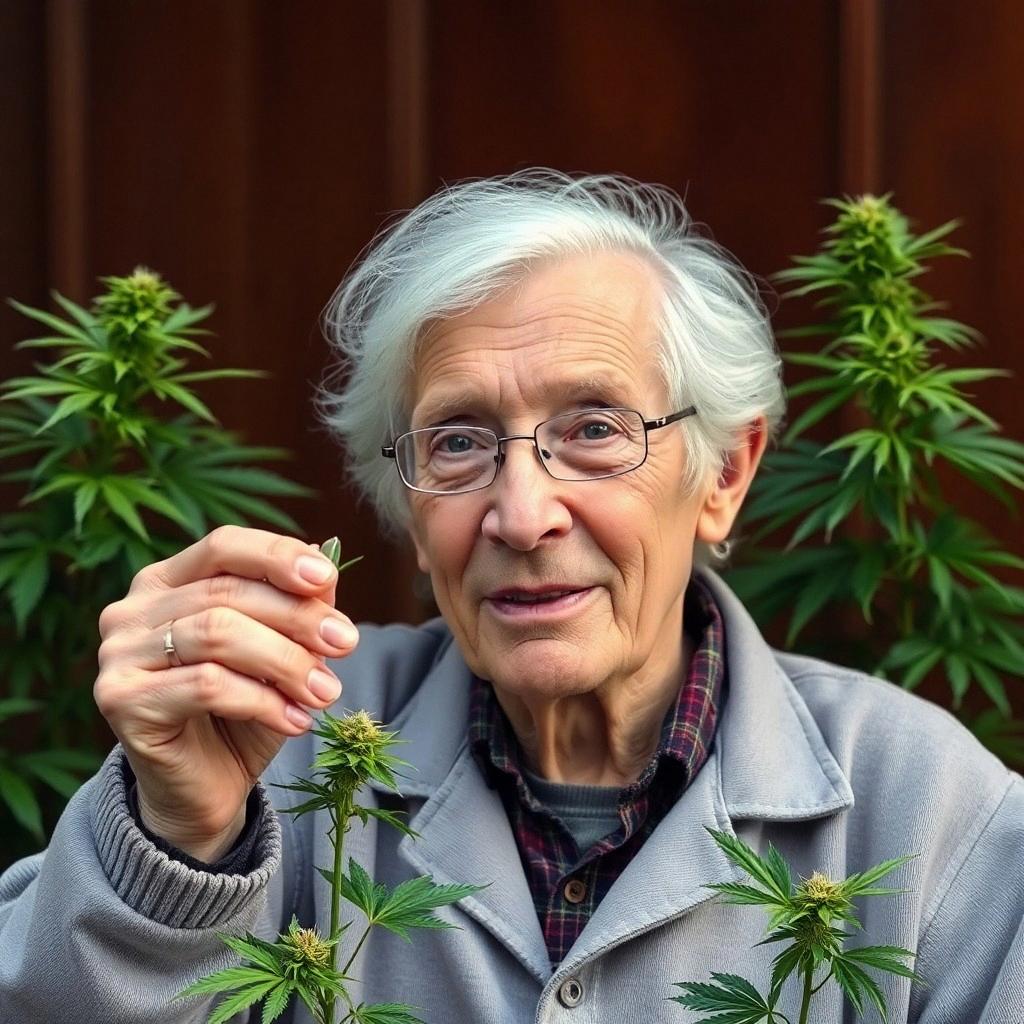
    Paper Review: Risk Factors for Cannabis-Related Mental Health Harms in Older Adults: A Review Science Art

     Science Movie


    Make a narrated HD Science movie for this answer ($32 per minute)


     Discussion


    Get Ahead With Science Insights

    Custom summaries of the latest cutting edge Science research. Every Friday. No Ads.


    My BGPT