Why BGPT?
logo

Review papers with raw data transparency

Quickly verify claims by accessing the underlying experimental data and figures.


Press Enter ↵ to solve


    Fuel Your Discoveries


     Quick Explanation


    Bottom line: Steck et al. (2012) is a rigorous, well‑referenced review that persuasively argues bacterial proteases—from pathogens and commensals—are plausible contributors to epithelial barrier disruption and PAR signalling in IBD/IBS, but direct causal human data (protease identification, in vivo proof) were limited at time of publication and remain an active area of research
    Needed next: targeted identification of active bacterial proteases in patient samples (activity-resolved proteomics), causal perturbation in validated animal/human-organotypic models, and assessment of specificity/safety of protease/PAR interventions (emerging 2025–2026 studies support feasibility)


     Long Explanation


    Visual paper analysis — "Republished: Bacterial proteases in IBD and IBS" (Steck et al., 2012)

    Visualize first — key quantitative assessments below, then concise evidence‑based critique and next experiments.

    Key claims made by the review (accurately cited)

    • Host proteases (MMPs, serine proteases, cathepsins) and an imbalance with inhibitors are implicated in IBD pathology
    • Faecal and mucosal proteolytic activity is increased in subsets of IBS and UC patients and can modulate neuronal sensitivity via PARs (PAR2 and PAR4 differences documented)
    • Commensal-derived proteases can disrupt epithelial junctions: Enterococcus faecalis GelE degrades occludin/E-cadherin and impairs barrier function in susceptible hosts (mouse models)

    Strengths — what the review does well

    • Comprehensive synthesis across host- and microbe-derived proteases, PAR biology, barrier biology and neuronal effects with extensive references (n≈97)
    • Clear identification of mechanistic hypotheses (PAR activation, junctional protein cleavage, mucolysis) and experimental gaps—helpful roadmap for follow-up mechanistic studies

    Limitations, blindspots and critical caveats

    • Predominantly correlative human data available by 2012: increased faecal protease activity was measured, but precise bacterial protease species/enzymes were not systematically identified in patient samples—so causality in humans remained unproven
    • Heterogeneity: IBS and IBD are heterogeneous clinical syndromes; protease signatures likely vary by subtype and disease state; review acknowledges this but cannot resolve it with available data
    • Therapeutic caution — protease inhibitors are non-specific and previous MMP inhibitor trials had adverse effects; the review correctly flags translational risks and need for specificity

    What new evidence (2025) changes/strengthens the picture?

    Since 2012, targeted work has started to close the human-causality gap. Two representative advances from the supplied dataset:

    • Bfp1 — a secreted protease from Bacteroides fragilis — was identified to cleave PAR2 and cause intestinal pain/inflammation in murine models; that is a concrete mechanistic example of a commensal protease acting through PARs, supporting the review's central hypothesis and validating the suggested experimental path (activity-resolved identification → PAR functional tests → in vivo perturbation)
    • Environmental modulation of mucolysis: a 2025 study indicates bacterial proteases (not only glycanases) are primary drivers of mucus degradation under certain conditions, increasing plausibility that proteases can access epithelial targets if mucus is thinned (an IBD feature)

    Critical synthesis and confidence-weighted conclusion

    Conclusion: The 2012 review laid a robust conceptual and literature foundation that bacterial proteases can — plausibly and mechanistically — contribute to IBD/IBS pathophysiology by (1) degrading mucus and junctional proteins, (2) activating PARs on neurons/immune cells, and (3) dysbalancing host protease/antiprotease systems. Direct, enzyme‑level, causal proof in humans was limited in 2012; subsequent 2025 mechanistic studies (e.g., Bfp1) provide the first concrete commensal-to-host PAR cleavage demonstrations, increasing confidence in the review's main thesis while underscoring continued needs for patient-level, activity-resolved proteomics and careful safety assessment for protease-targeted therapies

    What would disprove the review's central claims (falsification criteria)?

    1. High-quality, large human studies showing elevated faecal/mucosal proteolytic activity is solely due to host proteases with no bacterial-derived protease signatures even after activity-resolved enrichment and proteomic identification.
    2. Targeted knockout/inhibition of individual candidate bacterial proteases (in humanized microbiota animal models) failing to change barrier integrity, PAR signalling or symptomatology in replicated studies.
    3. Therapeutic trials that modulate protease activity (or PAR signalling) with high specificity producing no clinical or mechanistic benefit despite adequate PD target engagement and safety.

    Recommended next experiments (concise, specific, falsifiable)

    1. Activity-resolved metaproteomics of stool/mucus from well-phenotyped IBD/IBS patients: use activity-based probes for serine/cysteine/metallo‑proteases, pull-down, LC‑MS/MS to identify and quantify active bacterial proteases vs host proteases (test: presence/abundance of bacterial proteases correlates with permeability/visceral sensitivity).
    2. Human organoid + microbiota co-culture test: colon organoids with mucus layer exposed to isogenic bacterial strains (wild-type vs protease knockout) measuring TER, E-cadherin cleavage, PAR activation and neuronal co-culture responses (test: knockout abrogates barrier disruption and PAR signals).
    3. Proof-of-concept precision inhibition: develop small-molecule or antibody inhibitors to a candidate bacterial protease (e.g., Bfp1 or GelE), test in humanized mouse models and evaluate barrier, inflammation and pain outcomes, plus off-target host protease effects.

    Short methodological checklist for reproducible follow-up studies

    • Pre-register sample collection, define clinical subtypes (IBD: UC vs CD; IBS: D vs C), control for diet/antibiotics.
    • Use activity-based probes and parallel host/bacterial protease markers; deposit raw proteomics and metadata to public repositories.
    • Use matched functional readouts (TER, E-cadherin immunoblot/cleavage products, PAR reporter assays, visceral pain assays) with blinded analysis.
    Key citations used in this analysis:


    Feedback:   

    Updated: March 10, 2026

    BGPT Paper Review


    Study Novelty

    70%

    The review synthesised a then-underappreciated concept (bacterial proteases from commensals contributing to IBD/IBS) and highlighted specific mechanisms (PAR activation, GelE effects), which in 2012 was novel relative to prior pathogen-focused protease literature.


    Scientific Quality

    80%

    Well-referenced (≈97 refs), balanced discussion of host vs bacterial proteases, clear identification of gaps; limitations: review (not primary data), reliant on heterogeneous studies (animal models, ex vivo assays) and correlative human protease measures — authors acknowledge these biases.


    Study Generality

    60%

    Conceptually broad (applies to IBD/IBS and gut disorders) but mechanistic generality limited because protease types, host susceptibility, and PAR profiles vary across species and patient subtypes.


    Study Usefulness

    70%

    Provides a clear roadmap (targeted protease discovery, PAR-focused assays, therapeutic caution) useful for researchers planning mechanistic or translational work, though immediate clinical utility was limited without enzyme-level human data.


    Study Reproducibility

    60%

    As a review, reproducibility of synthesis is high (references provided), but underlying empirical claims depend on heterogeneous primary studies with variable methods; reproducible follow-up requires standardized activity-based proteomics and clinical phenotyping.


    Explanatory Depth

    70%

    Offers mechanistic models (PAR activation, junctional cleavage, mucolysis) and points to specific proteases (GelE, gingipains, StcE) but lacks deep quantitative mechanistic parameters (enzyme kinetics in vivo, concentration thresholds) because primary data were limited.


    🎁 Authors: Collect 197 Free Science Tokens (≈ $19.7 USD)

    Claim My Author Tokens

    Use for 49 days of free BGPT access (4 tokens = 1 day) or trade/sell (≈ $19.7 USD)

     Top Data Sources ExportMCP


     Analysis Wizard


    Preparing ABPP-LC/MS spectral search pipeline and mapping bacterial protease peptides to species/genes to quantify active bacterial proteases in patient stools; useful for prioritising candidates (e.g., Bfp1, GelE).


     Hypothesis Graveyard


    'All faecal protease activity is host-derived' — falsified by activity-resolved bacterial protease identifications and antibiotic/monoassociation animal experiments demonstrating bacterial contribution.


    'PAR2 activation uniformly causes hypersensitivity' — incorrect because different PARs (PAR2 vs PAR4) can produce opposite effects (pro- vs anti-nociceptive) depending on cell type and protease context.

     Science Art


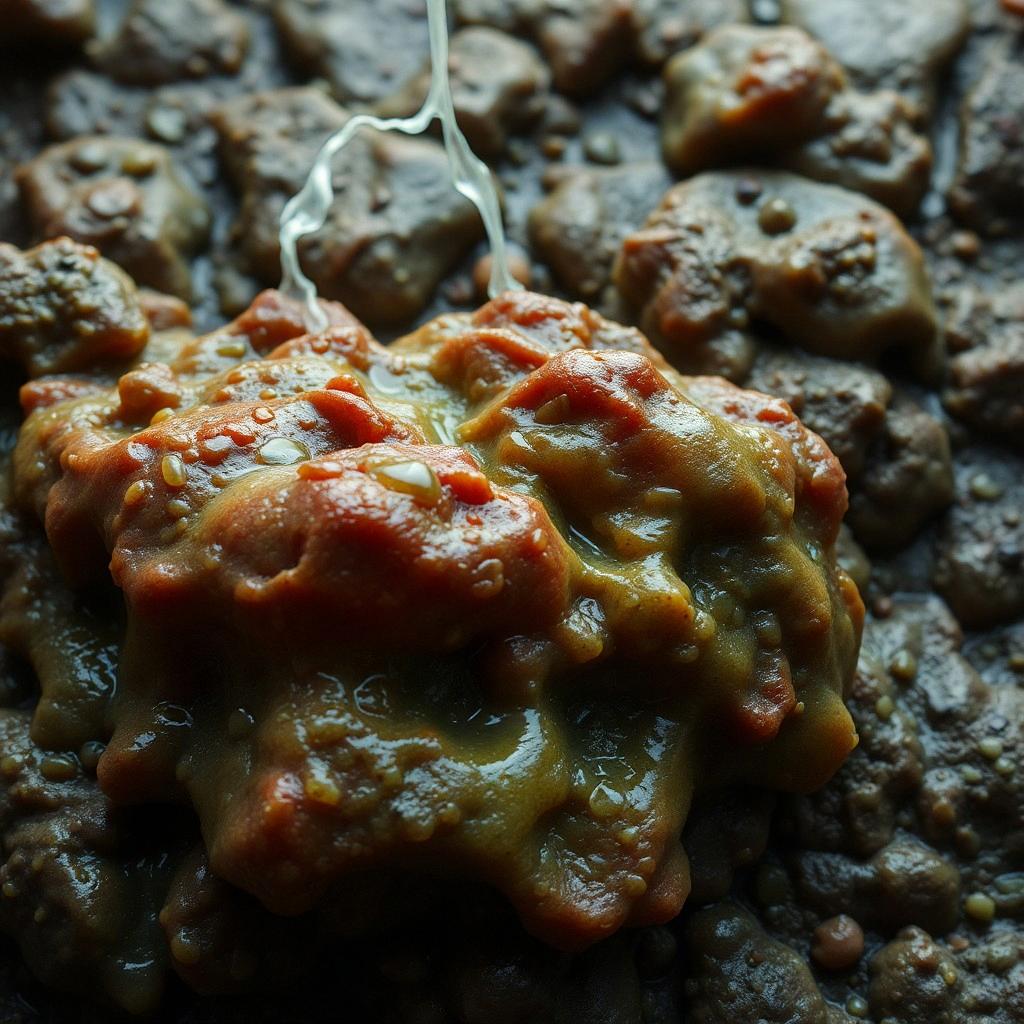
    Paper Review: Republished: Bacterial proteases in IBD and IBS Science Art

     Science Movie


    Make a narrated HD Science movie for this answer ($32 per minute)


     Discussion


    Get Ahead With Science Insights

    Custom summaries of the latest cutting edge Science research. Every Friday. No Ads.


    My BGPT