Why BGPT?
logo

Paper Review — Verify Claims Fast

Quickly check methods, data, and figures across full-text papers to verify conclusions.

Press Enter ↵ to review


    Fuel Your Discoveries


     Quick Explanation


    Paper reviewed: “Recent advances in universal chimeric antigen receptor T cell therapy” (10.1186/s13045-025-01737-8) — a narrative synthesis of UCAR‑T strategies focused on mitigating GvHD and HvGR, diversifying T‑cell sources, and addressing persistence/efficacy (especially in solid tumors).
    Most robust “known” thread: the central engineering logic (TRAC/TCR disruption to reduce GvHD + B2M/HLA-axis editing to reduce HvGR) is supported by multiple mechanistic and preclinical-to-clinical examples (e.g., TRAC targeting and universal CAR-T immune-evasion designs).
    Main scientific risk/uncertainty: because UCAR‑T products are highly heterogeneous, narrative synthesis can overgeneralize “engineering fixes” across constructs; additionally, long-term persistence and off-target/genotoxicity risk remain incompletely resolved, particularly as editing complexity increases.


     Long Explanation


    UCAR‑T Universal CAR‑T Therapy — Visual Critical Review
    Target paper: Recent advances in universal chimeric antigen receptor T cell therapy (10.1186/s13045-025-01737-8)
    Narrative review scope
    UCAR‑T “off‑the‑shelf” engineering to reduce GvHD and HvGR; diversify cell sources; improve persistence/efficacy (esp. solid tumors); and summarize clinical trial trends.
    Clinical trial phase skew (UCAR‑T; n=169)
    The paper states that most UCAR‑T trials are early-phase: Phase I and Phase I/II dominate.
    Example hematologic UCAR‑T objective response rates (subset; from Table 5 excerpts)
    Below are selected ORR values explicitly stated in the provided Table 5 text for multiple UCAR‑T programs. Because they come from different early-phase trials, direct comparison is non-inferential (sampling bias + differing endpoints/designs).
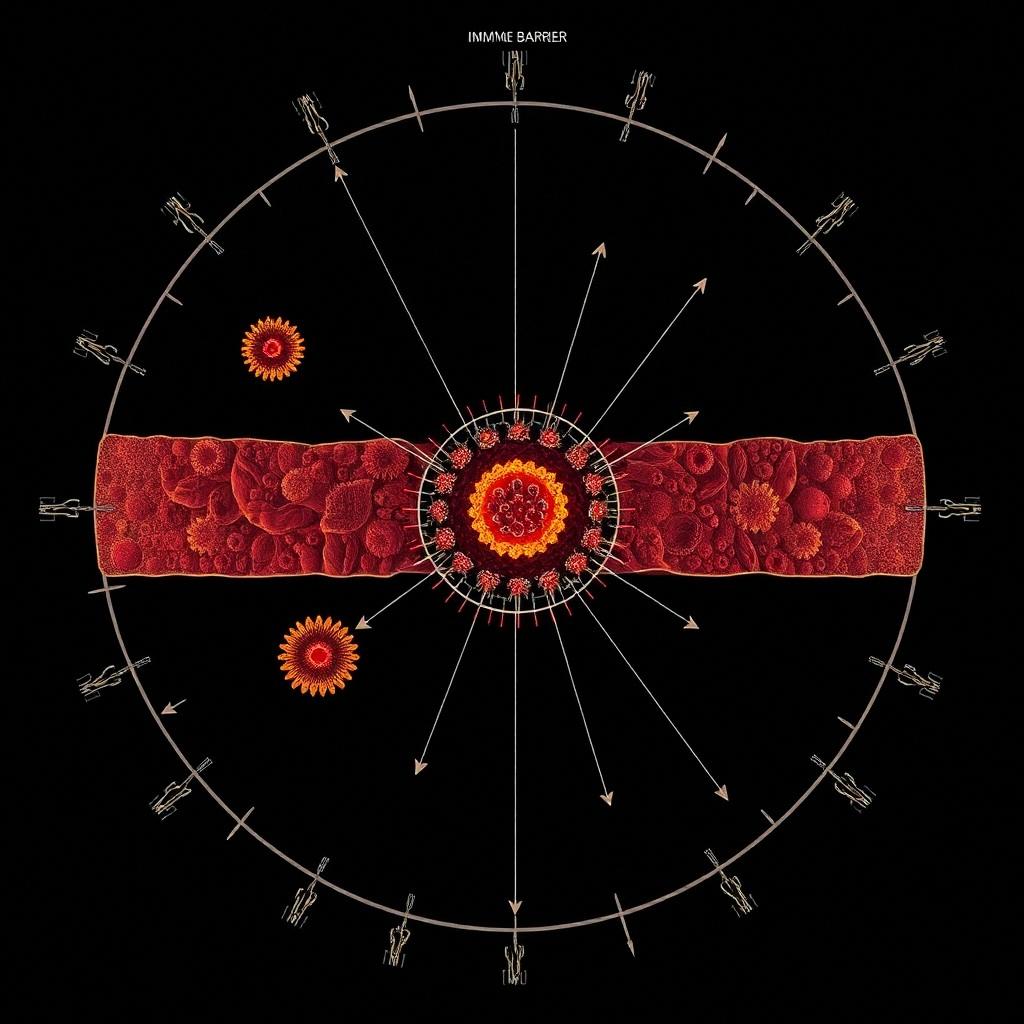
    Mechanistic design map: what UCAR‑T engineering is trying to fix
    This review consistently returns to a two-barrier framework (GvHD vs HvGR) and then layers multiple additional levers: persistence, TME reshaping, antigen heterogeneity escape, and controllability.
    Where this review is strongest
    • Mechanism-first organization around GvHD vs HvGR, then adding fratricide and durability/persistence drivers; this structure helps readers map edits to immunological risks.
    • Clear depiction of engineering tradeoffs: (i) DSB-based multiplex editing can increase chromosomal instability risk, while (ii) base editing reduces DSBs but introduces different off-target mutation modes.
    • Inclusion of non–gene-editing allogeneic approaches (e.g., shRNA CD3ζ knockdown, PEBL-style surface TCR blockers) broadens options beyond “always knockout.”
    Critical appraisal (skeptical, evidence-weighted)
    • Narrative-review bias & generalization risk. The paper synthesizes many constructs, but UCAR‑T products vary in target antigen, editing set, co-stimulation, cytokine support, lymphodepletion, and administration route. This makes “universalizable” conclusions fragile; effect sizes can’t be pooled from this article alone.
    • Editing-complexity safety remains a known unknown. The review notes that base editing and CRISPR variants shift rather than eliminate off-target risks. That means long-term monitoring, genomic characterization, and standardized reporting are essential—and are not established as a single universal solution.
    • Solid tumor efficacy claims must be interpreted as context-specific. Even where response signals exist, persistence, trafficking, and TME suppression remain major barriers, and early-phase results can be confounded by selection of antigen-positive lesions or patient-specific biology.


    Feedback:   

    Updated: May 01, 2026

    BGPT Paper Review


    Study Novelty

    70%

    The paper synthesizes multiple UCAR‑T engineering and clinical themes into a coherent barrier-driven framework; however, many constituent strategies (TCR ablation, B2M/CIITA/HLA‑E approaches, cytokine/TME armor, adaptors, off-switches) are already established areas in the literature, so novelty is mainly integrative rather than conceptually new.


    Scientific Quality

    80%

    Scientific quality is relatively high for a narrative review: it presents clear mechanistic mapping (GvHD/HvGR), enumerates engineering lever classes, and explicitly acknowledges limitations such as early-phase dependence and durability gaps. The main limitation is interpretability/cumulatability: narrative structure without systematic meta-analytic methods limits quantitative confidence.


    Study Generality

    80%

    The barrier-driven framework and the design-lever taxonomy generalize across many UCAR‑T constructs and even across some allogeneic ACT classes, though specific safety/durability outcomes depend heavily on product-level details.


    Study Usefulness

    80%

    Practically useful as a structured roadmap for researchers/engineers: it consolidates which genes/cell sources/functional levers are repeatedly targeted to solve the dominant failure modes (GvHD, HvGR, persistence, solid-tumor barriers).


    Study Reproducibility

    60%

    As a narrative synthesis with no deposited datasets, it is not reproducible in the computational sense; however, it is partly traceable via cited studies and trial identifiers, with limitations due to heterogeneity and likely selection bias typical of non-systematic reviews.


    Explanatory Depth

    70%

    Depth is good at the mechanistic/engineering taxonomy level (what barrier is being targeted and how), but less deep at quantitative causal inference level (because it is a narrative review and many links are preclinical or early-phase).


    🎁 Authors: Collect 301 Free Science Tokens (≈ $30.1 USD)

    Claim My Author Tokens

    Use for 75 days of free BGPT access (4 tokens = 1 day) or trade/sell (≈ $30.1 USD)

     Top Data Sources ExportMCP


     Analysis Wizard


    It will extract the numeric UCAR‑T trial endpoints explicitly stated in the paper’s Table 5 snippets, standardize them into a tidy table, then generate ORR distributions by target and phase.


     Hypothesis Graveyard


    Full HLA class I/II knockout alone will be sufficient to prevent HvGR in most recipients: likely false because the review emphasizes that HLA loss can provoke NK-mediated “missing-self” killing, requiring additional countermeasures (e.g., HLA‑E/G expression, other inhibitory/protection levers).


    Base editing can be treated as globally safer than DSB nucleases without tradeoffs: likely false because the review highlights sgRNA-independent off-target mutations as a base-editing-specific risk class, and it notes ongoing concerns around genomic safety monitoring.

     Science Art


    Paper Review: Recent advances in universal chimeric antigen receptor T cell therapy Science Art

     Science Movie


    Make a narrated HD Science movie for this answer ($32 per minute)


     Discussion


    Get Ahead With Science Insights

    Custom summaries of the latest cutting-edge research. Every Friday. No ads.


    My BGPT