Why BGPT?
logo

Review papers with raw data transparency

Quickly verify claims by accessing the underlying experimental data and figures.


Press Enter ↵ to solve


    Fuel Your Discoveries


     Quick Explanation


    Core claim
    The review argues that terminal 3′ uridylation (by non-canonical poly(A) polymerases / TUTases) frequently acts as a decay-promoting covalent mark across multiple RNA classes (mRNAs and sRNAs), and that 2′-O-methylation (HEN1) can antagonize uridylation to stabilize sRNAs—most clearly for Ago/PIWI-loaded sRNAs.
    Source:


     Long Explanation


    Paper Review (visual-first): “RNA decay via 3′ uridylation”
    A cross-species synthesis (plants, fungi, animals) proposing that 3′-end uridylation is an evolutionarily conserved destabilizing RNA modification, regulated by terminal uridylyl transferases (ncPAP/TUTase-like enzymes) and opposed by 2′-O-methylation (HEN1/HEN1 orthologs) in sRNA quality control.
    Review article DOI: 10.1016/j.bbagrm.2013.01.009

    1) Visual pathway map (what the review says uridylation does)

    Two coupled modules
    • Uridylation → decay promotion: 3′ terminal uridyltransferases add U (often short tails for certain enzymes/context), which then facilitates decapping and/or 3′→5′/5′→3′ exonucleolytic decay for multiple RNA substrates.
    • 2′-O-methylation (HEN1) → antagonism: HEN1-mediated 2′-O-methylation of sRNA 3′ ends blocks uridylation and thereby stabilizes PIWI/Ago-associated sRNAs.

    2) Extracted evidence map (from the review’s own Table 2)

    The review includes a cross-species table of sRNA substrates targeted by uridyltransferases and indicates which small RNAs have 2′-O-methylation. I convert the table’s categorical information into a visualization of how many sRNA categories per species are listed as uridylated/modified.

    3) Mechanism-by-mechanism critique (what is strong vs uncertain)

    3A. miRNA-directed 5′ cleavage products
    • Claim: After AGO1-mediated cleavage, 5′ fragments can acquire oligouridylation, and this is proposed to channel them into decapping and 5′→3′ exonucleolysis rather than only 3′→5′ exosome decay.
    • Evidence type: sequencing-based detection of terminal additions (e.g., cRACE) is emphasized, but the review itself does not provide uniform quantitative sufficiency across all systems.
    • Uncertainty to watch: uridylation could be a correlate of cleavage-product turnover in some contexts rather than a universally causal “timer” mark. The review explicitly notes missing mechanistic details for how uridylation signals degradation in sRNAs.
    3B. mRNA decay via deadenylation-independent uridylation (fungi + mammals)
    • Claim: In fission yeast, the non-canonical poly(A) polymerase/uridyltransferase Cid1 can add predominantly short mono-/di-uridyl tails to mature polyadenylated mRNAs, enriched on decapped intermediates, contributing to a deadenylation-independent decay pathway.
    • Mechanistic plausibility: short oligo-U tails can stimulate decapping; the review links this to Lsm1-7’s ability to distinguish oligouridylated RNAs.
    • Counterpoint inside the review: roles of specific mammalian uridyltransferases for histone mRNA oligouridylation are contested (review notes conflicting follow-up studies implicating ZCCHC11 rather than MTPAP/PAPD5).
    3C. pre-miRNA uridylation and mature miRNA uridylation: stabilization vs repression vs “who is actually uridylated?”
    • Claim: Lin28/Lin28A/Lin28B recruit ZCCHC11 (TUTase4) to uridylate pre-let-7 and promote degradation/inhibit processing, where extended uridyl tails disrupt Dicer recognition.
    • Important nuance: the review highlights that not all uridylation is purely degradative; for mature miR-26, ZCCHC11-dependent uridylation can inhibit miRNA-mediated decay of IL-6 (stabilizing the target mRNA), and isoform-specific uridylation can differentially alter miRNA activity.
    • Methodological blind spot acknowledged by the review: some “mature miRNA” uridylation signals in deep-seq may reflect pre-miRNA uridylation carried through incomplete Dicer processing, suggesting caution when inferring causality from terminal modifications on mature-sized reads.
    3D. big open question the review flags (sRNA decay engines & signaling)
    The review stresses that—unlike mRNA uridylation mechanisms where progress exists—the specific exonuclease(s) responsible for uridylated sRNA decay and the mechanistic “signal” translating a 3′ U tail into decay are not fully resolved.

    4) What I think the review does especially well (with skepticism)

    • Mechanistic integration: It links ncPAP/TUTase-like uridyltransferases to concrete decay steps (decapping/exonucleolysis) in mRNAs and to processing outcomes in sRNAs, while also showing where the causal chain is still incomplete.
    • Antagonism framework: Presents HEN1-mediated 2′-O-methylation as a general antagonistic protective modification for sRNAs—supported repeatedly across species in the review’s synthesis.
    • Explicit acknowledgement of experimental interpretation limits: e.g., oligo(dT)-primed methods can miss distal uridylation in mRNAs; deep-seq read interpretation can blur pre- vs mature miRNA uridylation.

    5) Table (from the paper): enzyme families & substrate classes (visual summary)

    Enzyme (named) Uridylation type Main substrate class emphasized Functional consequence emphasized in review
    ZCCHC11 (TUTase4) Uridylation / oligouridylation Pre-miRNA (pre-let-7), replication-dependent histone mRNAs, mature miR-26 (activity modulation) Processing inhibition & degradation for pre-miRNA/histone mRNAs; non-degradative inhibition of miRNA function for miR-26 → stabilized IL-6
    ZCCHC6 (TUTase7) Uridylation Pre-miRNA (Group II let-7 pre-miRNAs) and context-dependent pre-miRNA roles Supports either processing competence (e.g., monouridylation) or decay logic depending on tail length/context
    HEN1 / HENN1 / DmHen1 (Pimet) 2′-O-methylation (antagonizes uridylation) Ago/PIWI-associated sRNAs (piRNAs/selected siRNAs/miRNAs depending on system) Blocks uridylation and stabilizes sRNAs
    CutA / Cid1-like ncPAPs Uridylation (often short tails or CUCU motifs) Deadenylated mRNAs or decapping-linked intermediates Decapping and decay promotion in deadenylation-independent pathways
    These rows reflect the review’s synthesis of enzyme functions and consequences, not a mechanistic equivalence across all contexts.


    Feedback:   

    Updated: March 25, 2026

    BGPT Paper Review


    Study Novelty

    70%

    As a 2013 review, novelty lies mainly in consolidating disparate early findings into a unified “uridylation as decay/quality-control mark” framework across mRNA and sRNA classes, rather than introducing a new single experimental mechanism. Evidence is synthesized rather than newly established in the paper itself.


    Scientific Quality

    80%

    Strong for coverage and mechanistic organization, with explicit discussion of uncertainties and conflicting results (notably mammalian histone mRNA uridyltransferase identification). As a review, it depends on the underlying primary literature quality and is not itself experimentally controlled; additionally, without full coverage of later work, some conclusions could have been superseded after 2013.


    Study Generality

    80%

    It is broadly relevant to RNA metabolism and epitranscriptome-style regulation across eukaryotes, though the mechanistic certainty varies by RNA class and organism. It increases general understanding by mapping a conserved modification principle (uridylation vs HEN1 protection) rather than focusing on a single pathway.


    Study Usefulness

    80%

    High utility as an entry-point map to enzymes, substrates, and conceptual mechanisms (decapping/exonuclease links; tail-length effects; antagonism model). Less useful for precise kinetic parameters or experimentally validated causality in every system because it is a synthesis.


    Study Reproducibility

    60%

    Reproducibility is limited by the nature of a review: it does not include experimental protocols or raw data. However, it points readers to primary studies and explicitly indicates major evidence types (sequencing/biochemistry).


    Explanatory Depth

    80%

    Deep explanatory structure: it connects enzyme evolution (ancestral poly(A) polymerase → uridyltransferase), tailing/processing recognition, and antagonism by 2′-O-methylation, while still identifying where mechanistic gaps remain (especially sRNA decay signaling).


    🎁 Authors: Collect 344 Free Science Tokens (≈ $34.4 USD)

    Claim My Author Tokens

    Use for 86 days of free BGPT access (4 tokens = 1 day) or trade/sell (≈ $34.4 USD)

     Top Data Sources ExportMCP


     Analysis Wizard


    Summarizes the review’s Table 2 into a species×sRNA-category contingency table, then computes category counts and exports a publication-ready matrix for downstream hypothesis testing.


     Hypothesis Graveyard


    A universal rule that all uridylation is degradative (tailing length → decay) is weakened by the review’s examples where mature miRNA uridylation modulates activity rather than simply triggering turnover (e.g., miR-26/IL-6 axis).


    A universal assumption that the same uridyltransferase(s) responsible for histone-mRNA oligouridylation are always identified the same way is challenged by the review’s own summary of conflicting replication attempts and alternative implicates (ZCCHC11 vs MTPAP/PAPD5).

     Science Art


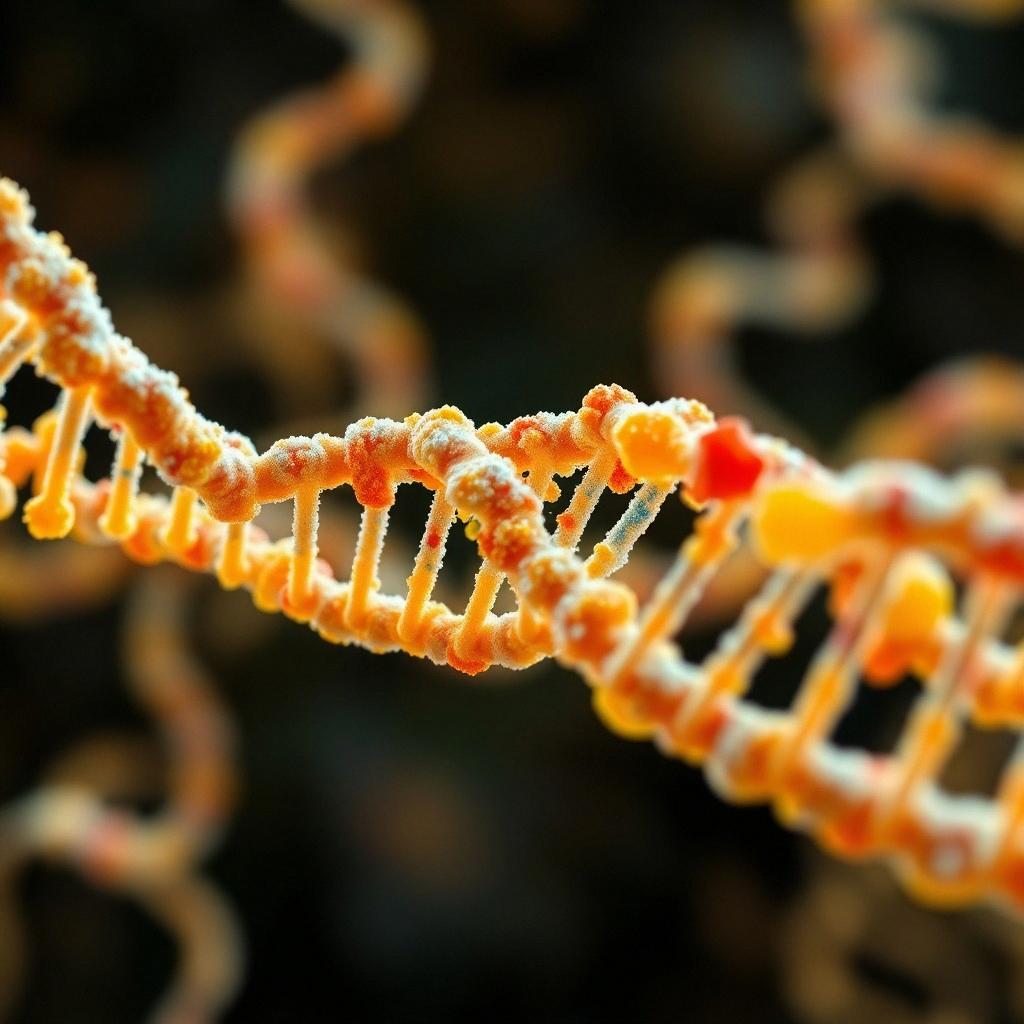
    Paper Review: RNA decay via 3′ uridylation Science Art

     Science Movie


    Make a narrated HD Science movie for this answer ($32 per minute)


     Discussion


    Get Ahead With Science Insights

    Custom summaries of the latest cutting edge Science research. Every Friday. No Ads.


    My BGPT