Why BGPT?
logo

Review papers with raw data transparency

Quickly verify claims by accessing the underlying experimental data and figures.


Press Enter ↡ to solve


    Fuel Your Discoveries


     Quick Explanation


    Key idea
    ATP and adenosine form a coupled signaling β€œduo” (P2 vs P1 receptors) that coordinates neuron–glia communication across physiological synaptic tuning and pathological danger/metabolic imbalance states.


     Long Explanation


    Paper Review (scientific, skeptical): Purinergic signaling orchestrating neuron-glia communication
    Journal DOI: 10.1016/j.phrs.2020.105253  β€’ Published: 29 Sep 2020 (per provided TEI metadata)
    What this review is (and is not): a narrative synthesis of mechanisms and examples across neurons/astrocytes/microglia/oligodendrocytes, not a single primary dataset.
    1) Visual synthesis (ATP–adenosine coupling + cell-type routing)
    The review’s organizing principle is that extracellular ATP and extracellular adenosine are not independent stories: ecto-nucleotidases convert ATPβ†’adenosine to couple P2 signaling to P1 signaling in space/time, producing different outcomes in physiological vs pathological contexts.
    Confidence: High for the review’s organizing claims about ATP/P2 and adenosine/P1 coupling via ecto-nucleotidases; medium for the detailed receptor-by-cell mapping because the review aggregates heterogeneous experimental contexts (slices, cultures, in vivo; receptor expression and functional readouts differ).
    2) Evidence-weighted mechanistic claims (what seems solid vs still unresolved)
    2.1 ATP/P2 β€œfast vs slow” split
    • The review distinguishes rapid ionotropic P2X receptors vs slower adaptive P2Y GPCR responses as a general organizational frame.
    2.2 Adenosine/A1 vs A2A: β€œbrake” vs β€œplasticity/metabolic imbalance” (with caveats)
    • The review emphasizes A1 receptor–mediated inhibition and A2A receptor–mediated facilitation of synaptic plasticity, with additional framing as low-intensity vs high-intensity roles in neurodegeneration.
    • Separate cited primary literature supports that ATP-derived extracellular adenosine and adenosine receptor signaling can causally modulate hippocampal transmission/plasticity and local inhibition via ecto-catabolism.
    Counterpoint / uncertainty: The review itself describes conflicting findings in hippocampal ATP/P2 effects on synaptic transmission and plasticity (e.g., potentiation vs depression depending on conditions/receptor subtype), implying that any β€œone-direction” story for P2 signaling is context-dependent.
    2.3 Astrocytes: ATP→P2Y-driven Ca2+ waves and ATP/adenosine cycles (and the gliotransmission debate)
    • The review highlights astrocytes as a major hub for ATP signaling that drives Ca2+ waves, with extracellular ATP degradation producing adenosine that can further modulate astrocytic and neuronal functions.
    • Primary studies cited in the review support roles of ATP release and P2 receptor activation in astrocyte-to-network effects.
    Blind spot / limitation: The literature on β€œgliotransmission” (especially physiological release vs artifacts from in vitro stimulation) is still actively debated; this review notes the sensitivity to experimental manipulation in parts of its discussion.
    2.4 Microglia: ATP as danger signal; adenosine as inflammation-tuning (but polarization models are contested)
    • The review positions ATP/P2 signaling as a key trigger for microglial activation and inflammation, and adenosine/P1 signaling (notably A2A) as modulating these responses.
    • The review acknowledges that simplistic M1/M2 macrophage-polarization analogies for microglia have been questioned.
    2.5 Oligodendrocyte-lineage (OPCs): ATP/adenosine influence myelination and survival
    • The review extends purinergic concepts to oligodendrocyte biologyβ€”ATP/adenosine influencing OPC proliferation, differentiation, and myelination with receptor-specific effects (examples discussed include P2X7 and adenosine receptor roles).
    Uncertainty: The review also flags contradictory expression/function results depending on in vivo vs in vitro and across oligodendrocyte subpopulations.
    3) What would most improve the field (as stated by the review + skeptical extrapolation)
    • The review calls for integrated spatiotemporal views of ATP vs adenosine signalingβ€”i.e., simultaneous monitoring of release, receptor engagement, and functional outcomes with explicit physiological vs pathological distinction.
    • A skeptical interpretation: many conclusions in narrative reviews depend on heterogeneous assays and preparations; therefore, mechanistic claims should be prioritized where (i) receptor specificity is established (genetics and/or clean pharmacology) and (ii) the ATPβ†’adenosine conversion step is causally demonstrated in the same system.
    Key epistemic uncertainty highlighted implicitly by the evidence landscape: receptor expression patterns and functional effects vary by preparation, sex/age/region, and by whether extracellular catabolism/transport is preserved. The review explicitly states that receptor density/function is context-dependent.
    4) Metrics (critical, skeptical) β€” for the provided review article
    Note: These scores judge the review’s scientific synthesis quality, not the quality of every included primary study.
    Dimension Score (1-10) Skeptical justification (short)
    Novelty 6 Strong integrative framing of ATP/P2 vs adenosine/P1 as coupled β€œphysiology vs pathology” loops, but largely builds on established purinergic concepts (not a brand-new experimental platform).
    Scientific quality 7 Mechanistic coverage is wide and generally consistent; however, as a narrative review it cannot resolve all contradictory experimental findings and may under-emphasize negative/failed replications by selection bias inherent to literature syntheses.
    Generality 8 Applies across multiple CNS cell types and two purine branches; usefulness for mechanistic thinking is high, even if details require system-specific validation.
    Practical usefulness 8 Provides a β€œmap” of receptor classes, coupling steps (ecto-nucleotidases), and major cell-type interactions to guide hypothesis formation and experimental design.
    Reproducibility (as a review) 6 Reviews are inherently reproducible only in their literature accounting; the lack of a structured meta-analytic protocol and the breadth of claims reduce strict reproducibility of β€œeffect size” conclusions.
    Explanatory depth 7 Goes beyond listing receptors by linking them to timing regimes (fast/slow; low/high intensity) and cell-to-cell loops, but still leaves key spatiotemporal unknowns unresolved.


    Feedback:   

    Updated: March 29, 2026

    BGPT Paper Review


    Study Novelty

    60%

    The review’s novelty is an organizing integrative framework (β€œATP/P2 vs adenosine/P1” as coupled loops with physiological vs pathological layers) rather than entirely new experimental methods or a new dataset; it systematizes known purinergic biology into a cross-cell communication map.


    Scientific Quality

    70%

    Mechanistic breadth is strong and several causal chains are consistent with the cited primary literature, but as a narrative review it cannot resolve contradictions and depends on heterogenous experimental contexts (slices/cultures; receptor expression vs functional readouts). The review itself flags conflicting hippocampal P2 findings and context dependence of receptor expression.


    Study Generality

    80%

    The framework applies to multiple brain cell types (neurons, astrocytes, microglia, oligodendrocyte-lineage) and unifies two receptor branches under a coupling step (ecto-nucleotidases).


    Study Usefulness

    80%

    It is practically useful as a mechanistic roadmap for choosing receptor families and considering ATPβ†’adenosine coupling when interpreting neuron–glia phenotypes.


    Study Reproducibility

    60%

    As a narrative review, it lacks a systematic inclusion protocol and quantitative meta-analytic design; reproducibility is mainly about verifying the cited claims rather than reproducing numerical synthesis.


    Explanatory Depth

    70%

    It connects receptor families to functional regimes (fast ionotropic vs slow GPCR; A1 vs A2A regimes) and proposes layered physiological vs pathological roles, but still highlights major unknowns in spatiotemporal interplay.


    🎁 Authors: Collect 225 Free Science Tokens (β‰ˆ $22.5 USD)

    Claim My Author Tokens

    Use for 56 days of free BGPT access (4 tokens = 1 day) or trade/sell (β‰ˆ $22.5 USD)

     Top Data Sources ExportMCP


     Hypothesis Graveyard


    β€œAdenosine always counteracts ATP-driven inflammation in microglia.” Why less likely: the review itself notes both opposing and context-dependent roles of adenosine receptors (e.g., A2A effects depend on glutamatergic excitotoxicity context; microglial responses vary by preparation/insult), and it emphasizes layer-specific physiology vs pathology.


    β€œAll ATP effects on synapses are direct P2 receptor activation; conversion to adenosine is negligible.” Why less likely: the review highlights ATPβ†’adenosine coupling, and primary evidence shows ATP-mediated synaptic inhibition can require extracellular catabolism to adenosine acting at A1 receptors.

     Science Art


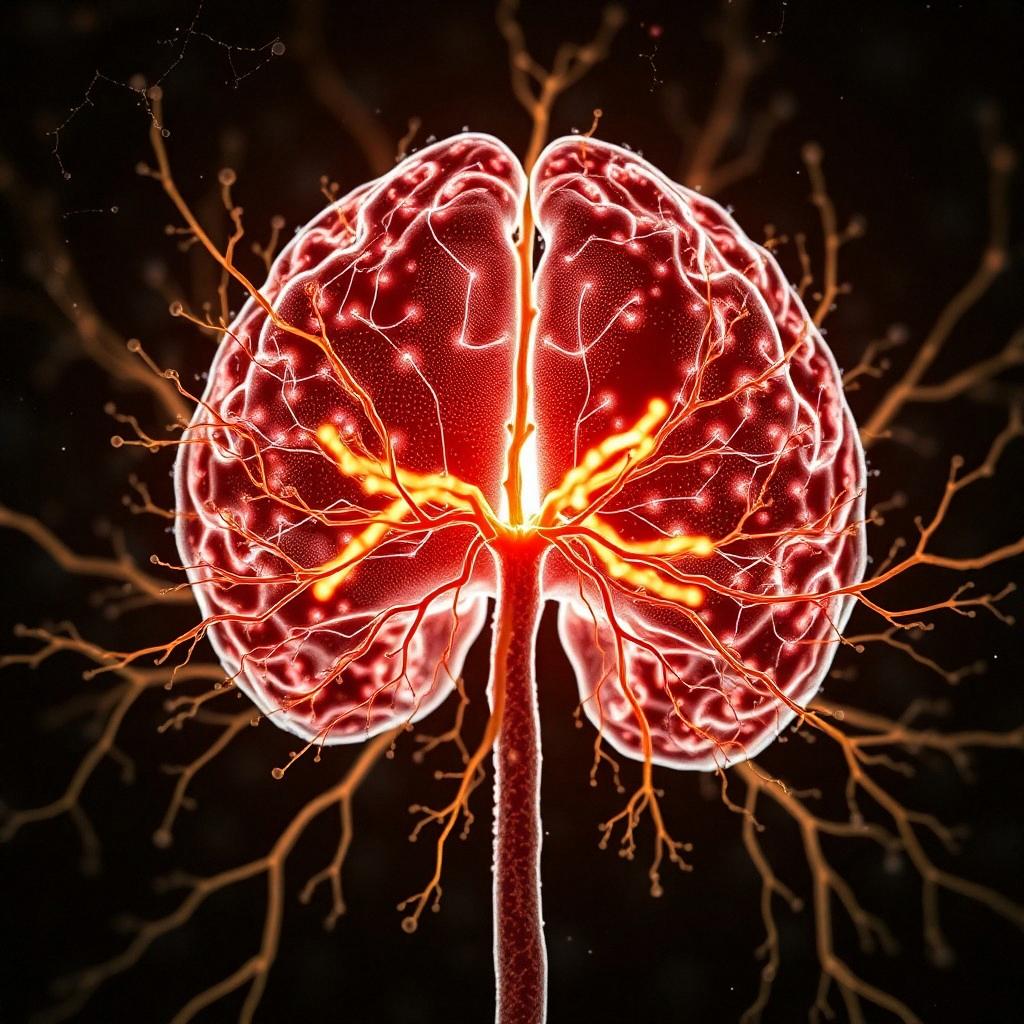
    Paper Review: Purinergic signaling orchestrating neuron-glia communication Science Art

     Science Movie


    Make a narrated HD Science movie for this answer ($32 per minute)


     Discussion


    Get Ahead With Science Insights

    Custom summaries of the latest cutting edge Science research. Every Friday. No Ads.


    My BGPT