Automatic extraction and concise summaries of methods, figures, and raw results for any paper.
Press Enter ↵ to solve
Fuel Your Discoveries
"An expert is a person who has made all the mistakes that can be made in a very narrow field."
- Niels Bohr
Quick Explanation
Copied
Bottom line (skeptical)
Peripheral tau (plasma p-tau181/p-tau217 and platelet tau patterns) is biologically plausible and supported by high-quality plasma evidence, but the paper’s narrative review-level synthesis cannot fully resolve key issues: assay standardization, cutoff reproducibility, and real-world predictive validity.
The review’s strongest evidence directionally matches what high-quality blood-tau studies support (diagnostic/prognostic signal), but it overstates “early detection” readiness relative to what rigorous cross-lab harmonization and phase-4/phase-5 style implementation evidence can yet guarantee.
Long Explanation
Paper Review (Critical & Visual): Proteína tau como biomarcador en Alzheimer preclínico
Evidence anchored to the paper text provided and to high-quality supporting literature with explicit DOIs.
Citation of the assessed paper:
What the paper claims (distilled)
Peripheral tau (plasma p-tau species; platelet tau patterns HMW/LMW) is presented as promising for preclinical AD detection/monitoring, with less invasiveness than CSF and lower cost than imaging.
The review acknowledges that early-detection usefulness remains debated, and stresses insufficient standardization/cutoff harmonization across blood assays.
The review’s direction is broadly consistent with high-quality plasma p-tau181 work showing (i) central pathology tracking and (ii) prediction of progression.
.
FIGURE 1 — Preclinical AD “continuum” stage logic (paper framework)
The paper uses the IWG/NIA-AA conceptual staging where biomarker abnormalities precede overt symptoms.
The paper reports sensitivity/specificity values for platelet tau (HMW/LMW approach).
FIGURE 3 — Plasma p-tau181: why this strengthens the review’s plausibility
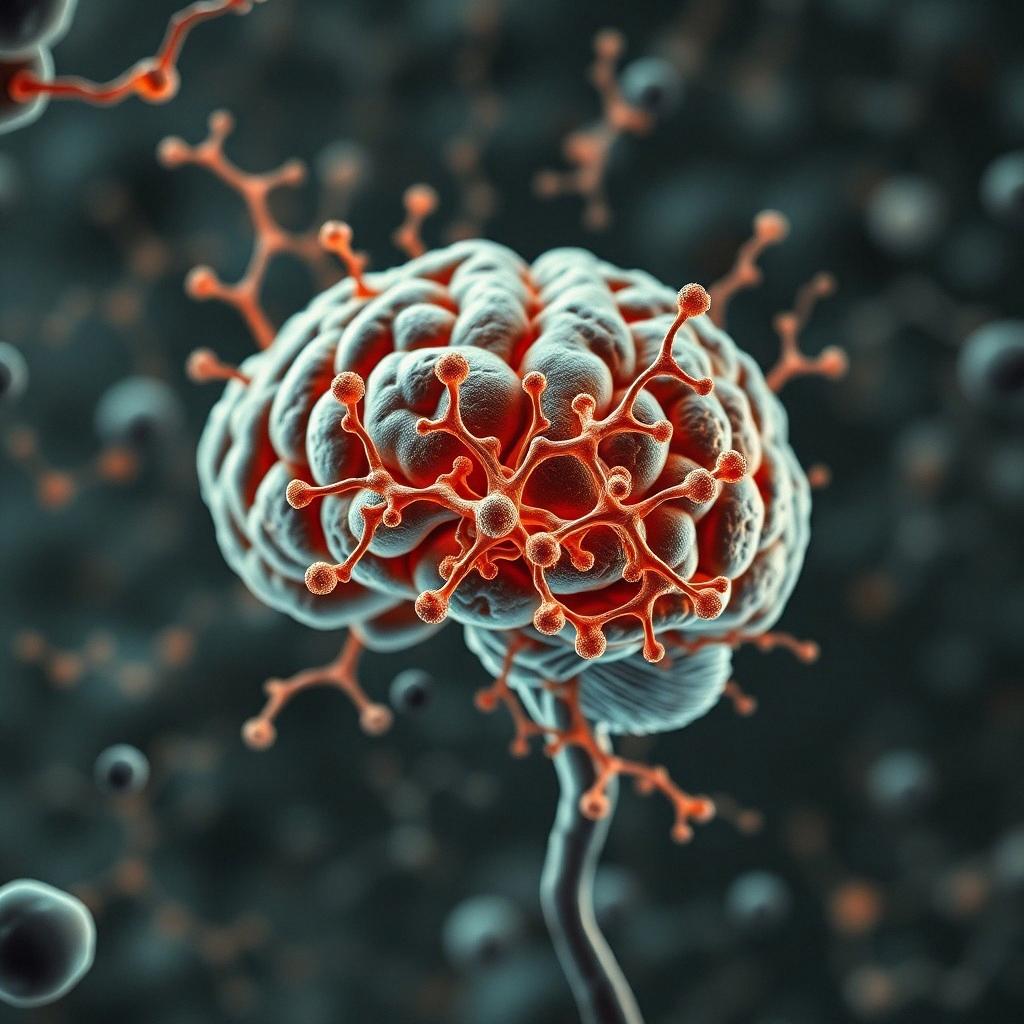
This figure is not a new estimate; it schematizes the review’s key claim: peripheral tau can reflect brain tau/amyloid. It is consistent with plasma p-tau181’s demonstrated associations and predictive utility.
TABLE 1 — Evidence types and what is actually supported (known vs uncertain)
This table separates what is explicitly evidenced (per cited studies) from what the review claims but cannot fully validate on its own.
Claim theme
What’s supported by high-quality evidence (with DOIs)
Uncertainties / blind spots
Plasma phosphorylated tau as a biomarker
Plasma p-tau181 correlates with CSF p-tau181 and tau PET; differentiates AD dementia vs non-AD neurodegenerative diseases; and predicts progression in nondemented individuals.
Generalization to routine clinical settings and assay standardization are still major practical hurdles; cohort/subgroup sizes and platform differences can limit precision.
Platelet tau patterns (HMW/LMW)
The review reports sensitivity/specificity values for LMW-based identification and frames platelet assays (e.g., Alz-tau®) as less invasive peripheral options.
Reported performance in the review does not substitute for cross-lab reproducibility, cutoff harmonization, and prospective “conversion to clinical AD” validation.
CSF tau and Aβ42 as reference benchmarks
CSF biomarker reviews support that total tau and phosphorylated tau are typically elevated in AD and that Aβ42 is decreased, with combined marker panels improving diagnostic accuracy.
CSF still faces assay variability and overlap, and—critically—the review-to-implementation pathway requires standardization; peripheral assays must prove comparable or incrementally useful performance.
Because this is a narrative review with a small number of included items (11 total, per the provided paper text), selection bias and incomplete synthesis are plausible.
Blood biomarker assays can vary by platform, antibodies, and pre-analytical handling. Even when a biomarker is promising, cross-lab reproducibility and universally accepted cutoffs often lag. The paper explicitly states that the field lacks standards to compare assays and define precise cutoffs, leaving later-phase implementation uncertain.
The review’s mechanistic framing (tau phosphorylation/aggregation/oligomer toxicity) is plausible, but the review-level evidence is not enough to establish causality for early peripheral tau changes; mechanistic causation needs targeted longitudinal mechanistic work rather than correlation-based staging.
Where the field has stronger evidence is in blood p-tau181 multimodal validation and longitudinal prediction. That provides an evidential anchor for the review’s overall direction, but it does not automatically validate the specific platelet HMW/LMW pipeline as universally usable in preclinical screening.
How to falsify the review’s main thesis (actionable scientific test set)
These falsification targets are framed around predictive validity and transferability—the usual failure modes when biomarkers move from studies to real settings.
The review itself highlights the need for assay comparability and cautions that definitive phase-4/phase-5 real-world validation is not yet established for blood-based tau biomarkers.
Optional next steps on BGPT (author deep-dives)
Feedback:
Updated: April 13, 2026
BGPT Paper Review
Study Novelty
30%
It is a narrative review synthesizing known themes (tau biology, preclinical AD staging, and peripheral tau assay approaches) rather than introducing new experimental results or new analytical frameworks; novelty comes mainly from the specific peripheral-tau emphasis and integration of staging with plasma/platelet discussion.
Scientific Quality
50%
Moderate scientific quality as a narrative synthesis, but with key limitations that reduce evidential strength for clinical implementation claims: small included corpus (11 articles), lack of systematic risk-of-bias methods (as provided), and explicit reliance on heterogeneous assay contexts where standardization/cutoffs remain unresolved.
Study Generality
60%
The topic (peripheral tau as a preclinical AD biomarker) is broadly relevant and informs ongoing translational biomarker efforts, but the review’s scope is constrained by a narrow selection window and narrative synthesis, which limits generalizable quantitative conclusions.
Study Usefulness
70%
Useful as a structured overview for understanding peripheral tau rationales (plasma vs platelets) and the practical motivations against CSF/imaging invasiveness, while also flagging standardization gaps.
Study Reproducibility
30%
As a narrative review, it does not provide standardized inclusion criteria beyond the described keyword-based PubMed search strategy and does not deposit data or a reproducible dataset of extracted biomarker performance/cutoffs; reproducibility depends on independently re-performing the literature search and re-extracting results.
Explanatory Depth
60%
Explains tau biology and discusses staging rationale and peripheral biomarker strategies; however, mechanistic claims about causality and “early detection readiness” remain inferential without a systematic quantitative synthesis or direct mechanistic longitudinal validation within the review itself.
Will extract the paper’s reported staging and biomarker categories, then generate tables/plots comparing which peripheral tau measures align with strong multimodal validation vs those lacking standardization evidence.
Get emailed when your analysis is done!
We'll email you the results when your analysis is finished.
Hypothesis Graveyard
“Platelet tau HMW/LMW is a universal preclinical AD classifier regardless of assay platform.” (Weighing the evidence: the review stresses lack of standardization/cutoffs; universal performance without cross-lab harmonization is unlikely.)
“Peripheral tau positivity implies central tau causally drives neurodegeneration timing in all individuals.” (Weighing the evidence: blood tau tracks and predicts in high-quality work, but causality and directionality for early peripheral signal remain unproven across contexts; correlation cannot establish mechanism.)

 Quick Explanation
 Long Explanation
 Top Data Sources
ExportMCP
Top Data Sources
ExportMCP
 Analysis Wizard
 Hypothesis Graveyard
 Potential Experiments
 Discussion
 Fuel Your Discoveries
 Ask a Follow-Up
 Key Insight
 Keep Exploring