Why BGPT?
logo

Paper Review — Verify Claims Fast

Quickly check methods, data, and figures across full-text papers to verify conclusions.

Press Enter ↵ to review


    Fuel Your Discoveries


     Quick Explanation


    Paper focus (TNBC programmed cell death)
    The review argues that apoptosis, pyroptosis, necroptosis, autophagy-dependent death, and ferroptosis form an interconnected “crosstalk” network in TNBC, with inflammation/mitochondrial dysfunction shared across modalities, and that this network may be leveraged to improve immunotherapy and overcome resistance—while emphasizing heterogeneity and model-to-human translation gaps.


     Long Explanation


    Programmed cell death in triple-negative breast cancer — visual critical review
    Narrative review (Cellular & Molecular Biology Letters) — DOI: 10.1186/s11658-025-00789-5
    What the paper claims (structured)
    • TNBC context: TNBC is defined by lack of ER/PR/HER2 and is clinically aggressive with chemotherapy-centered management and resistance.
    • PCD scope: The review centers apoptosis, pyroptosis, necroptosis, autophagy (including autophagy-dependent death), and ferroptosis as especially relevant PCD modalities for TNBC, and proposes system-level crosstalk.
    • Core thesis: Because pathway boundaries blur and there is bidirectional crosstalk (e.g., apoptosis↔pyroptosis via caspases/mitochondrial stress; necroptosis↔apoptosis via caspase-8 ‘switching’; autophagy as survival vs death ‘double-edge’; ferroptosis linked to iron/lipid peroxidation and antioxidant defenses), combinatorial strategies may be more effective than single-pathway targeting.
    • Immunotherapy linkage: The review argues PCD influences immune outcomes by releasing inflammatory mediators (DAMPs/cytokines/antigenic signals) and can synergize with checkpoint blockade and immune cell therapies; translation is limited by heterogeneity and preclinical-vs-human discrepancies.
    Pathway coverage map (proxy from review structure)
    Note: because no explicit counts (e.g., pages, figure numbers) were provided in the prompt excerpt, this chart uses an equal-weight proxy to visualize which major topics the review addresses—not to quantify strength of evidence.
    Mechanistic synthesis: what connects these PCD programs in TNBC (as presented)
    • Apoptosis as a central hub: The review describes extrinsic/intrinsic apoptosis routes culminating in caspase activation and discusses TNBC resistance via altered pro/anti-apoptotic Bcl-2 family balance and upstream survival signals.
    • Pyroptosis as inflammation-linked killing/immune modulation: The review frames pyroptosis as inflammasome- and gasdermin-mediated membrane rupture with IL-1β/IL-18 release; it emphasizes a dual role in TNBC (tumor-promoting vs anti-tumor immune activation).
    • Necroptosis as a caspase-independent alternative when apoptosis is impaired: The review describes RIPK1/RIPK3/MLKL signaling and a caspase-8 ‘switch’ logic, proposing necroptosis to bypass apoptotic resistance and promote inflammatory immune recruitment via released damage-associated signals.
    • Autophagy as survival vs death, and as a regulator of inflammatory outcomes: The review presents autophagy initiation/flux regulation (e.g., ULK/mTORC1/AMPK axis; LC3 processing conceptually) and treats autophagy in TNBC as a “double-edged sword” with roles in therapy resistance and immune evasion.
    • Ferroptosis as iron/lipid peroxidation vulnerability (with antioxidant counterplay): The review explains ferroptosis via iron metabolism (TFR1/FPN1/LIP concepts) and lipid peroxidation plus the GPX4/GSH antioxidant axis, connecting ferroptosis relevance to TNBC.
    Epigenetics & ncRNA layer (as claimed)
    • The review argues epigenetic regulation (DNA methylation, histone modifications) and ncRNAs (miRNAs/lncRNAs/circRNAs) can modulate multiple PCD programs by altering key gene expression nodes (e.g., caspase pathway components, GSDME/GSDMD-related control, ferroptosis and autophagy regulators).
    • It additionally claims epigenetic drugs and mechanisms are discussed as potential therapeutic entry points, and that the review contains tabulated summaries (Tables 1–4).
    Immunotherapy integration (as presented)
    • The review describes checkpoint blockade (PD-1/PD-L1, CTLA-4) as modulating T-cell function and links immune cytokines to PCD outcomes (e.g., IL-1β/IL-18 in pyroptosis; IFN-γ affecting ferroptosis/ER stress concepts) to justify synergy.
    • It also includes cell-based immunotherapies (CAR-T/TCR-T and NK-cell functions) and discusses that immune effector activity can trigger different PCD modalities.
    Skeptical critique: strongest points vs blind spots
    Strengths (evidence-focused, within the limitations of a narrative review)
    • Systems-level framing: The review repeatedly connects pathways by shared molecular features and feedback logic, matching the reality that death modalities can co-occur or share upstream stresses.
    • Translational caveat is explicit: It states that preclinical models and organoids/animals may not fully recapitulate human physiology, and TNBC heterogeneity/resistance complicate clinical translation.
    Potential blind spots / failure modes
    • Narrative review = selection bias risk: Because no formal search strategy/quantitative synthesis is described in the prompt excerpt, the conclusions are vulnerable to literature selection bias and emphasis on supportive studies.
    • Universality over heterogeneity: The review discusses integrated targeting broadly across TNBC, yet TNBC is heterogeneous and may vary in pathway wiring; the prompt text itself stresses heterogeneity, implying that some cross-talk claims may not hold uniformly.
    • Preclinical-to-human mismatch: The review states that organoids/animal models can be limited for human physiology, so any inferred therapeutic strategy may overfit to model-specific biology.
    • Mechanistic overreach risk: Where the review proposes that modulating one modality amplifies another, the true mechanism may be contingent on inhibitor specificity, experimental context, and measurement of ‘cell death modality’ markers rather than morphology alone. (The review itself highlights complex interplay and blurred boundaries.)
    Reproducibility / data availability (critical check)
    • No new datasets: The article states it is derived from publicly published literature and does not generate or analyze new datasets.
    • Replicability as re-synthesis: Since this is a narrative review, reproducibility depends on the ability to verify cited primary studies and on methodological transparency of the search/screening process (not provided in the prompt excerpt).
    What would disprove the review’s integrative crosstalk strategy? (falsification targets)
    • If TNBCs exhibit pathway independence (i.e., perturbing apoptosis does not shift pyroptosis/necroptosis/ferroptosis/autophagy outcomes in a reproducible, subtype-consistent manner), then the network-amplification rationale weakens.
    • If multi-modality combinations fail to improve tumor control or worsen outcomes/toxicity relative to single-pathway strategies in relevant models/clinical contexts, then ‘integrated strategy’ becomes non-robust.


    Feedback:   

    Updated: April 29, 2026

    BGPT Paper Review


    Study Novelty

    60%

    The work is a synthesis of well-established regulated cell death modalities (apoptosis/pyroptosis/necroptosis/autophagy/ferroptosis) applied to TNBC with a unifying crosstalk framework; novelty is mainly in integration and framing rather than new experimental mechanisms.


    Scientific Quality

    70%

    Scientific quality is moderate-to-good for a narrative review: it presents a coherent mechanistic storyline and explicitly discusses translational limitations. Major quality limitations are inherent to narrative synthesis (no disclosed systematic search protocol in the provided excerpt; no new datasets; dependence on the quality/selection of cited literature).


    Study Generality

    70%

    The mechanistic crosstalk framing may generalize beyond TNBC in principle (since many pathways are shared in cancer), but the review’s therapeutic framing is repeatedly grounded in TNBC-specific resistance/heterogeneity, limiting universal applicability.


    Study Usefulness

    70%

    Useful as a structured map of TNBC-relevant PCD modalities and their links to immunotherapy, plus consolidated table-like lists of regulators and models. Practical utility is constrained because it does not provide quantitative comparative evidence or new predictive biomarkers.


    Study Reproducibility

    50%

    Reproducibility is limited because it is a narrative review with no new datasets; different readers may select/weight primary studies differently.


    Explanatory Depth

    70%

    The review provides mechanistic explanations of each PCD modality and then synthesizes cross-talk logic, but causal boundaries and quantitative network strength are not established experimentally within the paper.


    🎁 Authors: Collect 144 Free Science Tokens (≈ $14.4 USD)

    Claim My Author Tokens

    Use for 36 days of free BGPT access (4 tokens = 1 day) or trade/sell (≈ $14.4 USD)

     Top Data Sources ExportMCP


     Analysis Wizard


    Build a pathway-edge network from the review’s TNBC PCD nodes (apoptosis/pyroptosis/necroptosis/autophagy/ferroptosis plus crosstalk mediators) and export graph tables for prioritizing falsifiable combination targets.


     Hypothesis Graveyard


    Strongman hypothesis: “All TNBCs respond similarly to integrated PCD targeting because the pathways are always tightly coupled.” This is unlikely given the review’s explicit emphasis on TNBC heterogeneity and model-to-human translation challenges, which predict context dependence.


    Strongman hypothesis: “Crosstalk makes single-pathway interventions always obsolete.” The review itself argues that pathway modulation can influence others, but translational failure modes, blurring boundaries, and dependence on specific nodes imply that well-chosen single-pathway targeting may still work in subgroups.

     Science Art


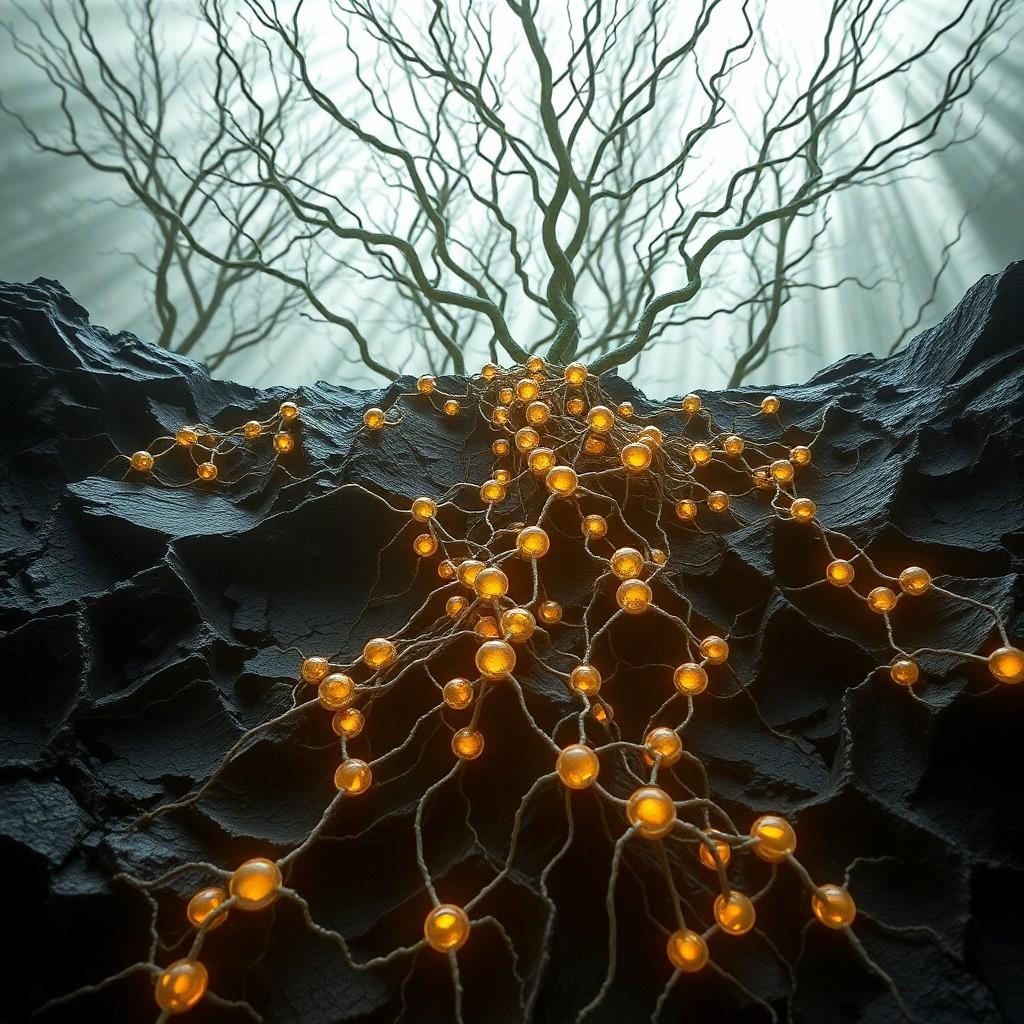
    Paper Review: Programmed cell death in triple-negative breast cancer Science Art

     Science Movie


    Make a narrated HD Science movie for this answer ($32 per minute)


     Discussion


    Get Ahead With Science Insights

    Custom summaries of the latest cutting-edge research. Every Friday. No ads.


    My BGPT