Check whether claims match experiments, exact reported results, and stated limitations.Know what the science actually supports before you trust the answer.
Press Enter ↵ to review paper
Explore by Goal
"The scientific man does not aim at an immediate result. He does not expect that his advanced ideas will be readily taken up. His work is like that of the planter - for the future. His duty is to lay the foundation for those who are to come, and point the way."
- Nikola Tesla
Quick Explanation
Copied
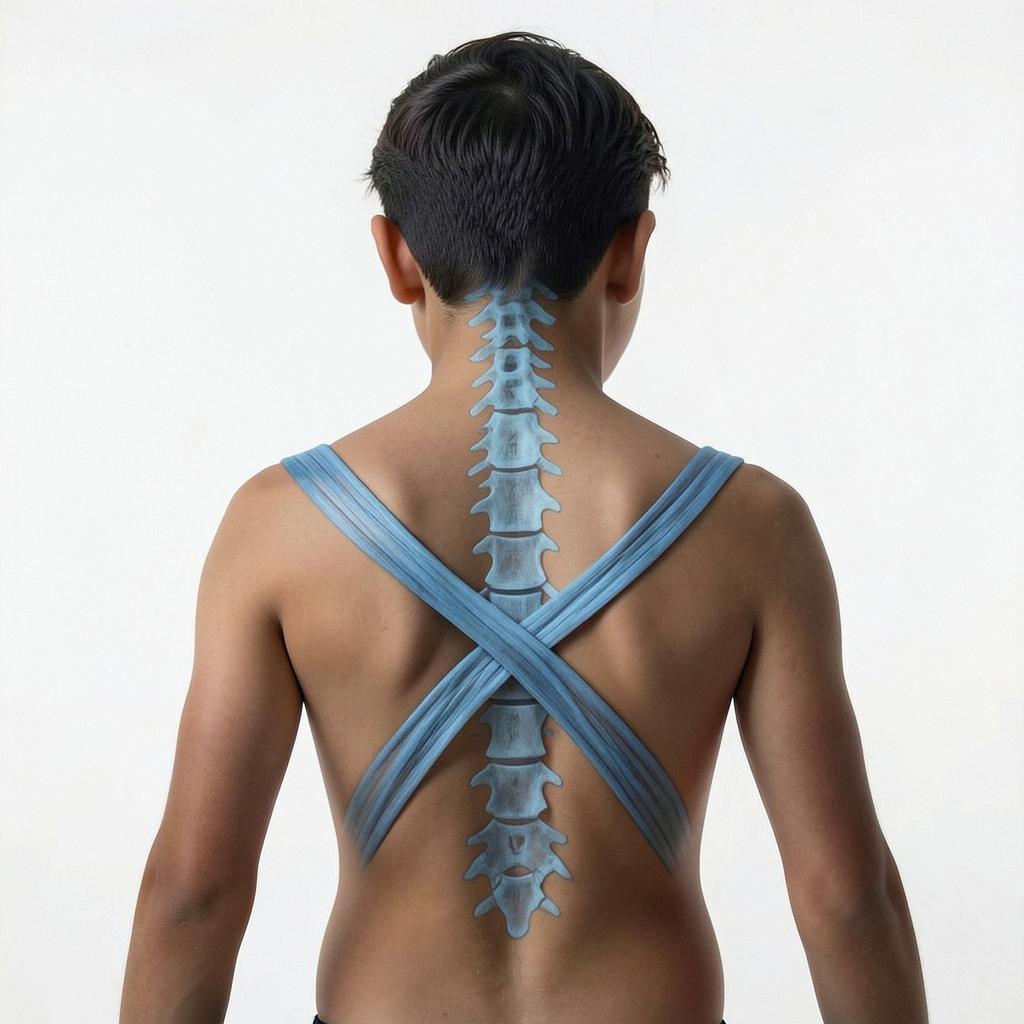
This cross-sectional study of 246 Delhi middle schoolers reports a 10.97% (27/246) prevalence of upper cross syndrome using four clinical tests, with females more affected than males; however, convenient sampling, no sex-stratified counts, and zero pectoralis major tightness findings limit interpretability .
Long Explanation
Study Overview and Key Findings
The authors assessed 246 Delhi students (ages 11-14) for upper cross syndrome (UCS) using the craniocervical flexion test (intra-rater reliability 0.92), craniovertebral angle via a mobile protractor app (inter-rater reliability 0.879), pectoralis minor length test (ICC 0.96), pectoralis major length test, and wall push-up test .
Notably, zero participants showed pectoralis major tightness, and prevalence was defined as presence of a “diagonal pattern” — a diagnostic criterion that is not operationally defined in the text. Female prevalence exceeded male, but no sex-stratified counts are reported, preventing effect-size estimation.
Critical Concerns
Convenient sampling from a single institution undermines prevalence generalizability; the 20% assumed population proportion was itself arbitrary.
No observer blinding is reported despite multiple subjective clinical tests; measurement bias cannot be excluded.
Missing data: no sex distribution, no per-test positive counts, no confidence interval around 10.97% (binomial 95% CI ≈ 7.3–15.6%).
UCS construct validity is contested: a related cross-sectional study found no significant correlation between working posture (RULA) and upper trapezius myofascial pain, suggesting posture alone may not determine musculoskeletal outcomes .
Cross-sectional design precludes any causal claim that screen time or lifestyle causes UCS; the introduction’s framing is hypothesis, not evidence.
What would change this conclusion: stratified prevalence with confidence intervals, blinded double-assessment, and a validated UCS operational definition. External validation against a comparable adolescent cohort elsewhere would be required to treat 10.97% as a regional benchmark.
Feedback:
Updated: October 25, 2026
BGPT Paper Review
Study Novelty
30%
Prevalence estimates for UCS in adolescents exist in comparable regional literature; the specific Delhi middle-school population adds modest incremental value, but the methods and framework are conventional.
Scientific Quality
40%
Reliability data for tests are cited, but the paper lacks observer blinding, a clear operational diagnostic definition ('diagonal pattern'), sex-stratified results, confidence intervals, and reports the implausible finding of zero pectoralis major tightness without discussion.
Study Generality
30%
A single-institution convenience sample of 11-14 year olds in Delhi limits generalizability; the findings are population-specific and do not advance broader mechanistic understanding.
Study Usefulness
50%
Offers a baseline prevalence figure useful for local school health planning and future longitudinal follow-up, but weak methods constrain how much weight the estimate can bear.
Study Reproducibility
50%
Test protocols and reliability figures are described, but the composite diagnostic rule, examiner training, and full demographic/sex-stratified data are missing, hampering exact replication.
Explanatory Depth
30%
Descriptive prevalence only; no analysis of determinants, confounders (e.g., screen time, backpack use), or mechanistic exploration despite an etiologic framing in the introduction.
We'll email you the results when your analysis is finished.
Hypothesis Graveyard
'Poor posture causes UCS in students' — the cross-sectional design cannot support causation, and a 2026 study found no correlation between RULA posture scores and upper trapezius pain, weakening the posture-determinism premise.

 Explore by Goal
 Quick Explanation
 Long Explanation
 Top Data Sources
 Ask a Follow-Up
 Key Insight
 Keep Exploring
 Hypothesis Graveyard
 Potential Experiments
 Discussion
