Check each claim against its experiments, reported results, scope, and stated limitations.Know what the science actually supports before you trust the answer.
Press Enter ↵ to start review
Explore by Goal
"The most important scientific revolutions all include, as their only common feature, the dethronement of human arrogance from one pedestal after another of previous convictions about our centrality in the cosmos."
- Stephen Jay Gould
Quick Explanation
Copied
Core claim reviewed
The paper argues that Agrobacterium VirB proteins assemble a pilus-like structure that helps mediate T-complex (T-DNA + Vir proteins) transfer into plant cells, drawing analogy to F-type bacterial conjugation.
Source:
Long Explanation
Paper Review (Visual + Critical): “Plant transformation: A pilus in Agrobacterium T-DNA transfer”
Focus: whether VirB proteins form a pilus/pilus-like structure that contributes to T-complex transfer across bacterial membranes into plant cells.
Mechanistic review (hypothesis-building + synthesis) centered on VirB/VirD4 and pilus formation in vir-induced Agrobacterium.
The review states that the mechanistic role of any putative pilus “is beginning to be unraveled” and emphasizes electron microscopy + genetics as converging lines within its timeframe.
1) Mechanistic pathway as the paper presents it (inputs → transfer → integration)
Below is a data-free conceptual wiring diagram derived only from the paper’s described components and ordering (not a quantitative model).
2) The central hypothesis: a VirB pilus/pilus-like structure
Evidence type #1 (structure): thin brittle pili observed specifically on vir-induced cells by transmission EM.
Evidence type #2 (genetics): VirA, VirG, VirD4, and VirB1–VirB11 are “absolutely required for pilus formation,” while these proteins are also central to T-complex transfer.
Critical synthesis (skeptical read)
Correlation vs mechanism: the genetic overlap (VirB proteins are required for pilus formation and for transfer) supports the pilus idea, but the review itself notes that roles of individual proteins in any transmembrane transfer mechanism are “only beginning” to be understood.
What would strengthen causality? direct demonstration that purified/visualized pilus structures are the physical conduit for T-complex transfer—not merely required for transfer.
Where uncertainty sits in the paper: it proposes analogy (“By analogy to bacterial conjugation… bind plant cells and mediate intimate contact… followed by T-complex transfer”), but emphasizes future research questions about signaling and channel formation.
3) Composition: candidate pilus components and the VirB1 processing clue
The paper highlights three candidate proteins as pilus constituents (or pilin-like components), derived from sequence similarity, complementation, and processing/stability logic.
Candidate (as discussed)
Paper’s supporting rationale
Current evidentiary status in the paper
VirB2
Sequence similarity between VirB2 and F TraA “propilin”, plus similar N-terminal processing reactions
Candidate supported by similarity; not presented as directly purified biochemical proof
VirB5 (TraC homolog)
VirB5/TraC homolog can complement an traC deletion strain when supplied externally
Complementation-consistent with pilus component; still a candidate
VirB1 processing product (VirB1*)
Proteolytic processing: large amounts of VirB1* recovered from supernatant after induction; linked to pilus brittleness/shearing logic
Physically plausible within the review’s mechanistic picture; direct activity not yet demonstrated
4) Assembly/stabilization: VirB7–VirB9 disulfide-linked center
The review describes a specific interaction pair (VirB7 and VirB9) as required for stabilization of the putative transmembrane complex, including covalent disulfide linking and downstream decreases in steady-state levels of other VirB proteins upon virB7 deletion.
5) VirB1 processing and an enzyme-like hypothesis (and its limits)
The review proposes that VirB1’s N-terminus may have transglycosylase/lysozyme-like activity, potentially assisting assembly by local murein cell-wall lysis; mutagenesis partially abolishes function but direct enzymatic activity is “not yet been directly demonstrated.”
Skeptical critique
Prediction burden: “enzyme-like” hypotheses based on motifs need biochemical assays to distinguish catalytic vs structural roles.
Potential alternative mechanism: processing could be required for correct topology/trafficking rather than enzymatic remodeling. The review acknowledges the activity is not directly demonstrated.
6) Figure 2 in the paper: a model map of VirB1/VirB1*/VirB7/VirB9 energy and assembly
Because this paper includes a textual model description (Dispatch 1569 “Figure 2”), we can convert it into a structured causal map. (Again: qualitative, not quantitative.)
7) What the review says is unknown / future work (high-value epistemic targets)
Pilus→plant contact causality: will pilus mediate contact formation with plant cells?
Signal coupling: if so, does contact transmit a signal triggering channel formation and T-complex transfer?
Host promiscuity: Ti virulence system can interact with wide host range (plants, other bacteria, yeast); does pilus-mediated contact always play a role?
Membrane penetration mechanism: which component (VirD2, VirE2, DNA) is recognized by which transfer machinery factor, and does the bacterium “poke a hole” through plant membrane?
Plant receptor hypothesis: is there a plant receptor for VirB-channel docking or T-complex transfer?
8) Biases, blind spots, and limitations (as far as can be judged from the provided text)
Because the supplied content is itself a review narrative (and not a full methods/results paper with raw datasets), reproducibility and quantitative evaluation are constrained. The most important “blind spot” is the step from required components to direct physical function.
Key skeptical points
Mechanistic under-determination: the review proposes that VirB proteins form a channel/pilus mediating transfer, but does not (in this text) provide direct measurements of pilus-mediated DNA/protein flux through purified structures.
Analogy transfer risk: bacterial conjugation analogy is used to motivate pilus function; analogies can be wrong in details (e.g., contact might be necessary but not the conduit).
Host variability is not resolved: the review notes host promiscuity and suggests future work, but doesn’t supply cross-host comparative causality.
9) Paper metrics summary (provided separately in JSON fields)
No additional metric text is embedded here per instruction; this section exists only as a spacer for visual structure.
Author deep dives (BGPT links)
Explore author-centric perspectives for cross-checking how mechanistic models evolved.
Feedback:
Updated: April 26, 2026
BGPT Paper Review
Study Novelty
70%
The review’s novelty lies in proposing/structuring a specific pilus-centered model for T-complex transfer by integrating early EM + mutant requirements; however, it is framed as synthesis/analogy-driven rather than introducing a new decisive experimental result within the provided text.
Scientific Quality
70%
Scientifically strong in mechanistic organization and in explicitly separating established steps (T-strand/T-complex formation and transfer requirements) from unresolved questions (direct pilus function, signaling, and channel formation). The main limitation is inferential under-determination typical of reviews: causality between pilus structures and transfer flux is suggested but not directly demonstrated in the provided text. Evidence strength varies (e.g., EM/genetic overlap vs unproven enzymatic activity for VirB1).
Study Generality
50%
The mechanism is broadly relevant to macromolecular secretion/conjugation-like systems, but it is tightly anchored to the Agrobacterium Ti virulence apparatus and plant-host interaction, so generality beyond this context depends on future cross-system validation.
Study Usefulness
80%
Highly useful as a mechanistic map: it identifies candidate components (VirB2, VirB5, VirB1*), stabilization interactions (VirB7–VirB9), and concrete experimental unknowns (plant receptors, channel formation triggers). This helps define target experiments and falsifiable mechanistic steps.
Study Reproducibility
40%
As a review/synthesis with no new raw datasets in the provided text, reproducibility is limited to the reproducibility of the cited underlying experiments (not provided here with methods/data). The review does not supply quantitative protocols or datasets.
Explanatory Depth
70%
Moderately deep: it integrates vir regulon logic, component localization/processing ideas, and a structured model linking pilus assembly to transmembrane transfer machinery. Depth is limited by the paper’s own admission that direct mechanistic details remain unclear.
Derives a component-level graph (VirA/VirG→VirB/VirD4→T-complex→nuclear targeting) from the paper text and exports it as a structured table for hypothesis-to-experiment mapping.
Get emailed when your analysis is done!
We'll email you the results when your analysis is finished.
Hypothesis Graveyard
A “channel formed entirely from non-pilus VirB components” explanation becomes less competitive if pilus-defective VirB mutants also abolish formation/assembly of stable VirB channel structures, implying pilus and channel assembly are coupled rather than parallel.
A “VirB proteins only regulate vir gene expression” strongman is disfavored by the review’s emphasis that VirB1–VirB11 and VirD4 are required for pilus formation and are also part of the transfer apparatus for T-complex translocation.
Science Art
Science Movie
Make a narrated HD Science movie for this answer ($32 per minute)
Discussion
Stay current without chasing every paper.
Know what changed, what holds up, and what remains uncertain. Every Friday. No ads.

 Explore by Goal
 Quick Explanation
 Long Explanation
 Top Data Sources
 Ask a Follow-Up
 Key Insight
 Analysis
  Hypothesis Graveyard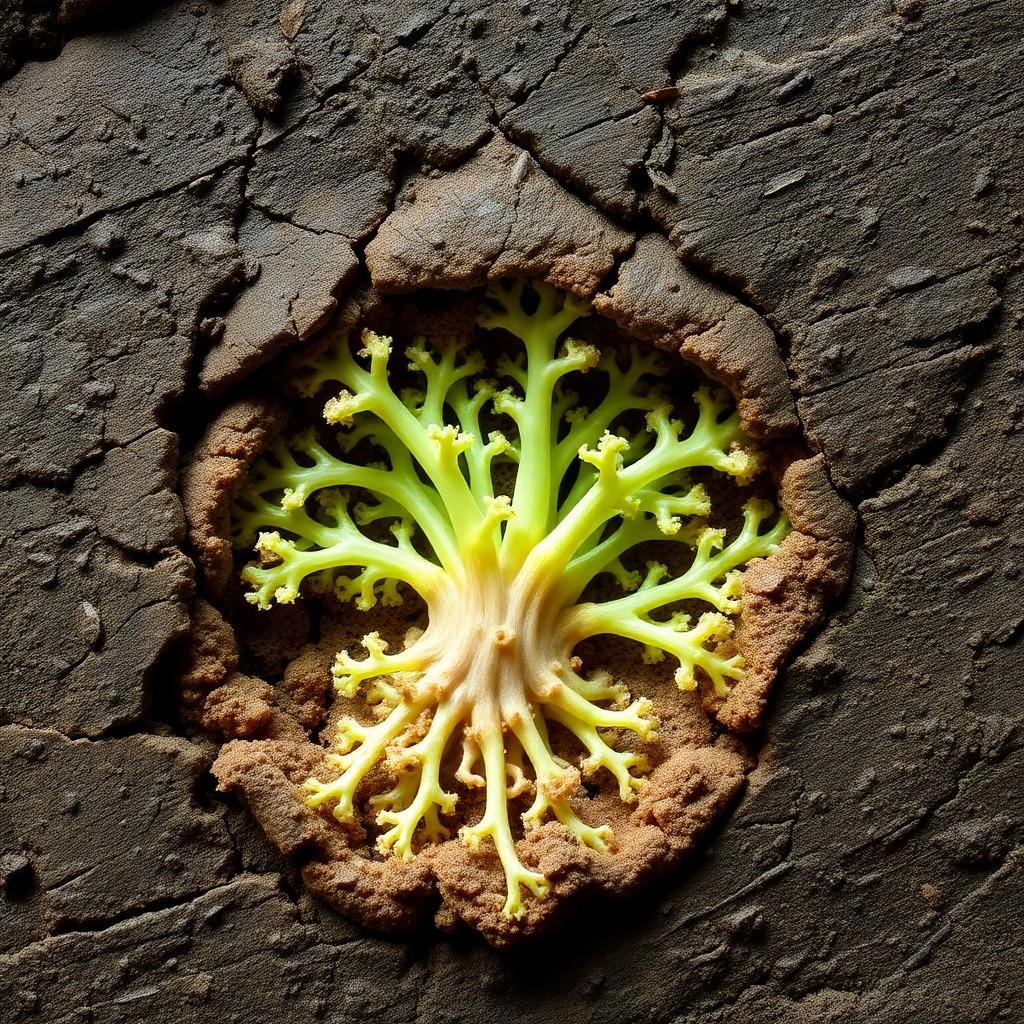
 Discussion
 My BGPT