Go beyond summaries to locate specific, verifiable claims and sources within research.Know what falsifiable science actually supports before you trust the answer.
Press Enter ↵ to search paper
Explore by Goal
"In nature, nothing exists alone."
- Rachel Carson
Quick Explanation
Copied
The paper proposes Adaptive Capability and Physiological Trajectory as conceptual, unvalidated extensions of Physiological Amplitude; it is rigorous about its own limits but contains no empirical data, no systematic search, and largely repackages established constructs (resilience, reserve, allostasis, network physiology) under new labels .
Long Explanation
What the paper actually does
Sepczynska and colleagues extend their prior Physiological Amplitude framework by proposing Adaptive Capability (how responses are organized/deployed under changing conditions) and Physiological Trajectory (longitudinal evolution of physiological organization) as analytically separable, non-causal constructs. They derive five testable propositions and a five-layer measurement architecture (baseline state → perturbation → response → recovery → longitudinal follow-up) built from a structured conceptual synthesis across dynamic regulation, resilience/reserve, network physiology, frailty, intrinsic capacity, and longitudinal aging literature .
Strengths and rigorous self-assessment
The paper is unusually disciplined about its own epistemic status: it explicitly forbids reifying any biomarker as the construct, denies causal direction among the three constructs, and specifies falsification conditions (e.g., if cross-system measures add no incremental information beyond individual variables, Propositions 2–4 weaken) . The comparative table against reserve, resilience, allostasis, intrinsic capacity, frailty, and network physiology is the paper's most useful artifact .
Critical weaknesses
Zero empirical content: no dataset, no perturbation study, no simulation. The authors acknowledge this (Section 5.9) .
Circularity risk: "Adaptive Capability" is nearly indistinguishable from "adaptive capacity," a term the authors concede is already used broadly; the claimed refinement (organization vs. possession of ability) is definitional, and the paper cannot establish distinctiveness by definition — a trap it repeatedly flags but does not escape.
Methodological opacity: the "structured conceptual synthesis" reports no search strategy, no inclusion criteria, no formal risk-of-bias assessment — a weakness inferred from the absence of such reporting, consistent with the paper's own data/limitations records.
Testability inflation: the five propositions are phrased so broadly ("may exhibit," "may provide information") that almost any finding could be counted as partial support; the discriminant-validity test required to rescue the framework is deferred entirely to future work.
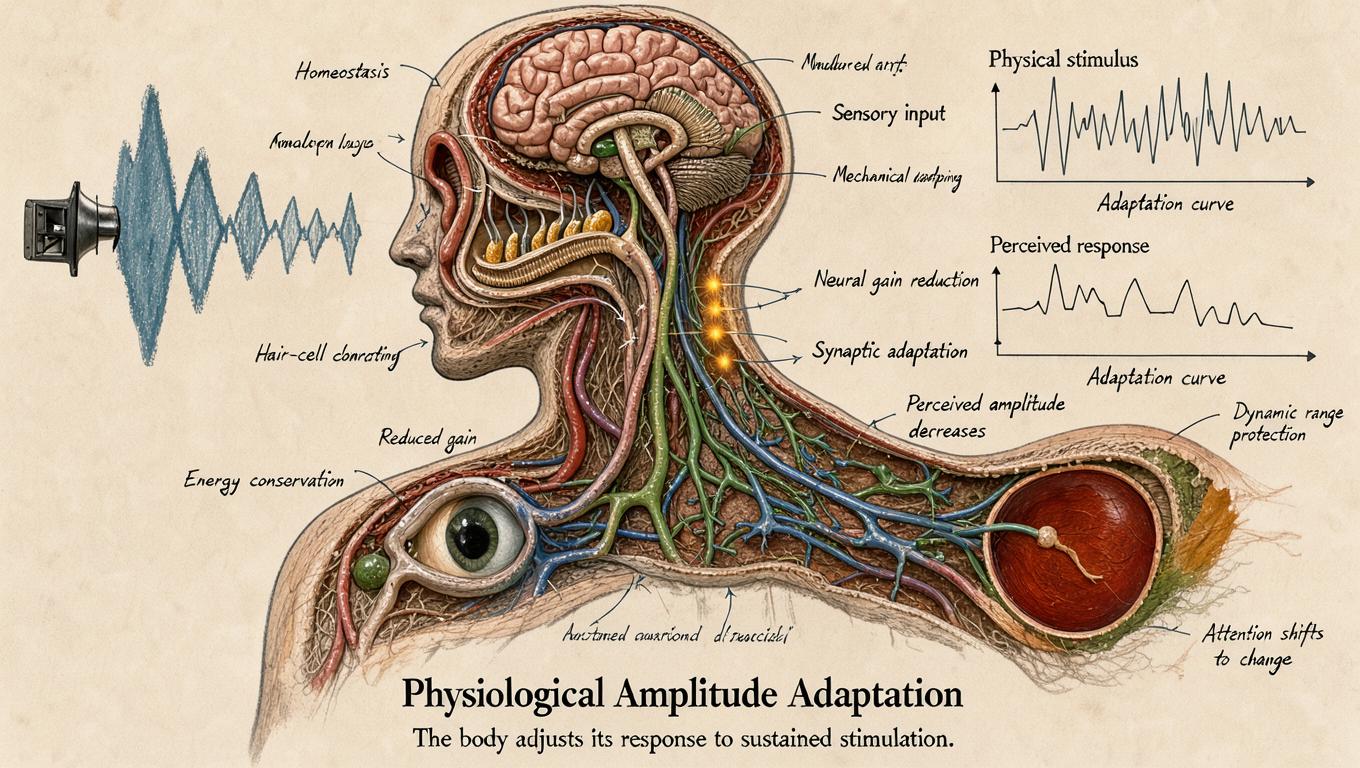
AI involvement: ChatGPT was used for language, structure, and conceptual visuals; the framework's hedged, redundantly qualified prose may partly reflect this, and independent human conceptual critique is limited to standard peer review.
Illustrative perturbation contexts (exercise, heat acclimation) are reasonable but the paper explicitly declines to claim they measure anything. Established quantitative precedents of organized adaptation — e.g., 2–4x antioxidant enzyme upregulation and ~300% GSH increases with cold acclimation — exist in the literature but are neither cited nor integrated, which weakens the claim that existing evidence cannot already explain the proposed phenomena .
Verdict
A cautious, self-aware conceptual framework paper whose real contribution is a research agenda rather than knowledge. Its survival depends entirely on a future demonstration of incremental validity beyond resilience/reserve/network measures — the paper names but cannot supply this. What would change this conclusion: a published within-person repeated-perturbation study showing candidate coordination features survive adjustment for baseline state, reserve, and individual network metrics with incremental predictive value.
Feedback:
Updated: November 26, 2026
BGPT Paper Review
Study Novelty
40%
The constructs largely rename existing ideas (adaptive capacity, resilience, longitudinal aging trajectories); the three-question decomposition is a modest organizational refinement, not a new phenomenon or theory. Self-cited predecessor paper plus a crowded construct space cap novelty.
Scientific Quality
30%
Conceptually careful and unusually self-critical, but with zero empirical data, no systematic search methodology, vague propositions ('may exhibit'), and AI-assisted drafting; quality is limited to internal coherence of an unvalidated framework.
Study Generality
20%
Abstract constructs aimed at general physiology in principle, but with no demonstrated domain of application, no mechanistic insight, and little concrete predictive content that would advance general scientific understanding.
Study Usefulness
30%
Provides a useful checklist for designing perturbation-response aging studies and a comparison table, but all practical value is deferred to unperformed future validation work.
Study Reproducibility
20%
No data, code, or protocol; the conceptual synthesis method is not specified in enough detail (search strategy, inclusion criteria) to reproduce the synthesis itself.
Explanatory Depth
20%
Taxonomy without mechanism; the paper explicitly declines to specify regulatory mechanisms, leaving explanation at the level of definitional distinctions.
Simulating statistical power for detecting incremental validity of multisystem coordination features over resilience/reserve covariates, and visualizing testable proposition outcomes from the framework's perturbation-response architecture.
Get emailed when your analysis is done!
We'll email you the results when your analysis is finished.
Hypothesis Graveyard
'Adaptive Capability is simply dynamic resilience.' Rejected as sufficient: resilience frameworks (Whitson 2016; Bandeen-Roche 2025) already cover perturbation-response and recovery; the paper's only non-redundant residue is cross-system sustainability and cost accounting, which remains unproven as a separate dimension.
'Three constructs form a causal chain (range → capability → trajectory).' Falsified by design: the authors explicitly encode bidirectional, non-causal relations, removing any mechanistic prediction that would make a causal chain testable.

 Explore by Goal
 Quick Explanation
 Long Explanation
 Top Data Sources
 Ask a Follow-Up
 Key Insight
 Keep Exploring
 Analysis
 Hypothesis Graveyard
 Potential Experiments
 Discussion
