Why BGPT?
logo

Review papers with raw data transparency

Quickly verify claims by accessing the underlying experimental data and figures.


Press Enter ↵ to solve


    Fuel Your Discoveries


     Quick Explanation


    Concise critique — Physiological Importance of Poly-(R)-3-hydroxybutyrates (Reusch 2012)

    This is a careful, hypothesis-rich review arguing that short, complexed PHB (cPHB) + polyphosphate (polyP) form biologically important supramolecular assemblies that can act as ion-conducting elements, protein modifiers ("PHBylation"), and ancient biofunctional polymers; evidence is largely from reconstituted bilayer assays, NMR/biochemical detection, and modelling rather than high-resolution structural or broad in vivo genetic perturbation data — thus plausibility is high but definitive in vivo mechanistic proof remains limited


     Long Explanation


    Visual paper analysis — "Physiological Importance of Poly-(R)-3-hydroxybutyrates" (Reusch, 2012)

    Key findings summarized (visual-first, evidence-cited)

    • Reusch synthesizes biochemical and biophysical data showing short-chain PHB ("cPHB") widely present and often noncovalently complexed with inorganic polyphosphate (polyP), with cPHB/polyP complexes isolated from membranes and mitochondria and characterized by NMR and size-exclusion chromatography; proposes Ca2+-bridged cPHB/polyP channels that can be Ca2+-selective under physiological pH
    • Primary functional evidence comes from planar-lipid-bilayer reconstitution (channel activity dependent on polymer length, concentration, and endgroups) and synthetic mimic channels — robust in vitro but requiring high PHB:lipid ratios and specific oligomer lengths to observe channel activity
    • Reusch documents covalent cPHB attachment to proteins (PHBylation) in bacteria and eukaryotes and proposes that this modification changes protein hydrophobicity, folding, membrane targeting, and temperature sensitivity — biochemical detection via NMR and proteomics is cited but systematic proteome-wide mapping in living cells is lacking
    • Physiological connections to mitochondria (mitochondrial permeability transition, TRP channels) and human health (plasma cPHB in lipoproteins; correlations with diabetes/atherosclerosis) are proposed with some experimental correlates but without large-scale genetic or in vivo causal tests: plausible but speculative pathways require targeted perturbation studies

    Critical appraisal — strengths

    • Comprehensive synthesis connecting diverse experimental threads (bilayers, NMR, biochemical isolation, modeling) into coherent mechanistic proposals that are experimentally falsifiable (e.g., architecture-dependent channel formation, Ca2+ coordination geometry)
    • Provides mechanistic chemical reasoning (polymer electrolytes analogy, carbonyl coordination, polyP charge behavior) that maps onto observed pH- and cation-dependent selectivities in bilayer assays — plausible chemical logic supported by polymer electrolyte literature

    Critical appraisal — limitations, blindspots, and biases

    • Heavy reliance on in vitro reconstitution and modeling: channel activity is reproducible in bilayers but typically requires synthetic oligomers at high PHB:lipid ratios and defined oligomer lengths — these conditions may not reflect native membrane concentrations or organization in living cells
    • Structural claims remain model-based: no high-resolution cryo-EM or X-ray structures of native cPHB/polyP complexes exist to validate spiral vs columnar models; polymer flexibility and low electron density complicate direct structural detection — fundamental unknown remains the in situ architecture
    • Limited genetic/in vivo causal tests: examples linking cPHB/polyP to specific protein channels (KcsA, TRPM8, Ca-ATPase) derive from biochemical detection and enzymatic perturbations (e.g., polyphosphatase) but lack orthogonal genetic removal/knock-in approaches that would establish necessity/sufficiency in living organisms — potential species differences and experimental artifacts are possible
    • Detection challenges and potential artefacts: cPHB's low abundance, flexible backbone, lack of unusual atoms, and hydrophobic character make it invisible to many assays and potentially confounded with lipids/detergents in preparations; prior positive reports may be biased by detection methods or contamination unless orthogonally validated (mass spectrometry, modern proteomics)

    External corroboration and counterexamples (selected)

    • Independent reports indicate bacteria synthesize PHB storage granules (long-chain PHA) and that some bacteria constitutively make PHB (LD12 SAR11): recent functional genomics demonstrates physiological PHB production and genetic pha loci in diverse microbes, supporting biological roles for PHB polymers, but these refer primarily to long-chain storage PHB (granules) rather than cPHB/polyP complexes highlighted by Reusch
    • Mitochondria/prohibitin literature: subsequent decades of prohibitin (PHB1/PHB2) research show mitochondrial and extra-mitochondrial roles; these independent PHB proteins (prohibitins) are distinct from polyhydroxybutyrate polymers but sometimes create naming confusion; careful distinction is required when reading "PHB" in different literatures (polyester PHB vs prohibitin proteins)

    Where the conclusions could be overturned (falsification tests)

    1. High-sensitivity mass-spectrometry/proteomics on intact native membranes that fail to detect cPHB covalent attachments or polyP co-complexes at scale would challenge claims of widespread PHBylation; conversely, robust proteome-wide identification of cPHB modification sites (with MS/MS evidence and controls) would strengthen the hypothesis (experimentally tractable via enrichment + MS/MS).
    2. Genetic removal or targeted enzymatic depletion of polyP/cPHB in organisms where cPHB was reported (e.g., TRPM8-expressing cells, mitochondria) followed by electrophysiological and physiological readouts: loss-of-function would support functional necessity; lack of phenotype would weaken the model.
    3. High-resolution structural determination (cryo-EM or solid-state NMR) of native cPHB/polyP complexes in membranes or of protein complexes proposed to bind cPHB/polyP (e.g., KcsA prepared under native-retaining conditions) would validate or falsify detailed spiral/columnar models.

    Practical recommendations and next experiments

    • Develop orthogonal detection pipelines: targeted chemical derivatization of ester carbonyls of cPHB + high-resolution LC-MS/MS peptide mapping to identify specific protein-conjugation sites (PHBylation) in vivo.
    • Use genetic and enzymatic perturbations (e.g., inducible polyphosphatases, candidate cPHB synthetase knockouts) combined with patch-clamp/mitochondrial permeability assays and lipidomics to test causality in cells and tissues.
    • Obtain cryo-EM of reconstituted complexes assembled from biomimetic proteins and synthetic cPHB/polyP under near-physiological lipid stoichiometries to test structural models; complement with MD simulations of Ca2+ coordination geometries.

    Short confidence & bias statement

    Assessment synthesizes the review and subsequent relevant primary work; confidence moderate (7/10) because the review draws legitimately on experimental data but the core functional claims require modern orthogonal in vivo validation and high-resolution structural support

    Quick actionable items (if you want to pursue this topic)

    • Run targeted proteomics for cPHB adducts on candidate membrane proteins (KcsA orthologs, TRP channels, Ca-ATPase).
    • Design CRISPR or inducible enzyme perturbations (e.g., polyphosphatase, candidate cPHB synthase) and assay mitochondrial permeability/ion-channel behavior.
    • Reconstitute cPHB/polyP complexes with isotope-labeled Ca2+ and use cryo-EM + cryo-ET to visualize complexes in lipid nanodiscs.

    Key citations used in this analysis


    Feedback:   

    Updated: March 09, 2026

    BGPT Paper Review


    Study Novelty

    80%

    Reusch synthesizes diverse biochemical and biophysical observations to propose a noncanonical class of membrane functional units (cPHB/polyP) and two explicit structural models; novelty is high because this framework is not mainstream and unifies disparate data, but many individual data pieces were previously published (review-based novelty).


    Scientific Quality

    70%

    Thorough literature synthesis and mechanistic reasoning, with properly cited experiments; however, reliance on in vitro reconstitution and modelling rather than systematic in vivo genetics or high-resolution structure reduces evidentiary strength; analytical detection constraints of cPHB present risk of over-interpretation.


    Study Generality

    70%

    Claims are broad (across organisms, membranes, mitochondria, channels) and, if validated, would have wide implications; presently generality depends on extrapolation from specific systems and may overreach without additional cross-species validation.


    Study Usefulness

    70%

    Useful as a hypothesis-generating synthesis that motivates specific biochemical and biophysical experiments (proteomics, genetic perturbations, cryo-EM); less immediately useful for translational applications until causal in vivo evidence accumulates.


    Study Reproducibility

    40%

    The review compiles published experiments; however many key functional claims derive from planar-bilayer reconstitutions that require specific polymer lengths and concentrations—conditions not universally reported—so direct replication under physiologic conditions is challenging without standardized protocols and orthogonal detection.


    Explanatory Depth

    80%

    Provides detailed mechanistic models (coordination geometry, polymer electrolyte analogy, pH-dependence) and quantitative model parameters (oligomer length, bilayer width) offering deep explanatory hypotheses, but lacks direct structural data to fully close mechanistic gaps.

     Top Data Sources ExportMCP


     Analysis Wizard


    Preparing targeted MS search parameters and site-mapping pipeline to detect PHBylation: generating theoretical fragment masses for peptide + cPHB adducts and producing a spectral library for MS/MS reanalysis of published membrane proteomes.


     Hypothesis Graveyard


    All cPHB/channel activity observed in planar bilayers is purely an artifact of high polymer concentrations with no biological counterpart — weakened because multiple biochemical isolations and functional links to mitochondria and native channels argue for at least some in vivo relevance.


    PHB polymer effects on membranes are identical to generic detergent/lipid perturbations and have no specific coordination chemistry — weakened because the Ca2+- and polyP-dependence and sensitivity to polymer length indicate chemistry beyond nonspecific membrane disruption.

     Science Art


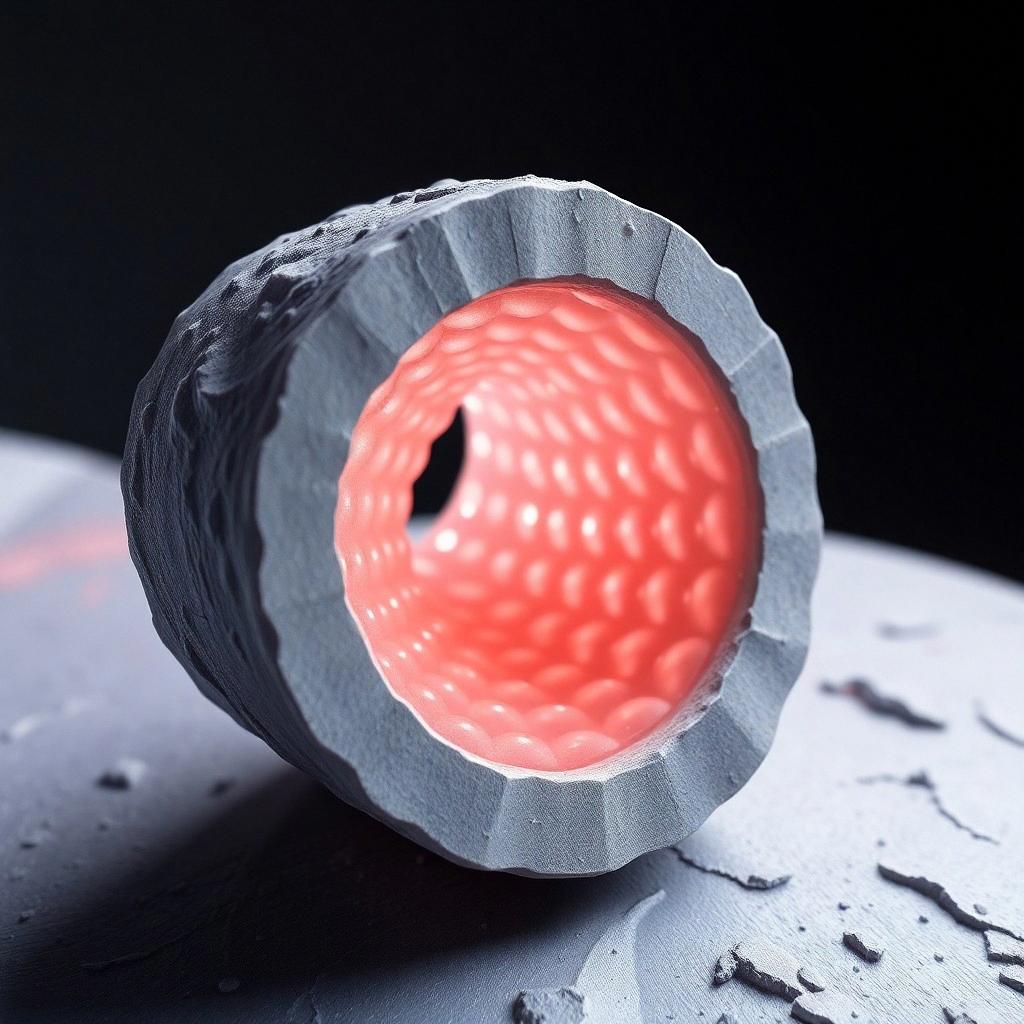
    Paper Review: Physiological Importance of Poly‐(R)‐3‐hydroxybutyrates Science Art

     Science Movie


    Make a narrated HD Science movie for this answer ($32 per minute)


     Discussion


    Get Ahead With Science Insights

    Custom summaries of the latest cutting edge Science research. Every Friday. No Ads.


    My BGPT