Check each claim against its experiments, reported results, scope, and stated limitations.Know what the science actually supports before you trust the answer.
Press Enter ↵ to start review
Explore by Goal
"The nitrogen in our DNA, the calcium in our teeth, the iron in our blood, the carbon in our apple pies were made in the interiors of collapsing stars. We are made of starstuff."
- Carl Sagan
Quick Explanation
Copied
This 2018 Phys. Chem. Chem. Phys. study (Liu, Gao, Li, Liu, Yuan, Du, Hou) reports the first demonstration that single-chain alkyl sulfates (dodecyl hydrogen sulfate, DHS) self-assemble into ~200 nm vesicles without additives near their apparent pKa, showing selective permeability, fast exchange, self-reproduction, and year-long stability — a novel, well-characterized protocell model whose prebiotic relevance remains plausible but unproven.
Long Explanation
Key Findings and Quantitative Evidence
Liu et al. report that dodecyl hydrogen sulfate (DHS), a simple single-alkyl sulfate acid, spontaneously forms vesicles in water without any additives near its apparent pKa. At 5 mM DHS, negative-staining TEM, cryo-TEM, freeze-fracture TEM, and SEM all show vesicles whose size distribution peaks near 200 nm, with DLS hydrodynamic diameter of 203 nm — an internal consistency check that strengthens the claim .
The mechanistic proposal is an 'acid–soap' dimer model: H-bonded C12H25SO4H–C12H25SO4⁻ pairs convert the conical micelle-forming alkyl sulfate geometry into a cylinder-like bilayer-forming unit, favored when ~50% of sulfate groups are ionized (solution pH 2.93 ≈ apparent pKa 3.11). DSC (endothermic peak at 58 °C) and urea-induced nile-red release support H-bonding involvement. Phase behavior shows two inflection points across surface tension, turbidity, polarity, and conductivity measurements: monomers below ~0.4 mM, vesicles from ~0.4–10 mM, oil droplets above ~10 mM, with no micellar phase detected .
Protocell-Relevant Functional Properties
The authors demonstrate four primitive-membrane characteristics: (1) selective permeability — ions (K⁺, Cl⁻) and small dyes (calcein, nile red) cross or partition into membranes, while FITC-BSA is excluded; (2) fast exchange via monomer diffusion; (3) self-reproduction — addition of 6 equivalents of SDS micelles to 8 mM DHS vesicles (pH 3.0 citrate buffer) drives growth through elongated and tubule-bead intermediates into ~1 µm daughter vesicles over 24 h, tracked by TEM, LSCM, AFM, and DLS; (4) stability — vesicles persist for months and over a year at 25 °C, consistent with primordial ocean pH (~3.5–6) and acidic hydrothermal vent scenarios .
The self-reproduction pathway closely parallels the fatty-acid vesicle literature (Walde, Hanczyc/Szostak), so its novelty lies in the amphiphile class rather than the phenomenon; broader reviews of prebiotic compartmentalization note that single-component models may underestimate the value of amphiphile mixtures, which enhance stability and sub-compartment formation in modern hybrid protocell work .
Critical Assessment and Blind Spots
Strengths: multiple orthogonal imaging methods, agreement between TEM and DLS sizes, quantitative pKa framing, and a falsifiable dimer mechanism. Limitations the paper acknowledges or leaves open: the acid-soap dimer is 'speculated' rather than directly structurally resolved (no SAXS/NMR of the dimer); the apparent pKa shift of ~6 units versus methyl sulfate is argued but not independently validated; prebiotic plausibility rests on meteorite detection of alkyl sulfates without demonstrating DHS prebiotic synthesis pathways; and the self-reproduction experiment uses SDS micelle feedstock — a chemically related but different amphiphile — in a citrate buffer, so pure-DHS self-reproduction is not shown. The single-concentration focus and absence of replicate statistics for permeability/size measurements limit quantitative confidence. Confounding variables such as ionic strength effects on vesicle stability were not systematically explored, and generalization from this model system to natural protocell environments carries the extrapolation risk typical of the field .
Falsification: demonstrating that DHS fails to form vesicles under these conditions at the stated pH, or that permeability/self-reproduction is an artifact of TEM staining or buffer conditions, would refute the central claims. Confidence: the vesicle formation and size data are strong; the dimer mechanism and prebiotic relevance are plausible interpretations with moderate evidential support.
Go Deeper
Author Reviews
Feedback:
Updated: October 03, 2026
BGPT Paper Review
Study Novelty
80%
First experimental demonstration that a single-chain alkyl sulfate acid alone forms stable vesicles without additives near its pKa; the functional phenomena (permeability, self-reproduction) echo fatty-acid vesicle precedents, but the amphiphile class and acid-soap mechanism are new.
Scientific Quality
70%
Multiple orthogonal characterization methods and internally consistent size data are strong, but the dimer mechanism is speculative without direct structural evidence, replicate statistics are absent, and self-reproduction relied on SDS micelle feedstock rather than pure DHS.
Study Generality
70%
Results generalize the acid-soap vesicle concept beyond fatty acids to alkyl sulfates and inform protocell compartment theory, though the findings are specific to one amphiphile, concentration range, and acidic pH window.
Study Usefulness
70%
Adds a new, simple, stable prebiotic membrane candidate useful for origin-of-life modeling and possibly synthetic bioreactors; practical impact is limited until independent replication and prebiotic synthesis routes are demonstrated.
Study Reproducibility
60%
The critical packing parameter and acid-soap frameworks offer a plausible mechanistic narrative supported indirectly by DSC and urea-release data, but direct structural evidence of the H-bonded dimer is lacking.
We'll email you the results when your analysis is finished.
Hypothesis Graveyard
Alkyl sulfates cannot form bilayers because of their large polar head and single chain — refuted here by the acid-soap dimer geometry argument; the micelle preference applies only to fully ionized species.
Vesicle formation requires either fatty-acid chemistry or additive co-surfactants — refuted by additive-free DHS vesiculation and by prior clay-mediated SDS vesicle formation.

 Explore by Goal
 Quick Explanation
 Long Explanation
 Top Data Sources
 Ask a Follow-Up
 Key Insight
 Keep Exploring
 Hypothesis Graveyard
 Potential Experiments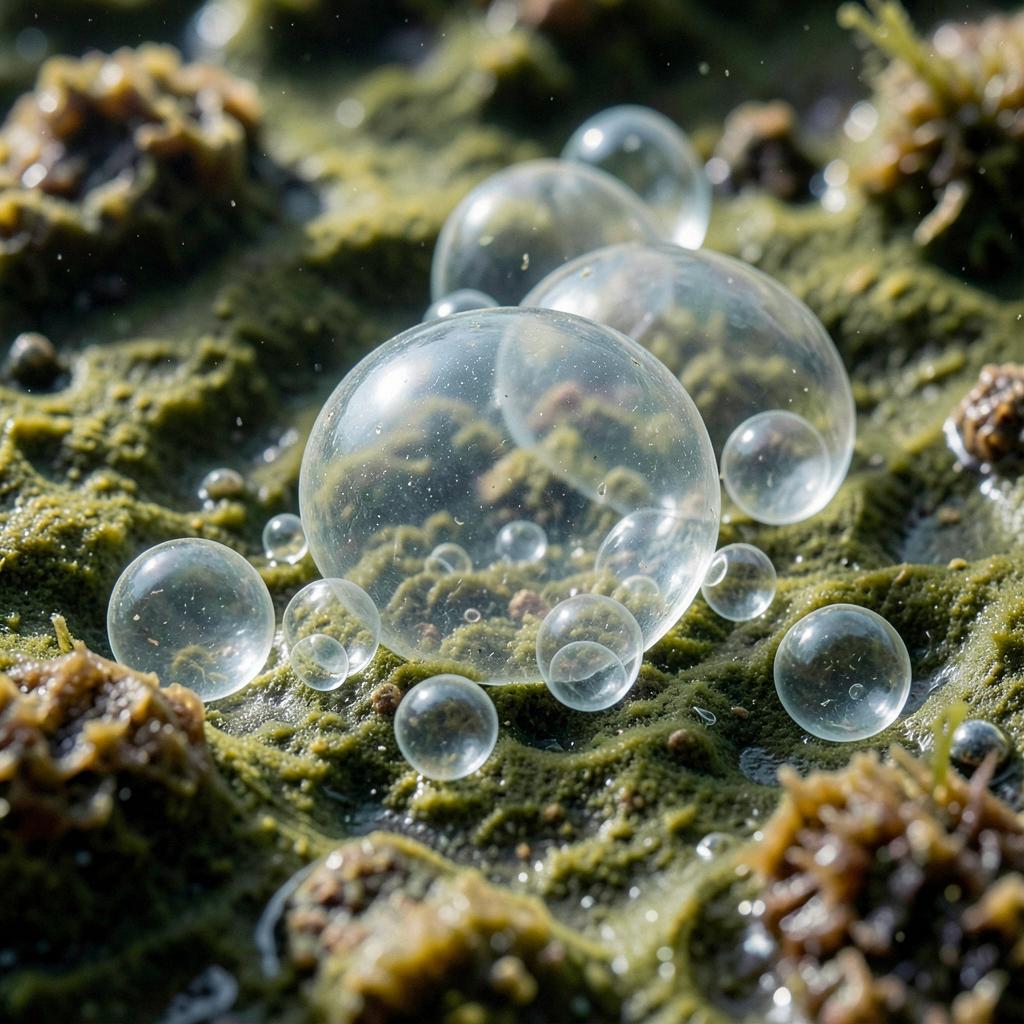
 Discussion