Why BGPT?
logo

Review papers with raw data transparency

Quickly verify claims by accessing the underlying experimental data and figures.


Press Enter ↡ to solve


    Fuel Your Discoveries


     Quick Explanation


    Core finding (causal axis)
    Mitochondrial complex I loss in distal lung epithelium (Ndufs2 cKO) drives a pathologically sustained integrated stress response (ISR), expanding β€œtransitional” AT2/AT1-like epithelial cells and causing postnatal respiratory failure; restoring NAD+ regeneration via yeast NDI1 or pharmacologically dampening ISR (ISRIB) or boosting NAD+ (NMN) rescues the phenotype.
    Evidence base:


     Long Explanation


    Paper Review (Visual + Critical): β€œMitochondrial integrated stress response controls lung epithelial cell fate”
    Nature, Aug 9 2023 β€’ DOI: 10.1038/s41586-023-06423-8
    Claim being evaluated: complex I–dependent NAD+ regeneration prevents pathological, persistent ISR activation that otherwise stalls epithelial differentiation into functional AT1 cells during postnatal alveolar development.
    1) What the authors built (causal logic map)
    Evidence grounding for the chain:
    • Complex I (Ndufs2) loss reduces oxygen consumption and causes postnatal death and alveolar structural failure.
    • Transitional AT2/AT1-like cells expand in Ndufs2 cKO lungs alongside increased Ki67, with histologic changes developing postnatally.
    • ISR gene programs are enriched in transitional cells; pharmacologic ISR inhibition and NAD+ precursor partially rescue lethality and ISR signatures.
    • Complex II (Sdhd) loss induces ISR but is milder and does not trigger comparable lethality, supporting the authors’ NAD+ regeneration emphasis.
    2) Phenotype magnitude (quant from the paper text)
    • Provided text indicates median lethality around week 7 (death between weeks 5–9) for Ndufs2 cKO, with control vs cKO survival: control n=21 vs cKO n=13, P<0.0001 by log-rank.
    • For NDI1 rescue: NDUFS2 cKO/NDI1 reported n=22 with P<0.0001 (log-rank) in the provided excerpt.
    3) Mechanistic depth: ISR as the β€œfate gate” (and why that’s testable)
    Mechanistic framing (authors’ model)
    They argue that complex I disruption perturbs NAD+ regeneration, elevating the NADH/NAD+ ratio and promoting chronic ISR activation (eIF2Ξ± phosphorylation β†’ translational reprogramming β†’ ATF4/ATF5/CHOP axis), which stalls differentiation of postnatal transitional cells into AT1 cells. Conceptually, the ISR mechanism (eIF2Ξ± phosphorylation integrating stress signals) is consistent with broader ISR biology.
    • ISRIB: excerpt states it decreases ISR signatures in lung epithelial cells and significantly extends lifespan.
    • NMN: excerpt states NMN decreases ISR signatures and partially rescues lethality.
    • NDI1: excerpt says NDI1 expression almost completely rescues metabolite dysregulation and prevents mortality while restoring alveolar structure/compliance to control-like levels.
    Skeptical check: what could confound the β€œISR is causal” interpretation?
    • Off-targets of pharmacology: ISRIB and NMN can have broader effects than eIF2Ξ± pathway dampening and NAD+ precursor availability; the excerpt does not establish exclusivity beyond gene signature shifts.
    • Correlative scRNA-seq β€œsignature enrichment”: enrichment of ISR transcripts in transitional cells strongly suggests ISR activity there, but causality is inferred through pharmacologic/genetic rescue; still, cell-autonomous sufficiency of ISR inhibition in transitional cells specifically (as opposed to earlier states) is not fully proven in the provided excerpt.
    4) β€œComplex I vs Complex II” differential phenotype (what it does and doesn’t prove)
    • The paper states SDHD loss (complex II) results in survival and less-robust ISR induction than NDUFS2 loss, supporting the notion that complex I-dependent NAD+ regeneration is a dominant determinant for preventing pathological ISR induction during alveologenesis.
    Critical limitation to watch:
    • Complex I vs II perturbations differ in more ways than NAD+ regeneration alone (superoxide generation, altered electron flux, succinate accumulation, and downstream signaling). The excerpt does not provide a fully comprehensive β€œonly NAD+ explains everything” decomposition beyond NDI1 rescue and ISR/NAD+ perturbation assays.
    5) Methods credibility & reproducibility signals (what looks strong vs what’s missing)
    Strengths (from provided text)
    • Multi-modal evidence: genetic mitochondrial perturbation + metabolic measurements (NADH/NAD+, lactate, succinate) + bulk RNA-seq + scRNA-seq with signature scoring + functional respiratory mechanics + rescue experiments using NDI1/ISRIB/NMN.
    • Availability cues: raw sequencing data are available via NCBI BioProject accessions listed in the provided text; code availability is reported via a GitHub repository.
    Reproducibility/interpretation red flags (from provided text)
    • No blinding and no randomization: the excerpt explicitly states investigators were not blinded and experiments were not randomized.
    • RNA velocity caution: the excerpt warns RNA velocity estimates can be biased by low-dimensional representation.
    6) What would most strongly disprove the paper’s main conclusion?
    • ISR inhibition must fail to rescue: if ISRIB/NMN did not reduce ISR signatures and did not restore differentiation/compliance despite NAD+ changes, the mechanistic linkage from ISR to fate would weaken. (The paper reports rescue, so this would be a falsification scenario.)
    • NAD+ regeneration must be insufficient without complex I: if NDI1 expression did not rescue metabolite dysregulation and fate, then NAD+ regeneration would not be β€œdominant.”
    • Complex I effects must not be ISR-mediated: if transitional cell accumulation persisted despite cell-intrinsic genetic ISR blockade, the ISR-gated fate model would be challenged. (The provided excerpt indicates a mechanistic pathway via OMA1-DELE1-HRI, but the falsifying genetic experiment is not shown in the excerpt.)
    7) BGPT-critical synthesis (balanced)
    • Most compelling part: the combination of complex I (Ndufs2) loss, NAD+ regeneration rescue (NDI1), and ISR/NMN pharmacologic rescue converging on developmental fate argues for a mechanistically meaningful mitochondriaβ†’NAD+β†’ISRβ†’fate axis.
    • Most important uncertainty: whether chronic ISR is the only causal mediator of fate stalling, or whether other mitochondrial-complex-I-specific outputs (beyond NAD+ regeneration) contribute to ISR activation and/or fate decisions.


    Feedback:   

    Updated: March 20, 2026

    BGPT Paper Review


    Study Novelty

    90%

    The work tightly connects mitochondrial complex I–dependent NAD+ regeneration to a developmentally timed, pathological ISR program that gates lung epithelial fate, using multiple orthogonal perturbations (complex I genetics, yeast NADH dehydrogenase rescue, ISR inhibitor, NAD+ precursor, and complex II comparison).


    Scientific Quality

    80%

    High-quality multi-modal evidence with strong rescue logic and stated data/code availability; however, the provided text also reports investigators were not blinded and experiments were not randomized, and RNA velocity is explicitly cautioned as potentially biasedβ€”both reduce inference robustness.


    Study Generality

    70%

    The mechanistic axis likely generalizes to other epithelial programs where mitochondria-to-NAD+-to-eIF2Ξ±/ATF4 signaling intersects differentiation; but the fate outcome is demonstrated in a specific mouse developmental context, with human relevance inferred through other datasets rather than direct human intervention/genetics in the provided excerpt.


    Study Usefulness

    90%

    Practically useful for identifying an experimentally testable mitochondria–NAD+–ISR pathway controlling alveolar epithelial differentiation, with clear intervention levers (NAD+ regeneration, ISRIB-like ISR modulation) and publicly listed sequencing accessions/code.


    Study Reproducibility

    80%

    Reproducibility is supported by explicit methodological detail (mouse genetics, dosing schedules, QC thresholds) and stated raw data and code availability; reproducibility may still be impacted by lack of blinding/randomization noted in the excerpt.


    Explanatory Depth

    80%

    Mechanistically deep at the pathway level (mitochondrial perturbation β†’ NADH/NAD+ β†’ ISR gene program enrichment β†’ impaired AT2β†’AT1 differentiation; includes involvement of OMA1-DELE1-HRI relay in the provided text), though causal specificity of ISR vs other complex I outputs remains partially unresolved from the excerpt alone.


    🎁 Authors: Collect 500 Free Science Tokens (β‰ˆ $50.0 USD)

    Claim My Author Tokens

    Use for 125 days of free BGPT access (4 tokens = 1 day) or trade/sell (β‰ˆ $50.0 USD)

     Top Data Sources ExportMCP


     Analysis Wizard


    It will ingest the paper’s scRNA-seq matrices and compute ISR-score distributions across epithelial subclusters, then quantify transitional-cell enrichment before/after rescue cohorts to map fate gating signatures.


     Hypothesis Graveyard


    The phenotype is not primarily driven by apoptosis/bioenergetic collapse (because the excerpt reports absent inflammation/apoptosis signals and increased Ki67), so a β€œsimple ATP shortage kills or arrests” strongman explanation is less likely than the ISR fate-gating model.


    The ISR signature is unlikely to be merely a consequence of stalled differentiation (not causal) because ISR inhibition and NAD+ precursor interventions reduce ISR signatures and partially reverse lethality and alveolar defects; a pure epiphenomenon explanation would require that these interventions correct differentiation via mechanisms independent of ISR signature changes.

     Science Art


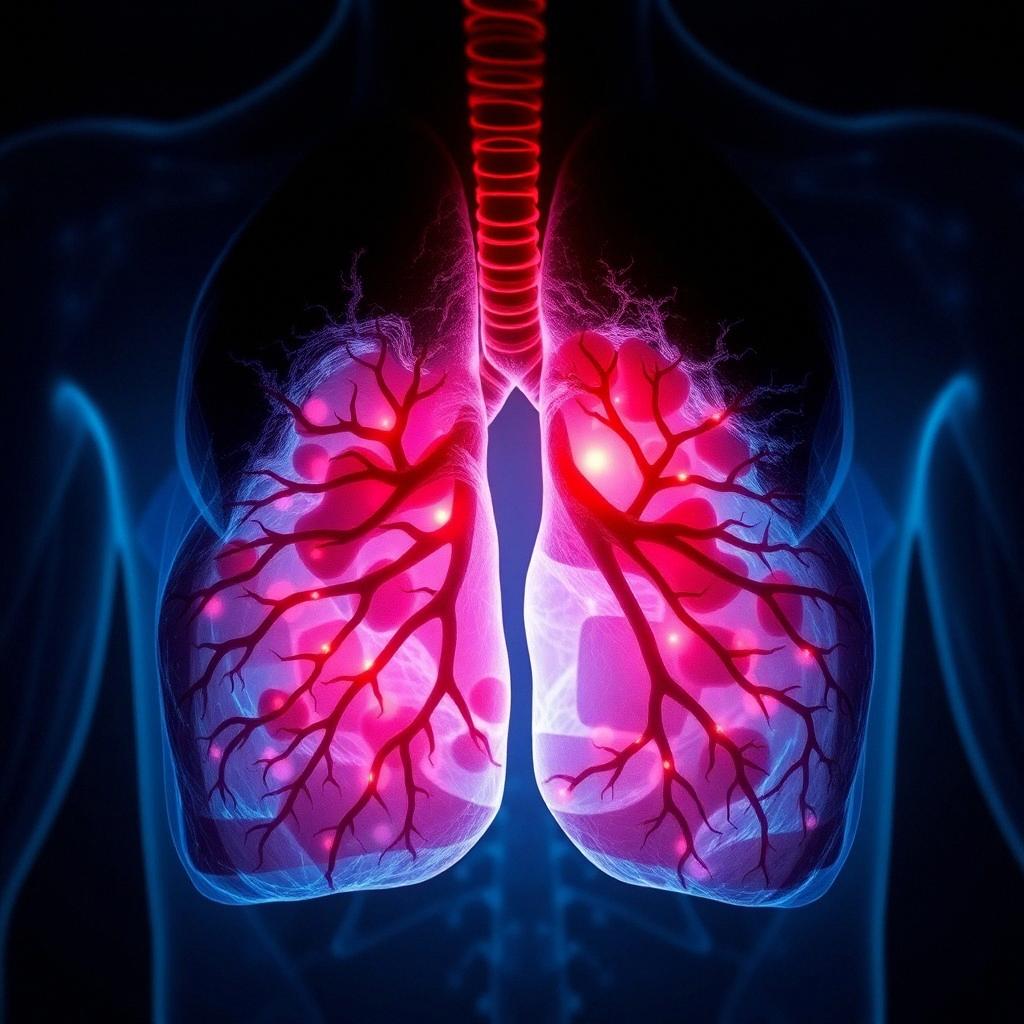
    Paper Review: Mitochondrial integrated stress response controls lung epithelial cell fate Science Art

     Science Movie


    Make a narrated HD Science movie for this answer ($32 per minute)


     Discussion


    Get Ahead With Science Insights

    Custom summaries of the latest cutting edge Science research. Every Friday. No Ads.


    My BGPT