Why BGPT?
logo

Review papers with raw data transparency

Quickly verify claims by accessing the underlying experimental data and figures.


Press Enter ↡ to solve


    Fuel Your Discoveries


     Quick Explanation


    Milk-derived exosomes: plausibly bioactive, method-sensitive, and still mechanistically incomplete
    Core claim: the review argues that milk exosomes and their RNA cargos can be absorbed (with glycan- and label-artifact caveats), reach certain tissues, and modulate phenotypes including brain-related performance and metabolic readouts when exosome/RNA depletion is used.
    Key skepticism: delivery/bioavailability estimates are highly label- and protocol-dependent (e.g., DiR leakage), some tissue β€œsignals” may reflect tracer artifacts, and much mechanistic work remains indirect (review-level synthesis rather than new primary data).
    Primary source:


     Long Explanation


    Milk-Derived Exosomes and Metabolic Regulation β€” Review-grade mechanistic synthesis (with careful caveats)
    Annual Review of Animal Biosciences (Review in Advance; finalized later). DOI: 10.1146/annurev-animal-020518-115300
    What the paper is: a narrative review arguing that milk exosomes and RNAs meet the definition of bioactive food compounds by plausibly surviving GI conditions, being taken up, and correlating with (or being causally tested via depletion) phenotypic changes in models.
    1) Visual map of the proposed evidence chain
    Claim architecture (review-level)
    • Biology: exosomes form via endosomal pathways (endocytosis β†’ endosomes β†’ multivesicular bodies β†’ release) and carry RNAs/proteins/lipids.
    • Cargo selection: microRNA/RNA loading is non-random (e.g., sorting via cellular factors); exosome surface glycoproteins can influence uptake.
    • Delivery: milk exosomes can be taken up by intestinal and other cell types (reported uptake kinetics and glycan/enzymatic dependence).
    • Tracking caveats: common fluorescent tracers (e.g., DiR) can transfer off-vesicle, biasing tissue distribution in some studies.
    • Functional outcomes: depletion of exosome/RNA cargos (ERD vs ERS diets) is associated with phenotypes (brain performance, purine metabolites, fecundity, immune modulation) in mice.
    All steps above are synthesized from the review text:
    2) Key quantitative anchors extracted from the review
    These are the only clearly numeric details visible in the provided paper text segment; other points in the review are qualitative or tied to study-dependent measurements.
    Values and caveats come directly from the review: the DiR-based estimate is stated as ~5% and is explicitly cautioned as label-transfer/omics confounded; higher apparent bioavailability (>25%) is described from visual inspection in a different labeling context where the authors did not quantify in a way consistent with the DiR correction issues.
    The review text states approximate counts of microRNAs reported in humans and cows (~1,900 vs ~800).
    3) Critical scientific appraisal (what is solid vs uncertain)
    3.1 What the review supports with comparatively stronger internal logic
    • Mechanistic plausibility: exosome biogenesis and cargo types are coherent with canonical EV biology; the review connects cargo protection to survival through GI conditions and links uptake to surface glycoprotein interactions.
    • Test design via depletion: using exosome/RNA-defined diets (ERD vs ERS) is presented as a functional perturbation strategy to infer that losing those cargos changes phenotypes (brain/purine metabolism/fecundity/immune readouts), while the review claims some basic physiological controls (e.g., similar intake and body composition) in the mouse context.
    • Assay artifact awareness: the review explicitly warns that DiR-based tracer tracking can be confounded by label detachment/transfer and that this affects distribution conclusions; it also contrasts with alternative labeling approaches.
    All three points are explicitly stated within the review text:
    3.2 Major uncertainties / blind spots (where alternative explanations could dominate)
    • Bioavailability fraction is not a single truth value: estimates differ strongly by labeling method (DiR vs microRNA cargo tracing) and by model context (cross-species vs same-species suckling). The review itself highlights why DiR-based numbers are likely underestimates for β€œvesicle-intact” delivery.
    • Distribution β‰  mechanism: detecting label in tissues does not automatically mean intact exosomes delivered functional cargos; even if uptake occurs, translating tissue-level presence to causal pathway changes is hard.
    • Unresolved β€œwhich cargo, at what effective dose, in which cells”: the review emphasizes non-random loading and potential receptor interactions, but for the metabolic phenotypes the text provided indicates the mechanism can remain unknown or speculative.
    • RNA-omics pitfalls: the review discusses that RNA contaminants (e.g., from spin columns) can generate artifacts and notes methodological protocols to reduce contaminants, implying that some historical cargo claims could be vulnerable to technical bias.
    These uncertainties are described across the review, including the DiR confounding discussion, the need to avoid uptake-label conflation, and the discussion of potential RNA extraction/analysis artifacts.
    4) Visual β€œevidence vs uncertainty” scoring rubric (qualitative, review-driven)
    This is an interpretive visualization of where the review is most explicit vs where it indicates β€œunknown”/caveat language; it is not an external dataset.
    Interpretation note: these scores are derived from the review’s explicitness and caveat language in the provided text segment (e.g., direct DiR tracer concerns and β€œmechanisms unknown” statements). The underlying numeric values are therefore not primary measurements, but a structured skepticism map grounded in the review narrative.
    5) Conflict of interest & bias risk (review-level)
    5.1 Disclosures stated in the paper
    • The review states that J. Zempleni serves as a consultant for PureTech Health, Inc.
    • Other authors report no conflicts of interest disclosed in the document.
    Bottom line (skeptical synthesis)
    • Most supported idea: milk contains extracellular vesicles/exosomes and their cargos; uptake and functional signaling are biologically plausible and supported by depletion-based perturbation approaches in mice within the review.
    • Most important uncertainty: how much of the β€œbioactivity” is due to intact exosome cargo delivery versus tracer/routine technical artifacts or indirect effects remains a central challenge, explicitly flagged for DiR-based distribution studies.
    • How this affects metabolic regulation: the review links exosome/RNA depletion to metabolic perturbations (e.g., purine metabolites) and discusses candidate miRNAs/cargo mechanisms, but in the provided text those pathways can remain unknown or not fully mechanistically resolved.


    Feedback:   

    Updated: April 17, 2026

    BGPT Paper Review


    Study Novelty

    60%

    The review is largely a synthesis of an emerging but already-active line of work (milk/exosome cross-species RNA transfer, uptake/distribution, and phenotypes via depletion diets). Its novelty is mainly in integrating multiple mechanistic threads and explicitly foregrounding methodological caveats like tracer label transferβ€”rather than introducing new primary results.


    Scientific Quality

    70%

    Strengths: it provides a coherent mechanistic narrative (biogenesis β†’ cargo sorting β†’ uptake β†’ functional outcomes) and explicitly discusses known experimental pitfalls (notably DiR tracer confounding and RNA contaminant concerns). Limits/red flags: this is a narrative review with dependence on heterogeneous study designs, multiple models/species, and unpublished in-house datasets referenced in multiple places; causal links to specific metabolic pathways remain mechanistically uncertain in parts of the provided text.


    Study Generality

    70%

    It is broadly relevant to EV biology and nutrigenomics because it addresses general principles of EV cargo delivery and bioactivity, while anchoring metabolic regulation in a specific food source context (milk-derived exosomes). However, the strongest causal evidence discussed is largely in mice rather than broad, convergent human trials.


    Study Usefulness

    80%

    High usefulness as a roadmap: it summarizes cargo types, delivery logic, distribution testing constraints, microRNA signaling framework, ERD/ERS depletion paradigms, and links to metabolic phenotypesβ€”helpful for designing future studies and for interpreting claims with appropriate skepticism.


    Study Reproducibility

    60%

    As a review, it does not provide new datasets or standardized, fully reproducible protocols itself. Reproducibility of the underlying evidence depends on cited primary studies’ methodologies; the review appropriately highlights that common approaches (e.g., DiR tracking and some RNA workflows) can introduce artifacts, which complicates cross-study reproducibility.


    Explanatory Depth

    70%

    It offers mechanistic explanations at several levels (EV biogenesis, RNA sorting, microRNA target recognition/RISC, receptor-mediated uptake concepts) and ties these to metabolic outcomes via depletion experiments. But for some metabolic mechanisms, it states that pathways remain unknown in the review text provided.


    🎁 Authors: Collect 197 Free Science Tokens (β‰ˆ $19.7 USD)

    Claim My Author Tokens

    Use for 49 days of free BGPT access (4 tokens = 1 day) or trade/sell (β‰ˆ $19.7 USD)

     Top Data Sources ExportMCP


     Analysis Wizard


    Extract all numeric bioavailability and miRNA-count claims from the review text, then generate summary plots (bar charts) for cross-model comparison and uncertainty flags for tracer-based estimates.


     Hypothesis Graveyard


    A pure β€œtotal RNA mass ingestion” model is unlikely: the review emphasizes protection in exosomes and glycan-dependent recognition, plus depletion changes phenotypes, arguing against simple bulk nutrient explanations alone.


    DiR-based β€œbrain accumulation” as a direct proxy for intact milk-exosome delivery is a weak explanation; the review explicitly flags DiR label transfer artifacts and contrasts alternative labeling approaches.

     Science Art


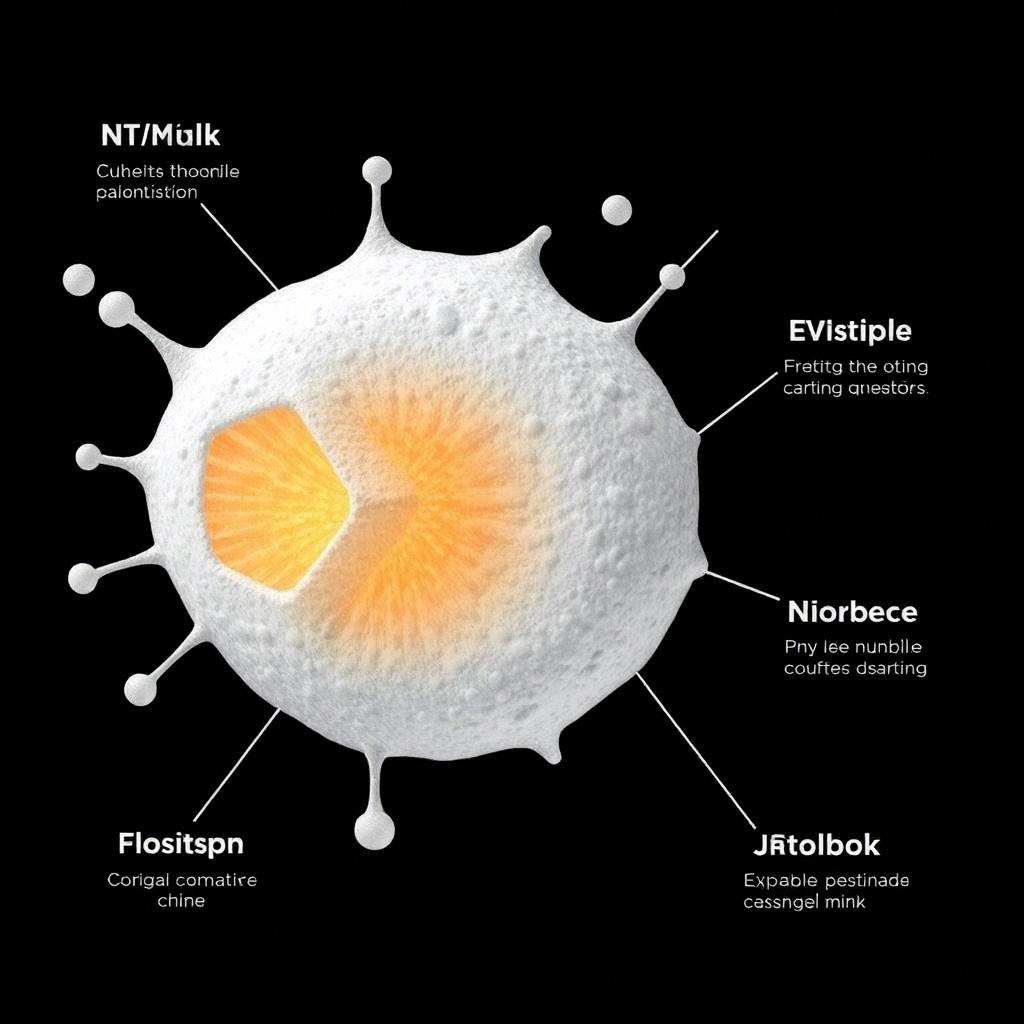
    Paper Review: Milk-Derived Exosomes and Metabolic Regulation Science Art

     Science Movie


    Make a narrated HD Science movie for this answer ($32 per minute)


     Discussion


    Get Ahead With Science Insights

    Custom summaries of the latest cutting edge Science research. Every Friday. No Ads.


    My BGPT